- Utah faces water shortages due to record-low snowpack, impacting reservoirs statewide.
- State officials warn of severe drought as reservoirs are below normal capacity.
- Cities implement water restrictions while farmers face tough decisions amid ongoing drought.
SALT LAKE CITY — Teresa Wilhelmsen knew this year would be troubling as she tracked snowpack data, but it wasn't until she began traveling to various reservoirs that she grasped the full scope of how bad it is.
One trip at the end of March remains ingrained in her mind. Wilhelmsen, Utah's director of the Utah Division of Water Rights, toured a tiny reservoir in the High Uinta Mountains. It only stores up to 1,000 acre-feet of water, but it was 40% full at the end of the snowpack collection season, which was alarming.
"When you think about that 1,000 acre-feet, it may seem small (compared to) some of the larger systems we have across the state, but … it's going to have a significant impact on that local community due to this hydrologic shortage," said Wilhelmsen, recalling it as various state agencies offered an update to Utah's water situation on Tuesday.
This is a challenge facing many other reservoirs across the state, as this year's record-low snowpack — dubbed the "no-pack" — is now creating water supply repercussions.
Utah's reservoir system is currently 72% full, which is above normal for late April, but state officials warn that the figure is a little misleading. Some of the state's larger reservoirs that can survive a "no-pack" are in decent shape, hoisting the number, while many reservoirs that rely on good snowpacks every year or every other year aren't.
Over a dozen of its largest reservoirs are listed at 60% capacity or less. At the same time, Utah's reservoir levels normally peak in June or July as the last of the state's snowpack melts, but state water managers don't expect many more gains this season, with this year's record-low snowpack mostly melted.
Tyrese Boone, KSLA growing number of cities are implementing voluntary or mandatory restrictions, while state agricultural leaders also recently held several "somber" meetings across the state over water concerns.
"Unfortunately, what we're looking at today is shaping up to be one of the worst droughts in recorded history," said Joel Ferry, director of the Utah Department of Natural Resources. "We're truly in uncharted territory."
The 'no-pack' fallout
Utah often finds itself in drought through various cycles, but this year has puzzled everyone.
The first half of this water year was Utah's warmest since at least 1895, besting the previous record by nearly 3 degrees. In many cases, Utah received no storms or warmer storms that produced rain in high-elevation areas this winter, creating a major snow drought stretching across the West.
This also led to greater evaporative demand, in which the air essentially used up the water the state received, said Laura Haskell, drought coordinator at the Utah Division of Water Resources.
Related:
Utah collected a record-low snowpack this year. Here's how every basin fared
Snowpack across nearly a dozen Utah basins peaked at levels below what was previously the region's record low, showcasing how every part of the state struggled to collect snow.To make things worse, March was so abnormally hot and dry that most of Utah quickly entered extreme or exceptional drought, as most of what was collected melted prematurely. Even with a wetter and cooler April, more than 90% of the state is in severe drought or worse, with the remaining areas in moderate drought.
Approximately 95% of the state's water supply comes from snowpack, and every water outlook from this year's record-low snowpack has been bleaker than the last because, well, there's no snowpack. Experts say the impacts of the "no-pack" are now playing out.
Many water rights holders will see reductions because there isn't enough water in the system to distribute full allocations, Wilhelmsen said. Many towns and cities have already imposed restrictions to prepare for reduced water supplies, and she expects many who rely on wells to seek replacements as they search for water.
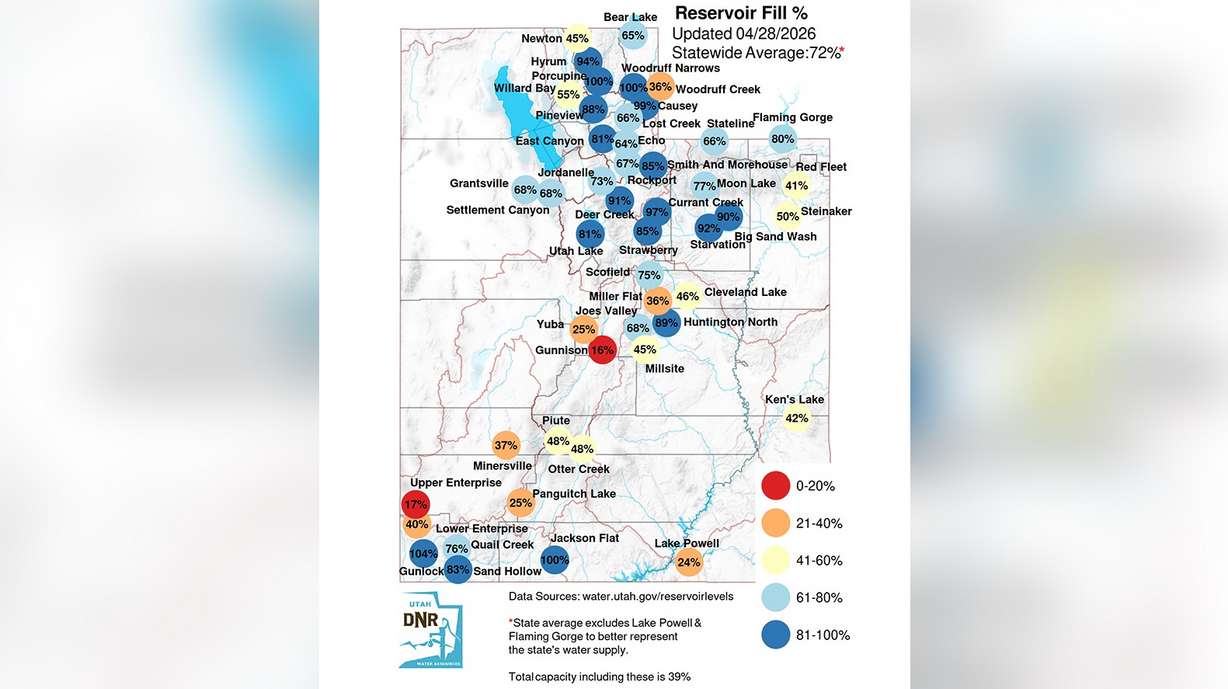
Some regions are in worse spots than others, such as the Upper Sevier and Ashley Valley basins, state officials said.
"It's tough," Ferry said.
He also believes the Great Salt Lake has peaked for the season, ahead of its annual summer slide. Its southern arm remains about 6 feet below its minimum healthy level before the seasonal drop.
We want to over-communicate. Our purpose is to educate and inform the public with this information.
–Teresa Wilhelmsen, Utah's engineer and director of the Utah Division of Water Rights
Meanwhile, the Utah Department of Agriculture and Food met with farmers and ranchers during a series of water-related meetings across the state last week. Over 100 people showed up at all five locations, and many were worried about the situation, Kelly Pehrson, the department's director, said.
Farmers and ranchers may have to haul in water, buy hay for their cattle or sell cows to make ends meet.
"There are big, big decisions that have to be made in their operations," he said, adding that the department promoted services it has to support farmers during those meetings.
Dust impacts, drier water systems, and inadequate water supply for farm animals exist during severe drought, Haskell said. Native vegetation becomes stressed, and fire danger spikes during extreme drought.
Land management agencies are preparing to crack down on fires and other conditions that can lead to wildfires, she adds.
How long will it last?
Long-range outlooks indicate stormy activity could resume in early May, but drier conditions could affect the rest of meteorological spring and early summer. Above-normal temperatures are much more likely than any precipitation trends, according to the National Weather Service Climate Prediction Center.
Some of its earliest summer outlooks hint at monsoonal moisture building up later in the season, which could improve drought conditions, but Haskell warns that it could create flooding risks if the heat dries up soil moisture by then.
The state plans to continue offering drought updates more regularly, much as it did before the record-high 2023 snowpack that lifted the state out of its last extreme drought.
"We want to over-communicate," Wilhelmsen said. "Our purpose is to educate and inform the public with this information."