'%3e%3cpath%20d='M34.1406%205.85938C30.3906%202.10547%2025.3047%200%2020%200C14.6953%200%209.60938%202.10547%205.85938%205.85938C2.10938%209.61328%200%2014.6953%200%2020C0%2025.3047%202.10547%2030.3906%205.85938%2034.1406C9.61328%2037.8906%2014.6953%2040%2020%2040C25.3047%2040%2030.3906%2037.8945%2034.1406%2034.1406C37.8906%2030.3906%2040%2025.3047%2040%2020C40%2014.6953%2037.8945%209.60938%2034.1406%205.85938ZM37.0117%2023.543H31.1602V13.5391H27.6328V19.9414C28.1211%2020.6914%2028.3711%2021.582%2028.3711%2022.5625V22.625C28.3711%2023.668%2028.1172%2024.6055%2027.6328%2025.4297V26.6094H36.082C33.4883%2032.9375%2027.2891%2037.3789%2020.0039%2037.3789C10.3711%2037.3789%202.62109%2029.6289%202.62109%2020C2.62109%2010.3711%2010.3711%202.62109%2020%202.62109C29.6289%202.62109%2037.3789%2010.3711%2037.3789%2020C37.3789%2021.1484%2037.2617%2022.2656%2037.0508%2023.3477C37.0391%2023.4141%2037.0234%2023.4766%2037.0117%2023.543Z'%20fill='white'/%3e%3cpath%20d='M22.3086%2018.5352C20.4336%2018.125%2019.9531%2017.8398%2019.9766%2017.1836V17.1406C19.9766%2016.6992%2020.3477%2016.2148%2021.4023%2016.2148C22.582%2016.2148%2023.8867%2016.6797%2025.0781%2017.4766L26.8516%2015.0195C25.4453%2013.8906%2023.707%2013.3398%2021.5547%2013.3398C18.5195%2013.3398%2016.4375%2015%2016.4063%2017.4766V17.5352C16.3633%2020.2617%2018.5859%2020.9805%2021.293%2021.6016C23.0391%2021.9766%2023.5703%2022.3164%2023.5703%2022.9609L23.5469%2022.9766C23.5469%2023.3906%2023.2578%2023.7031%2022.7852%2023.8359C22.5742%2023.9062%2022.1289%2023.9727%2021.5156%2023.9727C20.7617%2023.9727%2019.7539%2023.8633%2018.6328%2023.4844C18.0898%2023.2891%2017.4727%2023.0039%2016.8047%2022.6133L20.1406%2026.625C20.2813%2026.6602%2021.0977%2026.8516%2021.7734%2026.8516C25.0039%2026.8516%2027.0859%2025.2461%2027.1094%2022.6328V22.5703C27.1602%2020.1133%2025.2148%2019.1719%2022.3086%2018.5352Z'%20fill='white'/%3e%3cpath%20d='M5.24219%2013.5664V26.6133H8.75391V23.7578L10.2969%2021.9531L14.2031%2026.6133H18.3867L12.3555%2019.5195L17.4023%2013.5664H13.4531L8.75391%2019.0586V13.5664H5.24219Z'%20fill='white'/%3e%3c/g%3e%3cdefs%3e%3cclipPath%20id='clip0_97_2430'%3e%3crect%20width='40'%20height='40'%20fill='white'/%3e%3c/clipPath%3e%3c/defs%3e%3c/svg%3e)




- Utahn Michael McKnight set a record in the Arizona Monster 300, a 304-mile race across the Sonoran Desert, finishing in 83 hours.
- McKnight overcame multiple, serious back injuries and mental hurdles to achieve the feat.
- McKnight's journey began after breaking his back in a skiing accident, leading him to ultra running.
PATAGONIA, Arizona — When Michael McKnight crossed the finish line in the dark of night Monday after trekking 300 miles across the rugged, unforgiving and scorching landscape that is Arizona's Sonoran Desert, it was a moment of vindication.
Not only did McKnight win the Arizona Monster 300 — his first race since suffering a serious injury a year ago — he also shattered the previous speed record by nearly four hours, completing the journey in a mind-blowing three days, 10 hours and 52 minutes. Just under 83 hours, total.
"When I got into ultra running, I thought it would be cool to podium and do well and say, 'I'm good at this,' but I never intended to make a career out of it," McKnight, a Smithfield native and Utah State University graduate, told KSL.
McKnight in 2019 dominated what's called the Triple Crown of 200s — a trio of 200-mile races, run consecutively over four months (Tahoe in mid-June, Bigfoot in August, Moab in early October). Despite completing the crown in 162 hours (a record McKnight held until 2025), he still, in his own words, has struggled with bouts of imposter syndrome.
"I've kind of had a hard time the past several years accepting the praise that people give me. In the back of my head, I'm just like, 'I'm just an average Joe that's had some lucky experiences at these races,'" McKnight said.
But going into this race, McKnight took a different approach, preemptively deciding that we wasn't just going to win but set the course record in the process.
"Then I went out and made it happen," he said.
While this feat might seem like a defining victory — a momentous cherry on top of a decorated career — McKnight's journey to even compete in ultra running races is quite possibly even more impressive than his feats.
Here's how McKnight has overcome a litany of both physical and mental hurdles, going from a self-described "farm boy that has no athletic background" to a titan in the ultra running world.
'A very unconventional introduction'
McKnight hasn't always been a runner. At least not a competitive one.
After graduating, he served a two-year mission for The Church of Jesus Christ of Latter-day Saints. While on his mission, he started experiencing back issues.
His mission president encouraged him to start running as a potential alleviation to his back issues. McKnight heeded his advice, and the running did help.
But that advice wasn't the catalyst for McKnight's career in ultra running. That came through something much more serious.
In February 2012, McKnight broke his back in a skiing accident at Beaver Mountain, shattering his L1 vertebrae in a way that required a spinal fusion to fix. It could've been even worse, too.

McKnight said doctors told him that if the vertebrae had shattered away from his spinal column, he likely would've been paralyzed.
When it was all said and done, surgeons removed a part of his hip bone and inserted two rods and nine screws in his spine. Faced with a long recovery, McKnight deferred his classes for a full year and moved back with his parents.
As part of his rehab, McKnight's doctor instructed him to walk a mile every day. With the help of a walker, that's exactly what he did — for a bit, at least.
"I started to notice that I felt fine. So I'd go for a 2-mile walk, a 3-mile walk, and I was ramping up my walking miles pretty quickly, like, no more than a week after my surgery," McKnight said. "About three and a half to four weeks after my surgery, I decided just to try to go for like, a half-mile run to see how my back would feel. And it felt fine ... it didn't hurt any more than walking. So then I just started running a little more each day."
What should've been a yearlong recovery was shrunk to just four months. With nothing better to do than "just run every day," McKnight started pushing himself more and more, sometimes running 10 to 20 miles a day.
Thus, the world of ultra running opened up to McKnight, and in 2013, he signed up for his first 50-mile ultra marathon.
"It was a very unconventional introduction into it," McKnight said.
Conquering the monster
To almost anyone, a 300-mile run across the Sonoran Desert would qualify as an extreme, bordering on ludicrous, undertaking.
Beginning near Phoenix and ending in Patagonia, Arizona — less than 20 miles from the southern border — the race consists of 259.1 miles of single-track, 34 miles of bike path, 9.5 miles of paved road and 6 miles of dirt road.
This year, the already extreme terrain and distance were made more intimidating through unseasonably hot temperatures.
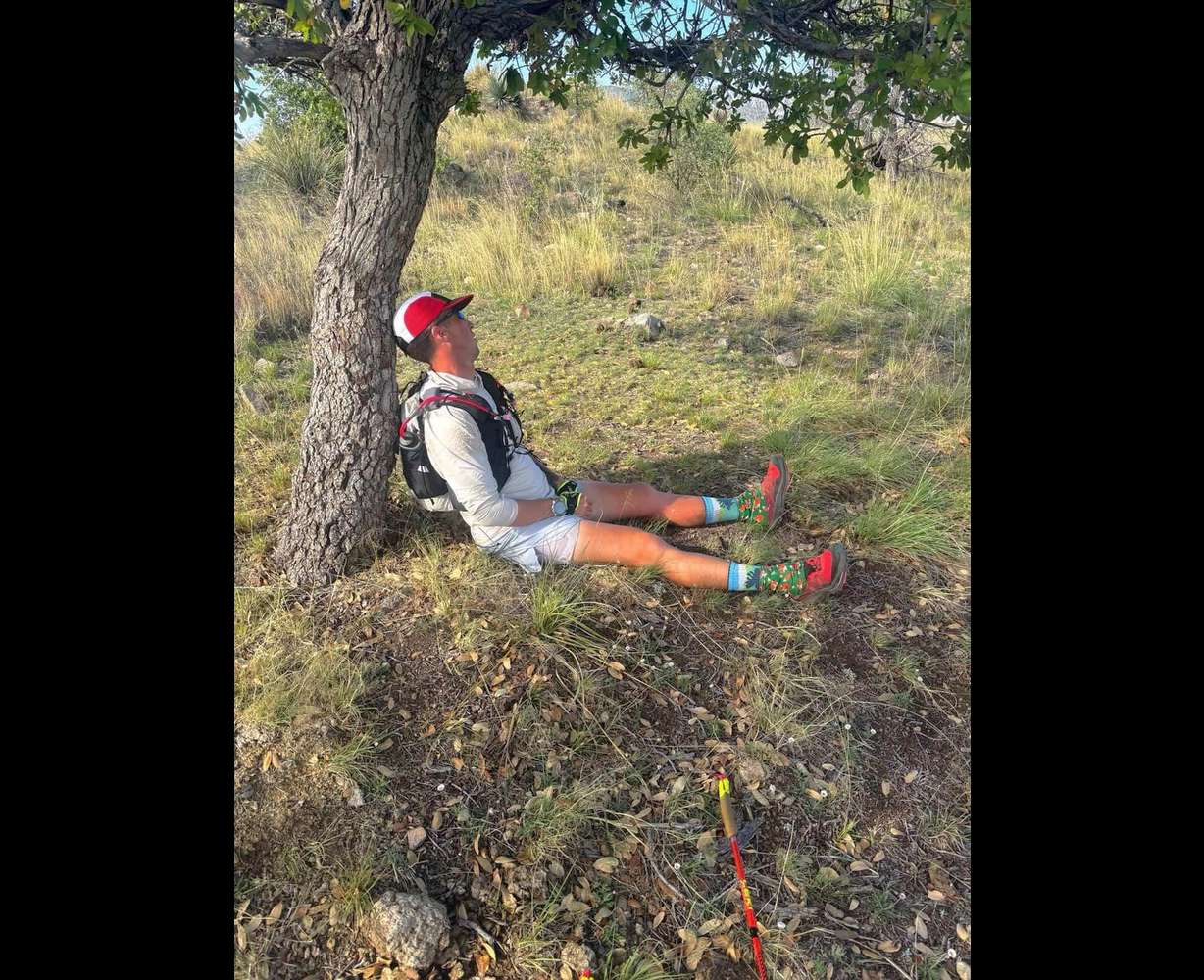
"This was the hottest race I've ever done, and there was a lot of carnage at this race. The amount of people that drop to this race, percentage-wise, is very high compared to other races," McKnight said.
Compounding that issue was the fact that aid stations — places where runners can eat, drink, sleep and generally collect themselves before continuing on — were about 18 miles apart — a long way given the steep desert terrain.
So, having already carved out a name for himself in the world of endurance sports, why was McKnight so determined to not just run the Monster 300, but win and break the record doing so?
After setting the Triple Crown of 200s record in 2016, McKnight admitted running wasn't as fun for him in the years that followed.
Last year, injury struck again when he herniated a disc in his back in what he described as "a worse experience than breaking my back."
With nerve damage, he could barely stand, let alone run. But this newfound immobility served as a reminder to McKnight of why he got into ultra running in the first place.
He also got a little competitive boost seeing another runner break his Triple Crown of 200s record in 2025.
"Seeing somebody take that from me while I was just stuck not being able to do this really hurt. So essentially, I lived last year how I told people I don't want to have to live," McKnight said. "It kind of re-lit the fire back in me."
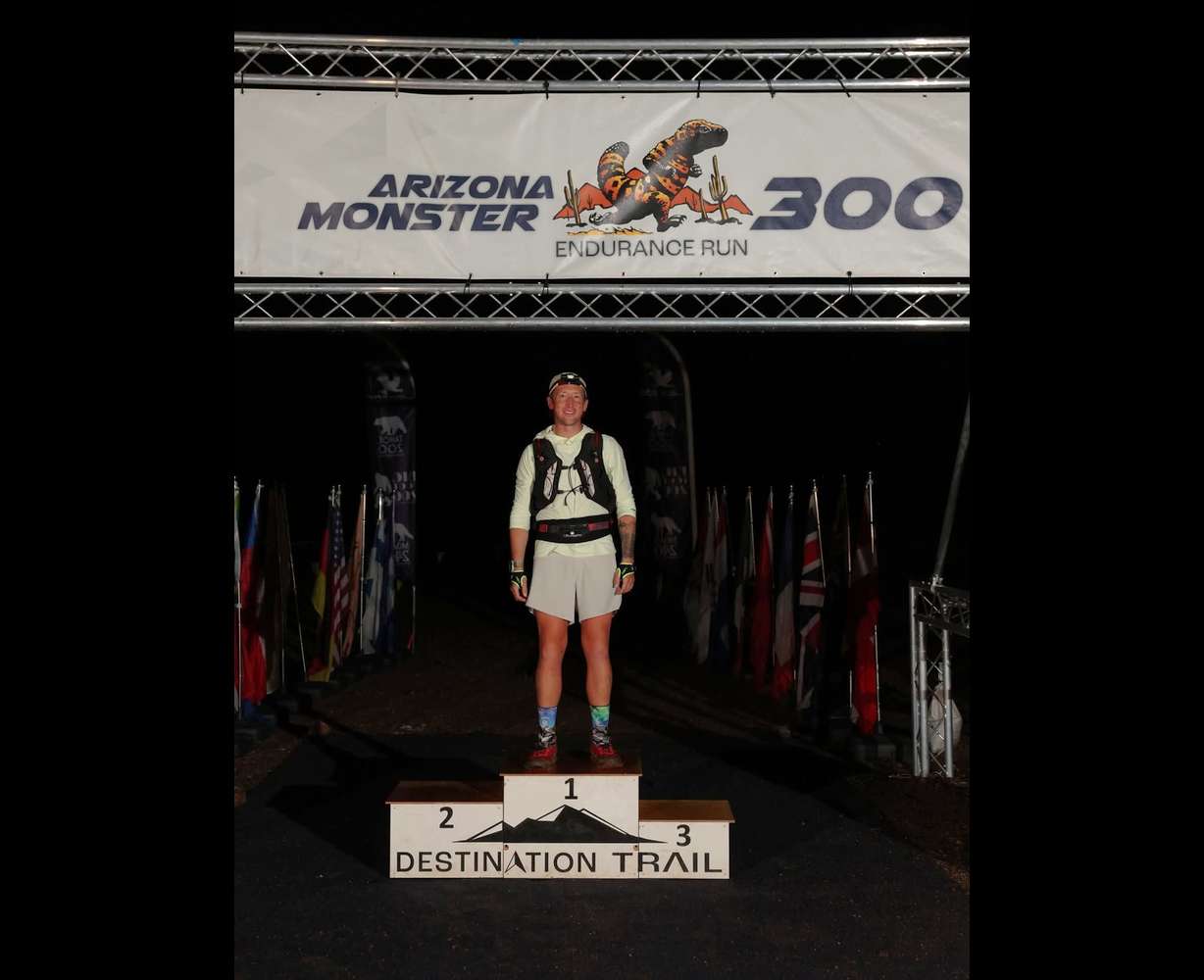
So, under the will-sucking heat of the Arizona sun and with a mindset focused not on proving something to anyone but himself, McKnight's fire burned strong for all 304 miles through the desert.
"It's essentially choosing your own suffering. Would you rather be immobile and inactive and wishing that you could be out exploring ... or would you rather be out at mile 220 with some blisters on your feet?"
For McKnight, the answer to that question couldn't be simpler.
And no matter what's next for him, it won't happen under the shadow of impostor syndrome.
"I think I'm good now. Especially after this race," McKnight said. "It's just a reminder to me of what I can do if I want to do it."