'%3e%3cpath%20d='M34.1406%205.85938C30.3906%202.10547%2025.3047%200%2020%200C14.6953%200%209.60938%202.10547%205.85938%205.85938C2.10938%209.61328%200%2014.6953%200%2020C0%2025.3047%202.10547%2030.3906%205.85938%2034.1406C9.61328%2037.8906%2014.6953%2040%2020%2040C25.3047%2040%2030.3906%2037.8945%2034.1406%2034.1406C37.8906%2030.3906%2040%2025.3047%2040%2020C40%2014.6953%2037.8945%209.60938%2034.1406%205.85938ZM37.0117%2023.543H31.1602V13.5391H27.6328V19.9414C28.1211%2020.6914%2028.3711%2021.582%2028.3711%2022.5625V22.625C28.3711%2023.668%2028.1172%2024.6055%2027.6328%2025.4297V26.6094H36.082C33.4883%2032.9375%2027.2891%2037.3789%2020.0039%2037.3789C10.3711%2037.3789%202.62109%2029.6289%202.62109%2020C2.62109%2010.3711%2010.3711%202.62109%2020%202.62109C29.6289%202.62109%2037.3789%2010.3711%2037.3789%2020C37.3789%2021.1484%2037.2617%2022.2656%2037.0508%2023.3477C37.0391%2023.4141%2037.0234%2023.4766%2037.0117%2023.543Z'%20fill='white'/%3e%3cpath%20d='M22.3086%2018.5352C20.4336%2018.125%2019.9531%2017.8398%2019.9766%2017.1836V17.1406C19.9766%2016.6992%2020.3477%2016.2148%2021.4023%2016.2148C22.582%2016.2148%2023.8867%2016.6797%2025.0781%2017.4766L26.8516%2015.0195C25.4453%2013.8906%2023.707%2013.3398%2021.5547%2013.3398C18.5195%2013.3398%2016.4375%2015%2016.4063%2017.4766V17.5352C16.3633%2020.2617%2018.5859%2020.9805%2021.293%2021.6016C23.0391%2021.9766%2023.5703%2022.3164%2023.5703%2022.9609L23.5469%2022.9766C23.5469%2023.3906%2023.2578%2023.7031%2022.7852%2023.8359C22.5742%2023.9062%2022.1289%2023.9727%2021.5156%2023.9727C20.7617%2023.9727%2019.7539%2023.8633%2018.6328%2023.4844C18.0898%2023.2891%2017.4727%2023.0039%2016.8047%2022.6133L20.1406%2026.625C20.2813%2026.6602%2021.0977%2026.8516%2021.7734%2026.8516C25.0039%2026.8516%2027.0859%2025.2461%2027.1094%2022.6328V22.5703C27.1602%2020.1133%2025.2148%2019.1719%2022.3086%2018.5352Z'%20fill='white'/%3e%3cpath%20d='M5.24219%2013.5664V26.6133H8.75391V23.7578L10.2969%2021.9531L14.2031%2026.6133H18.3867L12.3555%2019.5195L17.4023%2013.5664H13.4531L8.75391%2019.0586V13.5664H5.24219Z'%20fill='white'/%3e%3c/g%3e%3cdefs%3e%3cclipPath%20id='clip0_97_2430'%3e%3crect%20width='40'%20height='40'%20fill='white'/%3e%3c/clipPath%3e%3c/defs%3e%3c/svg%3e)




- Gov. Spencer Cox urges Utahns to prioritize wildfire safety ahead of Memorial Day and summer.
- Record-low snowpack has heightened fire risks, with 158 wildfires reported this year.
- Most fires are human-caused; officials stress caution as fire season usually intensifies in June.
SOUTH SALT LAKE — Basil Newmerzhysky was concerned when he heard about a wildfire that broke out in the Uintah Mountains two months ago.
It wasn't large, but a fire at an elevation above 7,000 feet was almost unheard of because the area is typically buried under several feet of snow in March. It was, as he put it, "a canary in the coalmine."
"They had a fire of several dozen acres burning through the heavy timber, and that's when we knew that all the concerns that we have with the middle- to high-elevations in this drought situation are going to be realized this coming fire season," said Newmerzhycky, a fire meteorologist for the Great Basin Coordination Center.
Utah's fire risks are usually the highest during the summer holiday season, prompting messaging about firework safety then. However, state and federal officials warn that vegetation is rapidly drying because of this year's record-low snowpack, and that's causing similar fire risks ahead of Memorial Day.
There have already been 158 wildfires that have scorched more than 8,000 acres across Utah this year. The number of fires is about the same as this time last year, but the acreage is more than seven times higher.
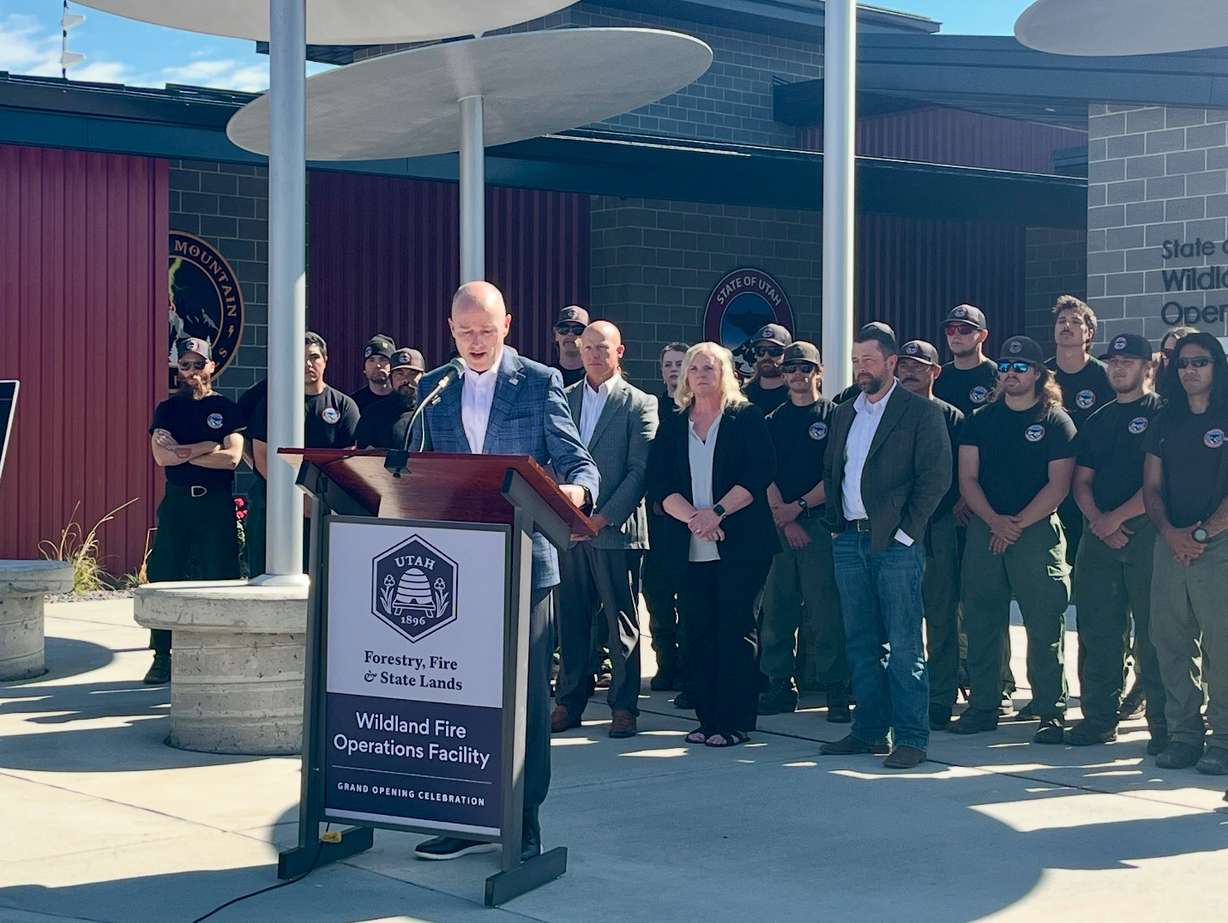
"We desperately need every Utahn, every visitor to be thinking about wildfire safety. Normally, we start thinking about this stuff around the Fourth of July; I need you thinking about this stuff around the 20th of May this year," said Gov. Spencer Cox, as he stood in front of a group of wildland firefighters outside of the state's new wildland fire operations center on Wednesday.
Most of this year's land damage comes from last week's Wild Horse Fire in Millard County, which was abnormally large for May. It ultimately burned a little more than 7,000 acres before it was fully contained this week, according to the U.S. Forest Service.
While some were sparked by lightning, 84% have started from human causes, according to state and federal firefighters. This includes the Goshen Canyon Fire in Utah County, a fire that broke out after target shooting last month, which eventually burned over 400 acres.
This week's storms, which brought late-season snow, have helped some, but Utah's snowpack ticket was "punched a long time ago," meaning they didn't do much to improve water conditions or reduce fire risks, Newmerzhysky explained.
Federal fire forecasters believe most of Utah will face above-normal fire risk in June and July, while there's still uncertainty over the summer monsoon season. Long-range models suggest it could be a good monsoon season, but a projected El Niño oceanic pattern could delay its arrival until late July or August.
Lower moisture helped reduce some grass growth, especially in central and southern Utah, which helps avoid lower-elevation fires, but there are new concerns over middle-elevation areas that didn't receive snow this year, he said. These are areas with trees and brush that may have dried out after good snowpack years since 2023, creating "carryover fuels."
Any day with warm, dry conditions will likely increase fire risk, which is why state leaders and fire experts urge people to use caution.
Utah fire sense tips
- Check fire restrictions ahead of starting a campfire or doing any other activity that could spark a fire. It's also important to check for red flag warnings.
- Keep all fires to a manageable size. Never leave a fire unattended, and always have enough water available when extinguishing a campfire. Do not burn on windy days, and make sure you have tools to suppress a fire or communication ready before burning something.
- Use the "drown, stir and feel" method when putting out a campfire.
- Make sure there aren't any chains dragging on your vehicle and that your brakes and other vehicle parts are properly maintained.
- Never park on or drive over dry vegetation.
- Only target shoot in areas where it is allowed. Use an appropriate backdrop away from rocks or vegetation. Bring a shovel and water or a fire extinguisher with you when shooting outdoors.
- Exploding targets are not allowed on any public lands. Fireworks are also prohibited on all public lands, and are only permitted in some areas at times in July to celebrate the Fourth of July and Pioneer Day.
- More tips can be found at utahfiresense.org.
Cox issued an emergency declaration ahead of the season last year, which hasn't happened thus far. It's something that will "very likely" happen at some point, though, he said. Such a measure would last 30 days unless extended by the Utah Legislature.
State lawmakers will likely "respond appropriately" depending on how the season plays out, said House Majority Leader Casey Snider, R-Paradise.
Last year's fire season, which was the state's worst in five years, cost more than $190 million to fight across all agencies.
An equally hectic season this year would likely be more expensive, thanks to higher fuel costs, the governor said. Utah has a fire savings account of over $120 million that helps it pay its portion of fire suppression, as well as mitigation projects.
That's money the state would like to avoid spending, while also protecting its firefighters and iconic landscapes.
"We ask that you use extreme caution when recreating or engaging in any activity that can produce a spark," Cox said. "As temperatures rise and more people head outdoors, your awareness really is the best line of defense."