- Fireworks have been a July 4 tradition for over two centuries.
- Gov. Spencer Cox signed an order allowing Utah cities to restrict personal fireworks this holiday weekend.
- The order is the latest chapter in the history between July 4, fireworks and Utah.
SALT LAKE CITY — Gov. Spencer Cox knew that his latest order, one that strengthened personal firework prohibitions across the state for the Fourth of July weekend, would ruffle feathers as he announced it last week.
"I love fireworks, guys, more than just about anything. I turn into a kid again every Fourth of July," he said.
His order didn't stop many professional shows planned for the holiday, and it did carve room for communities to allow them, as he said he tried to find the right balance between tradition and public safety. In terms of acres burned, this year has already become the state's worst fire year since 2018.
It's resulted in some political clashes over the order, especially as the U.S. gears up for a major anniversary.
"We understand why. Independence Day traditions mean a great deal to many families, and we recognize the disappointment many are feeling," the Tremonton Fire Department wrote in a Facebook post on Friday, as it explained its decision to join the state's order.
But how did fireworks become such a passionate symbol of the country's birthday?
The origin of July 4 fireworks
Two hundred and fifty years ago on Saturday, the 13 U.S. colonies formally adopted the Declaration of Independence, paving the way for a new country.
The date July 4 soon became associated with the new nation's birth date, although it wasn't one that at least one of the founding fathers had in mind.
John Adams, who went on to become the nation's second president, wrote to his wife that he imagined July 2, the day the Continental Congress approved Virginia delegate Richard Henry Lee's call for independence, "will be the most memorable Epocha, in the History of America," per the July 3, 1776, letter that the Massachusetts Historical Society posted online.
He also wrote that the day "ought to be solemnized with pomp and parade, with shews, games, sports, guns, bells, bonfires and illuminations from one end of this continent to the other from this time forward forever more."
He went one for two on his predictions.
While the Revolutionary War carried on, Philadelphia held its inaugural commemoration of the Continental Congress's decision to approve the Declaration of Independence on July 4, 1777, as did the Sons of Liberty in Boston, as noted by History.com. Both celebrations, the outlet wrote, included fireworks.
"The evening was closed with the ringing of bells, and at night there was a grand exhibition of fireworks (which began and concluded with thirteen rockets) on the Commons, and the city was beautifully illuminated," the Pennsylvania Evening Post wrote in its recap of the celebration. "Everything was conducted with the greatest order and decorum, and the face of joy and gladness was universal."
With that, a tradition was born, although more widespread celebrations wouldn't become more common until after the War of 1812, History.com added. It adds that July 4 ultimately became a holiday in the nation's capital in 1870, after the Civil War, and didn't become an official federal holiday until 1938.
July 4 fireworks in Utah
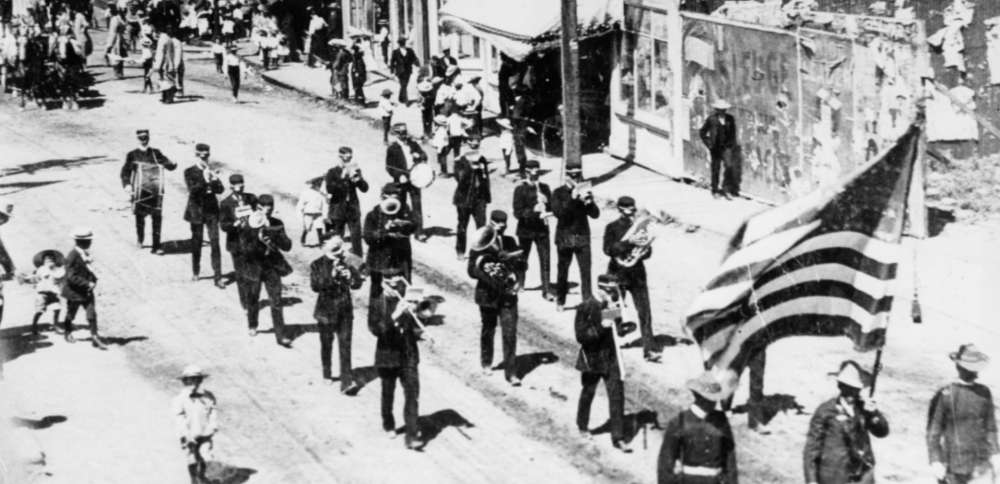
The anniversary has been celebrated in Utah since at least 1852, two years after the state became a territory, according to Deseret News archives. The day featured flags, speeches, cannons and music, but there's no mention of fireworks, per the newspaper's coverage of Salt Lake City festivities at the time.
Fireworks were not "readily available" throughout most of the 1840s and 1850s, which is why cannons and guns were more common in the first celebrations, state historians point out. Most mentions of fireworks in newspapers of the time refer to local celestial events, like the northern lights or meteor sightings, that looked like fireworks.
One newspaper of the era wrote about a "grand display of fireworks" that was included during an 1859 celebration of the Fourth of July in Utah, which appears to be the earliest mention associated with the holiday.
Fireworks only grew after the transcontinental railroad was completed in 1869, state historians explained. Utahns eventually adopted them as a "focal point of many holiday gatherings," they wrote.
This year's fireworks debate isn't new, either.
In 1893, amid growing firework accidents, a frustrated Utahn wrote an op-ed griping that lighting fireworks was "a practice for which no good can be said," the Utah Historic Society also pointed out. Others wrote about concerns over fires over a century ago, too.
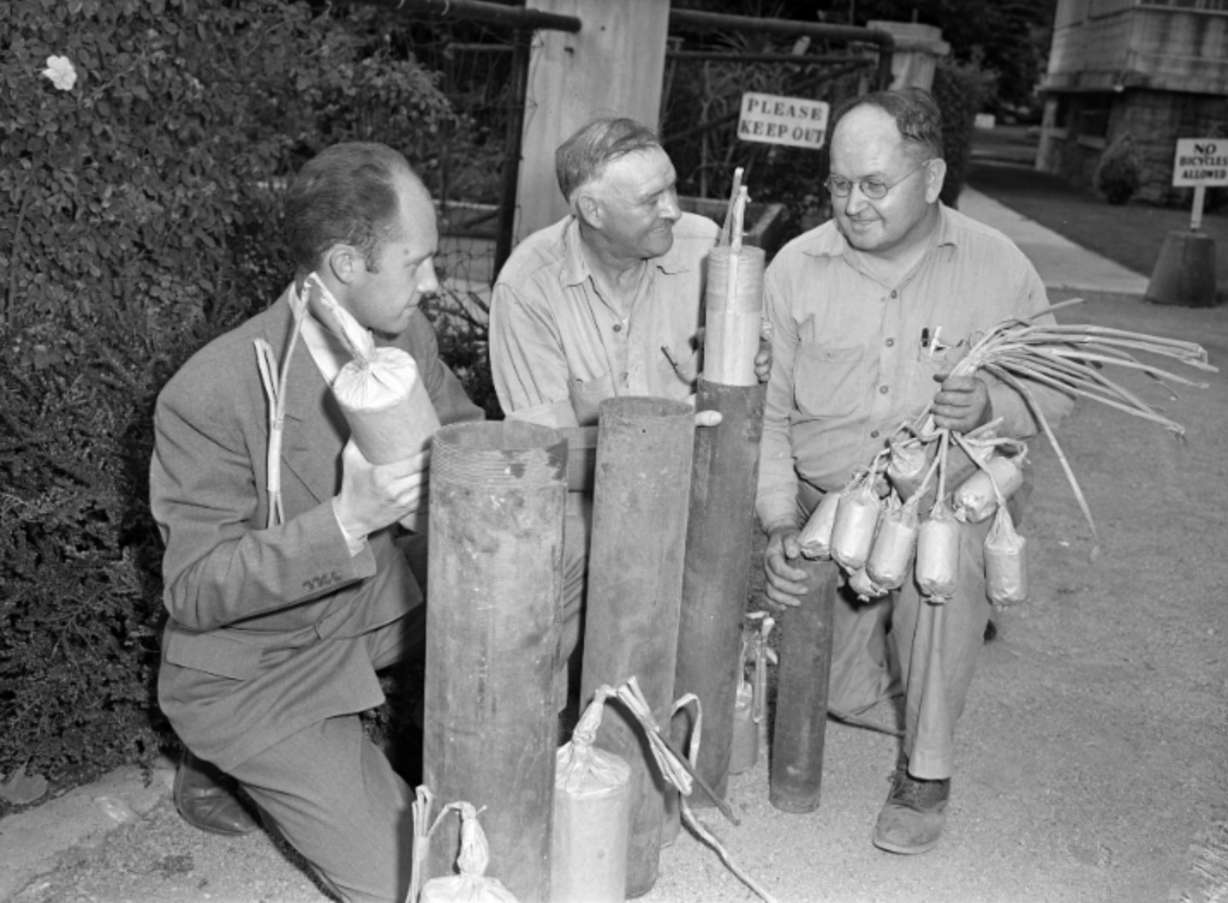
Laws to regulate fireworks have been implemented over time over these types of concerns. Personal fireworks were technically banned under a 1939 state law that allowed public fireworks shows by approved organizations, but it largely went unenforced, state historians wrote.
Personal fireworks were legalized in the 1980s, but the state has tweaked the law over time. Leaders narrowed its summer fireworks window to July 2-5 for the Fourth of July, and July 22-25 for Pioneer Day in 2018, while allowing cities to ban them in hazardous areas.
Cox's order extended this ban to cities if they wanted to this year because of the fire danger. It and arguments over fireworks this holiday weekend are just the latest chapter of a long history between the Fourth of July, fireworks and Utah.