'%3e%3cpath%20d='M34.1406%205.85938C30.3906%202.10547%2025.3047%200%2020%200C14.6953%200%209.60938%202.10547%205.85938%205.85938C2.10938%209.61328%200%2014.6953%200%2020C0%2025.3047%202.10547%2030.3906%205.85938%2034.1406C9.61328%2037.8906%2014.6953%2040%2020%2040C25.3047%2040%2030.3906%2037.8945%2034.1406%2034.1406C37.8906%2030.3906%2040%2025.3047%2040%2020C40%2014.6953%2037.8945%209.60938%2034.1406%205.85938ZM37.0117%2023.543H31.1602V13.5391H27.6328V19.9414C28.1211%2020.6914%2028.3711%2021.582%2028.3711%2022.5625V22.625C28.3711%2023.668%2028.1172%2024.6055%2027.6328%2025.4297V26.6094H36.082C33.4883%2032.9375%2027.2891%2037.3789%2020.0039%2037.3789C10.3711%2037.3789%202.62109%2029.6289%202.62109%2020C2.62109%2010.3711%2010.3711%202.62109%2020%202.62109C29.6289%202.62109%2037.3789%2010.3711%2037.3789%2020C37.3789%2021.1484%2037.2617%2022.2656%2037.0508%2023.3477C37.0391%2023.4141%2037.0234%2023.4766%2037.0117%2023.543Z'%20fill='white'/%3e%3cpath%20d='M22.3086%2018.5352C20.4336%2018.125%2019.9531%2017.8398%2019.9766%2017.1836V17.1406C19.9766%2016.6992%2020.3477%2016.2148%2021.4023%2016.2148C22.582%2016.2148%2023.8867%2016.6797%2025.0781%2017.4766L26.8516%2015.0195C25.4453%2013.8906%2023.707%2013.3398%2021.5547%2013.3398C18.5195%2013.3398%2016.4375%2015%2016.4063%2017.4766V17.5352C16.3633%2020.2617%2018.5859%2020.9805%2021.293%2021.6016C23.0391%2021.9766%2023.5703%2022.3164%2023.5703%2022.9609L23.5469%2022.9766C23.5469%2023.3906%2023.2578%2023.7031%2022.7852%2023.8359C22.5742%2023.9062%2022.1289%2023.9727%2021.5156%2023.9727C20.7617%2023.9727%2019.7539%2023.8633%2018.6328%2023.4844C18.0898%2023.2891%2017.4727%2023.0039%2016.8047%2022.6133L20.1406%2026.625C20.2813%2026.6602%2021.0977%2026.8516%2021.7734%2026.8516C25.0039%2026.8516%2027.0859%2025.2461%2027.1094%2022.6328V22.5703C27.1602%2020.1133%2025.2148%2019.1719%2022.3086%2018.5352Z'%20fill='white'/%3e%3cpath%20d='M5.24219%2013.5664V26.6133H8.75391V23.7578L10.2969%2021.9531L14.2031%2026.6133H18.3867L12.3555%2019.5195L17.4023%2013.5664H13.4531L8.75391%2019.0586V13.5664H5.24219Z'%20fill='white'/%3e%3c/g%3e%3cdefs%3e%3cclipPath%20id='clip0_97_2430'%3e%3crect%20width='40'%20height='40'%20fill='white'/%3e%3c/clipPath%3e%3c/defs%3e%3c/svg%3e)



- National Audubon Society stresses the importance of protecting Great Salt Lake's wetlands for migratory birds.
- Its new report highlights conservation priorities and opportunity areas in and around the lake.
- Report seeks to offer advice for various groups, including state and federal leaders.
Editor's note: This article is published through the Great Salt Lake Collaborative, a solutions journalism initiative that partners news, education and media organizations to help inform people about the plight of the Great Salt Lake.
SALT LAKE CITY — As the Great Salt Lake continues to linger near record-low levels yet again, a team of national researchers has identified areas of ongoing priority and opportunity to ensure that a vital stop for millions of migratory birds isn't lost.
The National Audubon Society recently unveiled its Great Salt Lake Birds and Habitat Assessment, which aims to offer a guide as to where conservation efforts will best be served in the future, said Marcelle Shoop, director of Audubon's Saline Lakes Program.
"The future of Great Salt Lake and its wetlands is intertwined with the decisions we make in the surrounding watershed," she said in a statement after the report was released on June 30. "(It) makes clear that protecting how water moves to the lake and its wetlands is essential for the future of Great Salt Lake and our communities."
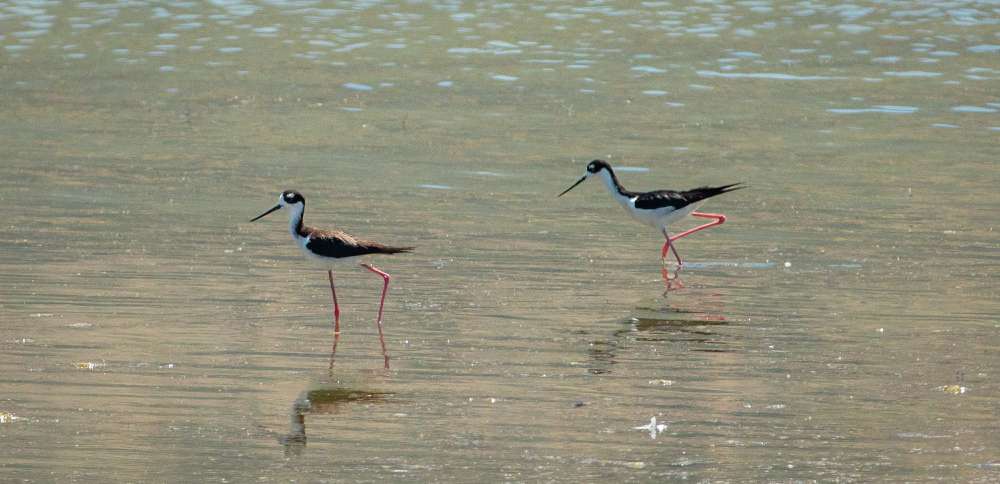
Approximately 12 million migratory birds rely on the lake annually, but it's become harder for them to do so as the lake level drops. Its southern arm, where its tributaries flow into it, hovered just above 4,191 feet on Thursday, about half a foot above its northern arm. That's just 2 to 2½ feet above its all-time low set in 2022.
Despite its low levels, its southern arm's salinity levels are listed at 12.3%, well within the range that's healthy for the ecosystem, according to Grow the Flow, a conservation group led by research ecologists.
That's been a silver lining amid the lake's decline. Researchers said salinity levels reached as high as 18% in 2022, affecting the brine flies that the birds consume and putting the lake's ecosystem on the brink of collapse.
Protecting the lake's southern arm, as well as its existing wetland complexes, like state, federal and privately managed refuges and management areas, are important moving forward, Audubon's new assessment finds. Those areas are highlighted as ongoing priorities.
It underscores that the hydrologic connectivity of the lake and its wetlands is critical to habitat conservation. It notes that different habitat types are needed throughout its watershed since species that rely on the lake have different needs. Wilson's phalarope, for instance, need open water areas, while white-faced ibis prefer freshwater sources and deep-water zones from nearby wetlands.
The report also outlines "key potential sites" for new conservation, through restoration or incentivizing voluntary preservation of key habitat areas near the lake. Many of the opportunity zones are located throughout its watershed, with a large emphasis on the Utah Lake area.
Utah Lake, which connects with the Great Salt Lake via the Jordan River, has struggled with various water quality issues that limit its ecological function even as birds use the area, researchers wrote, but they see it as a solvable problem.
"Its long-term value is restorable, and the model's future projections reflect that habitat could be enhanced now, making conditions more suitable amid climatic changes," they wrote.
National Audubon Society officials say they hope the report can be used in decisions over the lake, whether from the state, federal or local level, or various other entities across the sectors.
The goal, they said, is to maximize the positive impacts for decisions that could impact bird habitats. It's an extra tool for solving similar challenges along the Pacific Flyway, the route migratory birds use to travel north and south every year.
Kelly Pehrson, commissioner of the Utah Department of Agriculture and Food, said he sees its value, believing farmers in the Great Salt Lake Basin could use it to help out.
"The assessment highlights the important role that agricultural lands can play in water flows for wetlands and habitat, which are important factors to be considered in conservation and planning," he said.