'%3e%3cpath%20d='M34.1406%205.85938C30.3906%202.10547%2025.3047%200%2020%200C14.6953%200%209.60938%202.10547%205.85938%205.85938C2.10938%209.61328%200%2014.6953%200%2020C0%2025.3047%202.10547%2030.3906%205.85938%2034.1406C9.61328%2037.8906%2014.6953%2040%2020%2040C25.3047%2040%2030.3906%2037.8945%2034.1406%2034.1406C37.8906%2030.3906%2040%2025.3047%2040%2020C40%2014.6953%2037.8945%209.60938%2034.1406%205.85938ZM37.0117%2023.543H31.1602V13.5391H27.6328V19.9414C28.1211%2020.6914%2028.3711%2021.582%2028.3711%2022.5625V22.625C28.3711%2023.668%2028.1172%2024.6055%2027.6328%2025.4297V26.6094H36.082C33.4883%2032.9375%2027.2891%2037.3789%2020.0039%2037.3789C10.3711%2037.3789%202.62109%2029.6289%202.62109%2020C2.62109%2010.3711%2010.3711%202.62109%2020%202.62109C29.6289%202.62109%2037.3789%2010.3711%2037.3789%2020C37.3789%2021.1484%2037.2617%2022.2656%2037.0508%2023.3477C37.0391%2023.4141%2037.0234%2023.4766%2037.0117%2023.543Z'%20fill='white'/%3e%3cpath%20d='M22.3086%2018.5352C20.4336%2018.125%2019.9531%2017.8398%2019.9766%2017.1836V17.1406C19.9766%2016.6992%2020.3477%2016.2148%2021.4023%2016.2148C22.582%2016.2148%2023.8867%2016.6797%2025.0781%2017.4766L26.8516%2015.0195C25.4453%2013.8906%2023.707%2013.3398%2021.5547%2013.3398C18.5195%2013.3398%2016.4375%2015%2016.4063%2017.4766V17.5352C16.3633%2020.2617%2018.5859%2020.9805%2021.293%2021.6016C23.0391%2021.9766%2023.5703%2022.3164%2023.5703%2022.9609L23.5469%2022.9766C23.5469%2023.3906%2023.2578%2023.7031%2022.7852%2023.8359C22.5742%2023.9062%2022.1289%2023.9727%2021.5156%2023.9727C20.7617%2023.9727%2019.7539%2023.8633%2018.6328%2023.4844C18.0898%2023.2891%2017.4727%2023.0039%2016.8047%2022.6133L20.1406%2026.625C20.2813%2026.6602%2021.0977%2026.8516%2021.7734%2026.8516C25.0039%2026.8516%2027.0859%2025.2461%2027.1094%2022.6328V22.5703C27.1602%2020.1133%2025.2148%2019.1719%2022.3086%2018.5352Z'%20fill='white'/%3e%3cpath%20d='M5.24219%2013.5664V26.6133H8.75391V23.7578L10.2969%2021.9531L14.2031%2026.6133H18.3867L12.3555%2019.5195L17.4023%2013.5664H13.4531L8.75391%2019.0586V13.5664H5.24219Z'%20fill='white'/%3e%3c/g%3e%3cdefs%3e%3cclipPath%20id='clip0_97_2430'%3e%3crect%20width='40'%20height='40'%20fill='white'/%3e%3c/clipPath%3e%3c/defs%3e%3c/svg%3e)



- Seventy percent of Salt Lake County residents express concern about the Great Salt Lake.
- Hispanic/Latino and Pacific Islanders show 10% more concern than white residents, the study found.
- It also found that women and young residents are more concerned about the lake's decline.
Editor's note: This article is published through the Great Salt Lake Collaborative, a solutions journalism initiative that partners news, education and media organizations to help inform people about the plight of the Great Salt Lake.
SALT LAKE CITY — Over two-thirds of Salt Lake County residents say they are concerned about the shrinking Great Salt Lake as it continues to fall this summer.
However, that concern seems to carry across different backgrounds and personal experiences to differing degrees, according to a new University of Utah research that explored perceptions of the health, economic and environmental impacts of the lake.
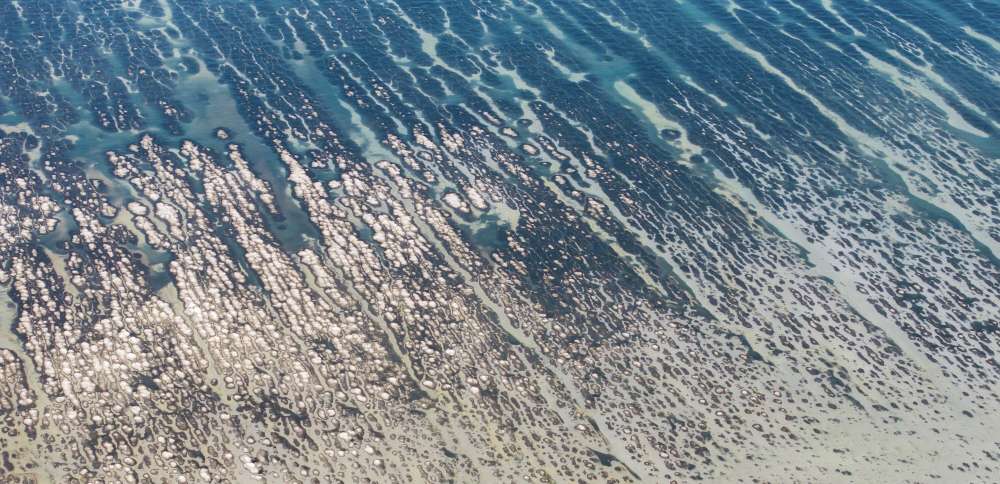
Great Salt Lake's southern arm, which touches Salt Lake County, has fallen back to 4,191 feet elevation, approximately 1½ feet below its peak this spring. Its northern arm was 0.3 feet below the southern arm on Friday.
That's only 2½ feet above its lowest point on record, set in 2022. All of this has led to more dust being picked up from the dried lakebed when there are wind events, like Friday's strong winds.
Sara Grineski, a professor in the Department of Sociology and Criminology at the University of Utah, led the study and poll, which explored how residents with different backgrounds and personal experiences with the lake viewed the lake's decline and its different impacts. These include more dust events, economic impacts on farmers, lost lake recreation, threats to the lake's vital ecosystem and loss of regional identity.
Nearly 70% of 515 residents surveyed said they were concerned about the lake's decline, with all respondents less concerned about lost lake-related recreation (48%) and loss of regional identity (55%) than lost animal habitats (77%) and dust emissions (73%).
It also found that Hispanic/Latino and Pacific Islanders had 10% greater concerns about the lake than white residents. Both groups were also more concerned about the loss of animal habitats and regional identity, as well as impacts on recreation and impacts for future generations.
The study also found that women were 16% more likely than men to be concerned about the lake, which followed previous research that showed women are more likely to perceive environmental risks as more serious than men, researchers said.
Young residents were also more likely to be concerned than older ones, the study found. The number of residents 30 and younger concerned about the lake's decline was 14% higher than that of residents between 31 and 64.
Foreign-born residents were more likely to be concerned about quality of life, while those who either kept up on the lake's status through the news or visited the lake over the past year were slightly more concerned than those who hadn't tracked it that much, by 7%.
The researchers were somewhat surprised by the findings, expecting that dust issues would be the top concern. They were also surprised that a person's proximity to the lake didn't necessarily affect their opinion on dust, but they believe it could be because it's one of multiple environmental concerns some deal with.
"Areas with higher dust exposure in the northwestern portion of the country also have higher chronic air pollution from more visible sources like industry and traffic, which they may be more concerned about than episodic dust from the lake," said Tim Collins, professor at the university's School of Environment, Society and Sustainability, and one of the study's co-authors.
The team's findings were published in Sage Journals on May 31. Grineski said the patterns could help create a more effective way to address policies tied to the lake.
"Social movement leaders and policymakers can use the issues that most resonate with locals as a frame to catalyze action, with the aim of building momentum and support for policies that would raise the lake's water levels and better sustain quality of life in the region," she said.