Estimated read time: 2-3 minutes
This archived news story is available only for your personal, non-commercial use. Information in the story may be outdated or superseded by additional information. Reading or replaying the story in its archived form does not constitute a republication of the story.
PROVO — No one plans to start life in the neonatal intensive care unit, and even more so when English is not their native language.
That's the situation Martin Fernandez found himself in.
Now, nearly three decades later, he's back at the NICU.
Fernandez and his new bride, Gabriela, had moved from Argentina to Provo for college when they soon learned they were expecting.
"When we found out my wife was pregnant, she started getting sick," Fernandez said.
All of the local OB-GYNs were booked for months, so Fernandez found a doctor in Delta who could see his wife that very day.
Their doctor discovered high blood pressure, making the pregnancy difficult. Fernandez and his wife were given an ultimatum: save their baby or save Gabriela.
At 31 weeks, Gabriela had a cesarean section, and their newborn needed intensive care.
Baby Thomas was Life-Flighted to Provo while Gabriela recovered in Delta. Fernandez drove the nearly 100 miles between the two almost every day for a month.
There were no phone lines, and Fernandez couldn't speak English fluently, so doctors found a way to share Thomas's progress: using Polaroids.
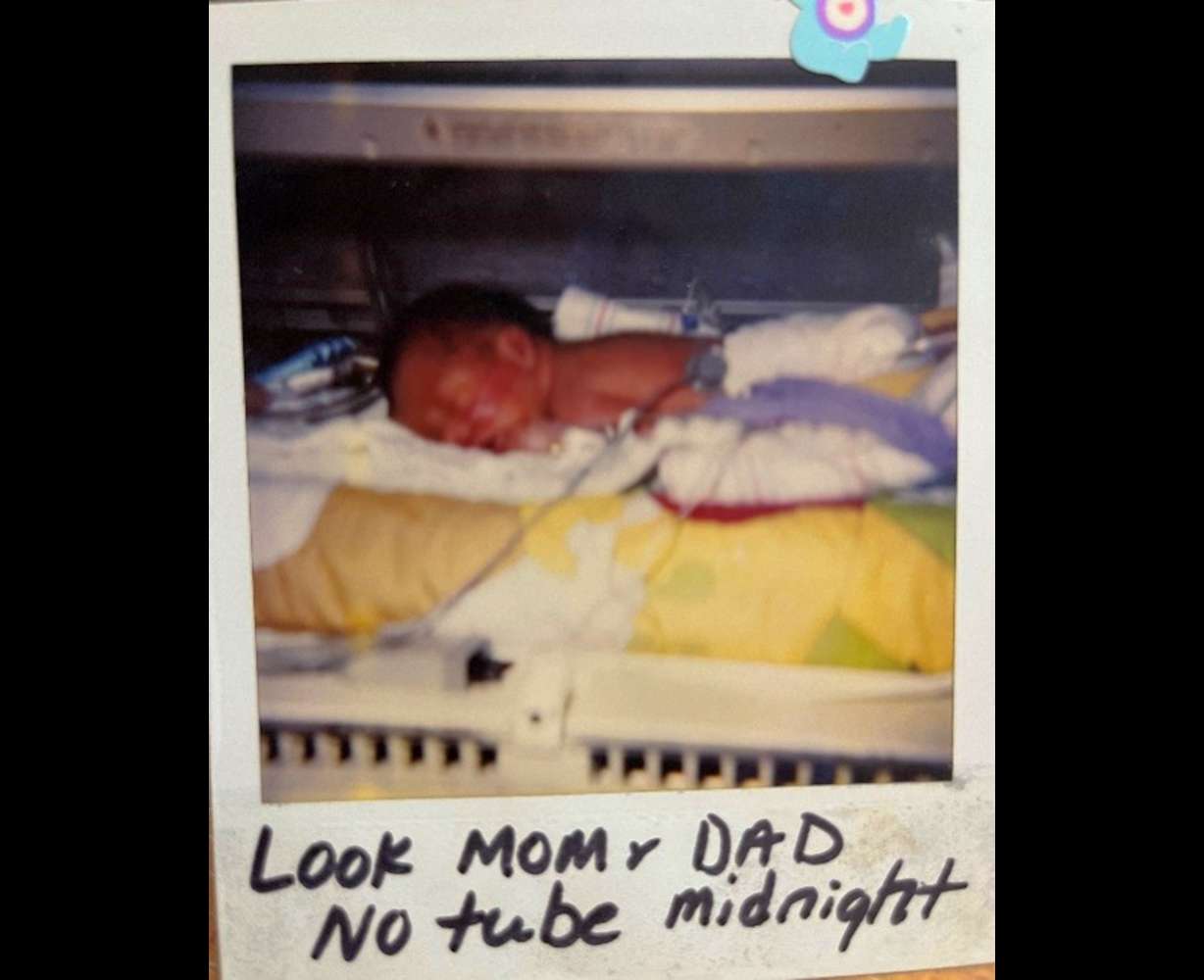
"These beautiful doctors, nurses and medical assistants kept sending us Polaroids," Fernandez said. "That was the way to communicate baby's improvements."
Wendy Robinson was one of those nurses.
"We would try to capture good things like when we take the breathing tube out," Robinson said. "Things like that, and tried to give baby extra love and attention."
Robinson has been a NICU nurse for most of her nearly three decades of work.
When she first started, there were no translators or interpreters.
"It's hard. Sometimes all you can do is cry with people and smile at them," said Robinson. "You motion and try to share that things are good, and that it's OK to touch a baby and connect with them."
For Fernandez, it was overwhelming becoming a new father, trying to take care of Gabriela and Thomas while not fully understanding what doctors were telling him.
"We tried to tell nurses and doctor our thoughts, but we were not able to find the proper words," Fernandez said. "So many times, we didn't tell them what we thought or what we want because of a barrier in the language."
That was 27 years ago, and now Fernandez finds himself back in the NICU – this time, so he can help.
"My experience here motivated me," said Fernandez.
Following his family's recovery, Fernandez studied to become a medical interpreter and translator.
In November of 2022, Fernandez was hired by Intermountain Health and assigned a shift at the NICU in Provo.
"When I first saw Wendy, I asked her, were you here in April 1996?" said Fernandez.
Robinson confirmed that she was not only the nurse who took Polaroid updates for Fernadez's son, she was one of the nurses who saved his life.
"It's kind of miracle, a full circle story being closed," said Fernandez.