
Estimated read time: 2-3 minutes
This archived news story is available only for your personal, non-commercial use. Information in the story may be outdated or superseded by additional information. Reading or replaying the story in its archived form does not constitute a republication of the story.
SALT LAKE CITY — Blankets, shoes, suitcases, bicycles, car parts, camping gear, furniture, propane tanks, tires, shopping carts, needles — even an unopened loaf of bread.
These are a small sampling of the everyday items strewn about in a series of homeless camps located in the foothills north of the state Capitol, a short distance off Victory Road on the way out of Salt Lake City.
"Anything you can imagine is here," Salt Lake police detective Greg Wilking said.
Law enforcement and health officials say the unkempt campsites are a public safety hazard. On Thursday, several agencies coordinated a massive cleanup of the area, hauling away more than 160,000 pounds of litter by about noon, officials estimated.
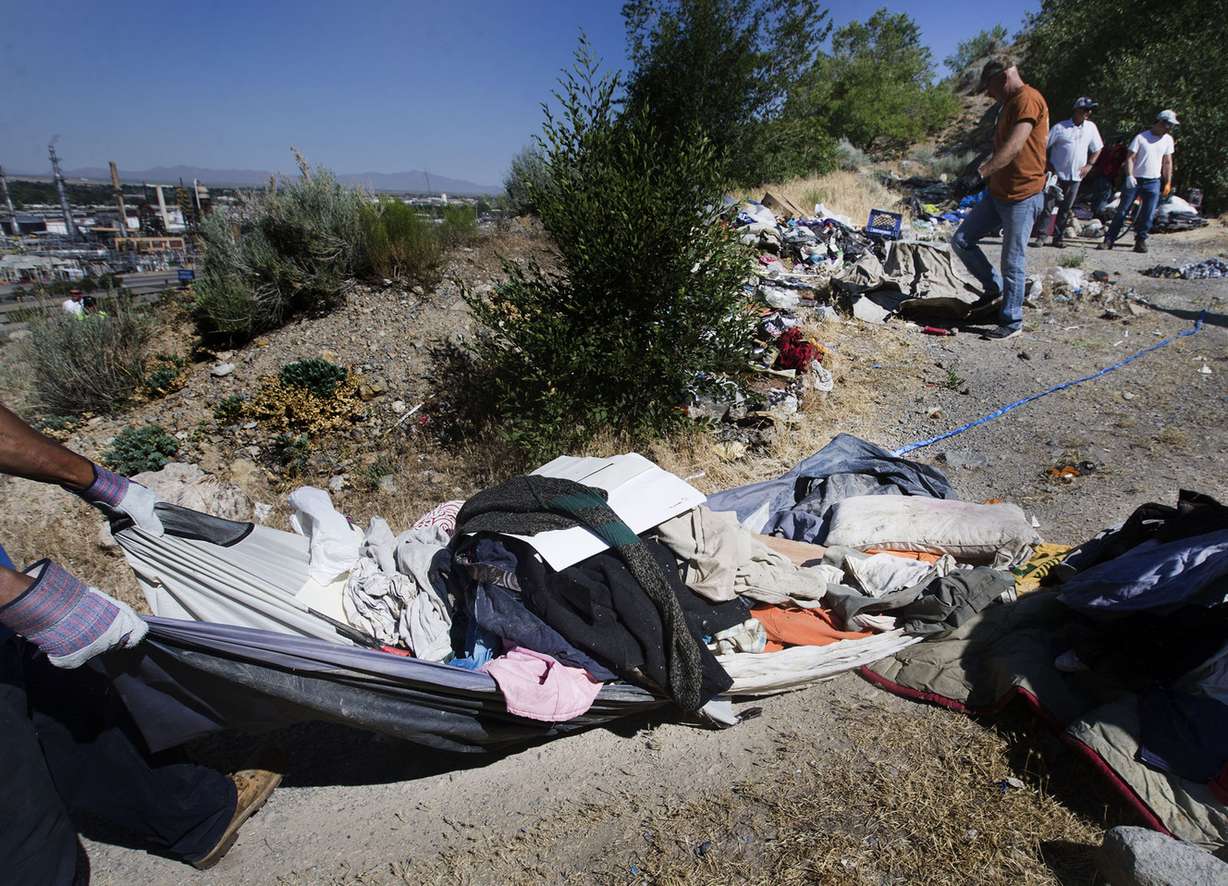
The cleanup was expected to run through about the end of the business day Thursday and again most of Friday.
"The key is, we've been making contact with these people in these camps the last couple months, offering them services and letting them know the cleanup is coming," Wilking told KSL.
Those warnings intensified in the last week, Salt Lake County Health Department spokesman Nicholas Rupp said.
A small handful of stragglers remained Thursday morning to take the last of their belongings off of the mountain to keep it from being thrown away. Wilking said "we haven't had real issues with anybody" while overseeing the cleanup.
Rupp didn't know precisely how many homeless campers lived in the area, but said there were about 15 campsites with about three to four tents each.
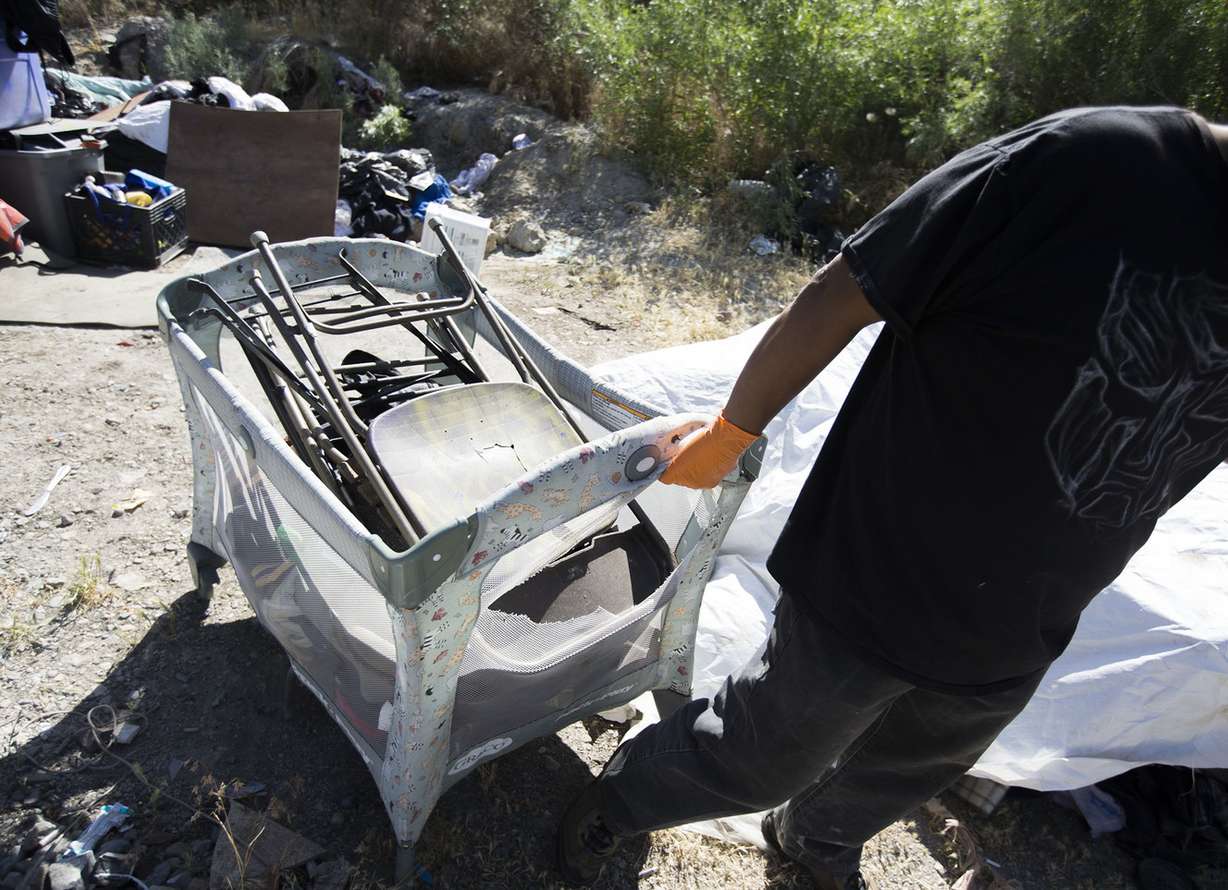
"Basically they have been making … living quarters up here," Wilking said.
The presence of drug paraphernalia and human waste is considered a significant public health issue, according to Rupp. Other items left on the mountain can also corrode and affect the soil, he said, and during wildfire season, the camps are also a fire hazard, he said.
Fourteen supervised inmates from the Salt Lake County Jail were on hand to help clear the campsites.
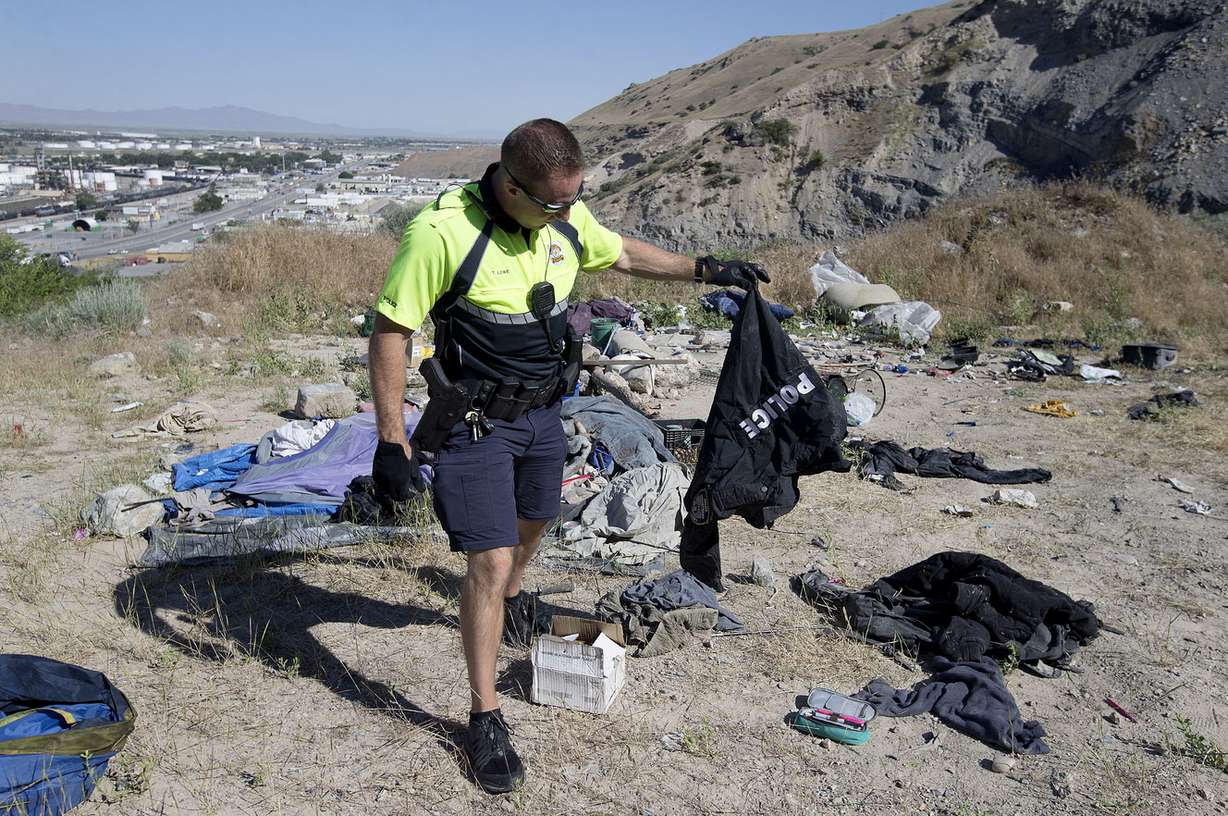
Dale Keller, environmental health bureau manager for the county health department, estimated a separate cleanup on the hillside in April yielded 300,000 to 400,000 of pounds of debris to be hauled away.
On occasion, when there are straggler campers still gathering their things, Keller said, "we'll invite them to have lunch with us."
"This isn't us (versus) them," he said. "It's just (that it's) a public health hazard."
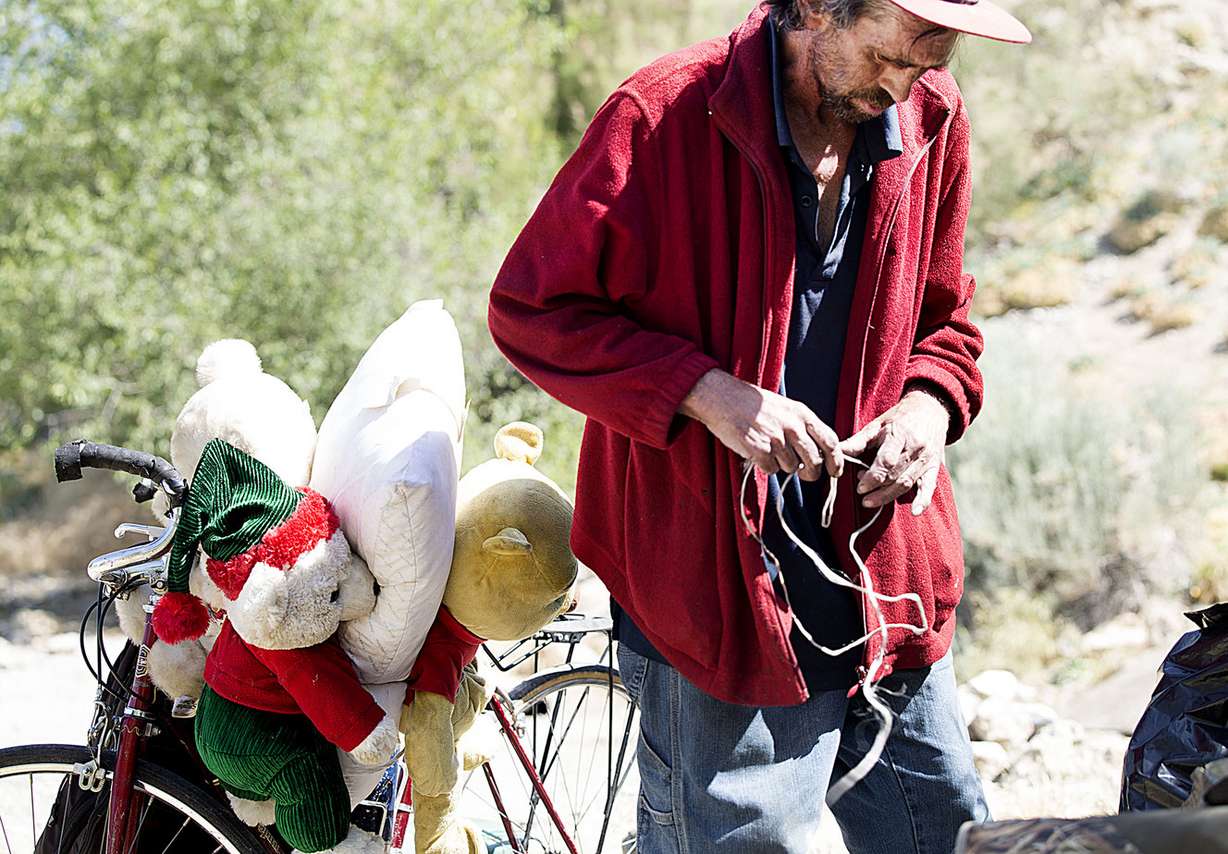
Rupp said two to three homeless camp cleanups of this scale are conducted each year in the county. The foothills near Victory Road undergo a cleanup each year and campsites near the Jordan River and in City Creek Canyon are also frequent targets, he said.
This story will be updated.