
Estimated read time: 7-8 minutes
This archived news story is available only for your personal, non-commercial use. Information in the story may be outdated or superseded by additional information. Reading or replaying the story in its archived form does not constitute a republication of the story.
TOOELE — The nearly 100-mile stretch of I-80 that extends from Lake Point to Wendover is a lonely highway surrounded by endless acres of empty desert and salt flats, so it’s understandable why it keeps its secrets so well.
“(If) somebody wants to do something out there, it can be pretty easy sometimes,” said State Bureau of Investigation Agent Ronny Corona. “(You’ve) got to be prepared that there is a body out there or there is somebody out there doing something bad.”
For two years, Corona’s job as a Utah Highway Patrol trooper was to uncover those secrets.
“You stop somebody and you’re it,” he said. “You’re the guy.”
He never expected to be "the guy" to make a significant discovery when he simply pulled off of westbound I-80 near mile marker 65 late on the night of Jan. 12, 2017, to assist a red Honda Civic that appeared to be broken down.
Corona said the driver had apparently been trying to flag down other cars with his flashlight.
“Everything about that vehicle looked out of place — just didn’t look right,” Corona said. “I could see that the bumper was partially black — like somebody just got some spray paint and quickly tried to paint it.”
A man emerged with a gas can from the driver’s side of the car. Corona said the man, subsequently identified as Kyle Alexander Jepson, said he was on the road from Iowa and that he was out of gas and money.
“I told him, ‘that’s kind of odd that you don’t have any money — you’re traveling across the country and you have no money for gas,’” Corona recalled.
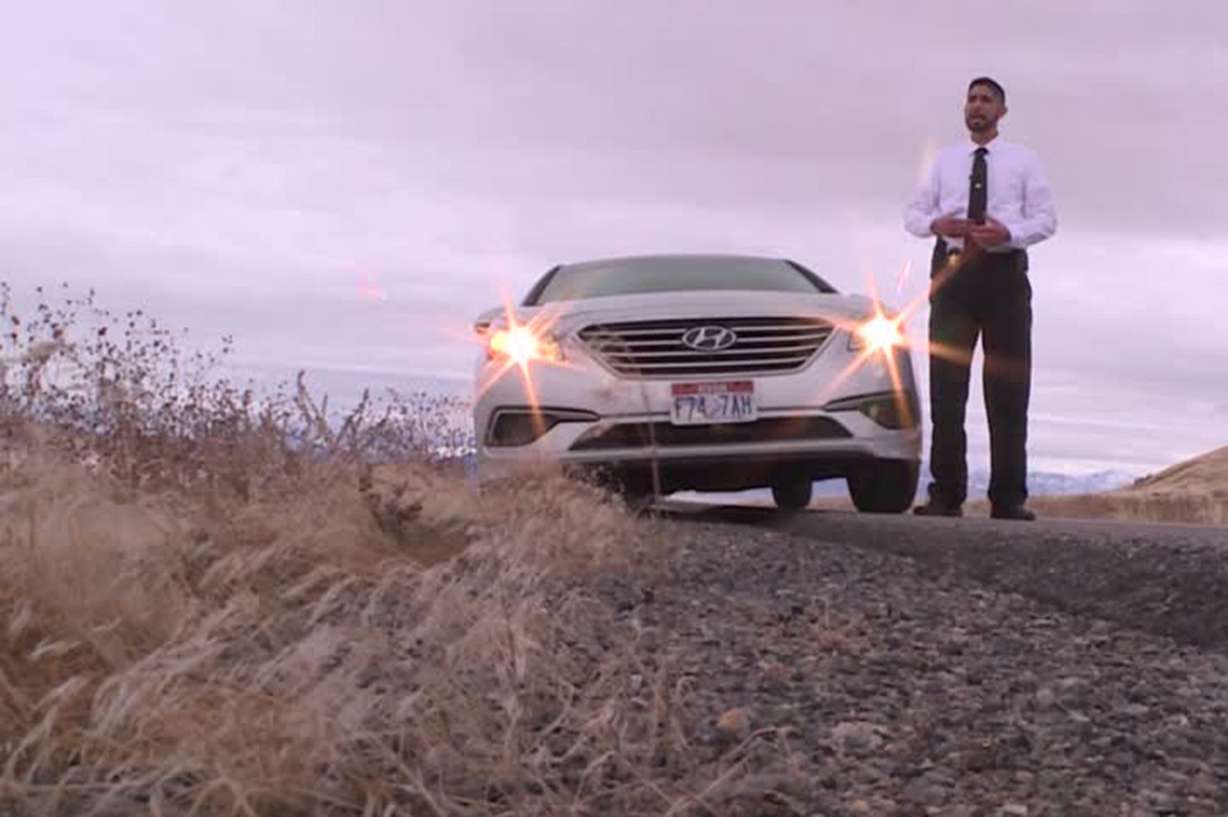
Around the same time, Corona noticed other signs something was wrong.
“His passenger window was broken and all the hatchet marks inside the vehicle,” Corona said. “He had told me he got angry at one point and just started hitting his car.”
Jepson, as heard on dash cam video, initially said the car belonged to his aunt.
“What’s her name?” Corona could be heard saying in the dash cam video.
“Uh, duh, geh …” Jepson started to reply.
“So you don’t know who your aunt is?” Corona quizzed.
“Sorry, I was drawing a blank,” Jepson stated in the video.
Trooper Training
Corona’s instinct told him something was not right.
Col. Brian Redd, head of the State Bureau of Investigation and Deputy Commissioner of the Utah Department of Public Safety, said that instinct is cultivated through training, and is pivotal in a trooper’s ability to uncover major crimes.
“We’ve solved a lot of cases over the years — homicides, aggravated assaults, all types of cases, fraud cases — through just a simple traffic stop,” Redd said.
Still, Redd said what was yet to unfold was surprising to investigators.
“We didn’t really know what we had and I don’t think the authorities in Iowa knew what they had at the time either,” Redd said.
Change of Story
As Jepson sat in the back of Corona’s cruiser, his story — which already had some major holes — suddenly started to change.
“So whose car is it?” Corona asked.
“It’s stolen,” Jepson replied in the dash cam video.
It was the first of many revelations that night to unfold in the back of the cruiser and in an interrogation room.
“We knew that the car he was in was a NCIC (National Crime Information Center) hit,” said Agent Brian Davis, who took part in the interrogation. “It was involved in a missing person’s case in Iowa.”
Gloria Gary
Gloria Gary of Des Moines, Iowa had been missing for about a week prior to her car showing up in Utah with Jepson.
In the interrogation room, Jepson began to fill in the unknown details surrounding what had happened to Gary.
“Initially that’s what we did was let him talk,” Davis said. “He was surprisingly forthcoming.”
Jepson told investigators, in video captured by the room’s cameras, that he had been homeless and in need of shelter when he simply spotted Gary’s house at random.
“I wanted to go into that house and I wasn’t going to leave,” Jepson stated.
From last year:
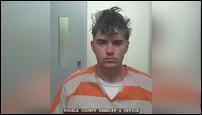
Utah warrant connects man with Iowa killing
The body of a Des Moines woman found hidden in her Iowa house had her head "wrapped in duct tape," according to a newly unsealed search warrant affidavit filed in Utah.He admitted to attacking Gary when she came home. Jepson told investigators in extensive and graphic detail how Gary subsequently struggled for her life, and that he strangled her and sexually assaulted her after she died.
“I guess I don’t know if I feel bad enough,” Jepson acknowledged at one point during the interview.
Davis said the details have been hard to forget.
“The human in you wants to be emotional, have an emotional response to what they’re confessing to, but we really do have to take a step back and stay objective to the facts because our job as investigators is to collect facts,” Davis said.
Davis and another investigator were able to get Jepson to reveal where Gary’s body was located, which was hidden in the house and "was not located initially by authorities," Davis explained.
Inside the Mind of a Killer
The interview also seemed to peer inside Jepson’s mind.
Jepson, who appeared cold and clinical during the interview, said he ate the woman’s pizza that she had brought home after he killed her.
“I was eating pizza like it didn’t even happen,” he said. “That was the worst part.”
Jepson said he lit candles and placed them around a clown statue he found in the house.
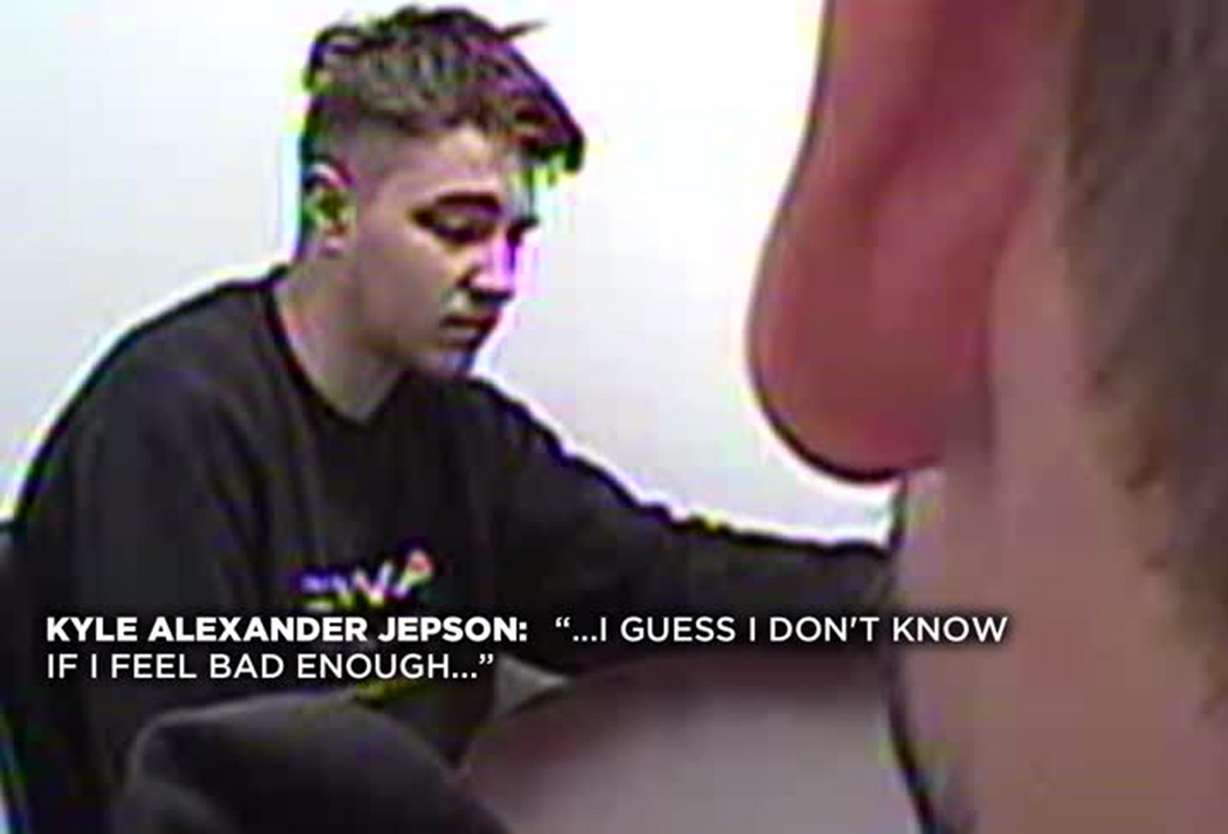
“I felt like a clown — like a creepy clown,” he told investigators. “I was almost expecting it to be like fate or a new persona, because like now, what do you do? So do you turn back, or do you keep on doing it, or do you try to enjoy it?”
“What were your thoughts?" the other agent in the room quizzed during the interview. "Did you decide it was something you were going to keep on doing?”
“I thought it was something I was going to be good at,” Jepson replied.
After the Confession
Jepson ultimately pleaded guilty in court last September to murdering Gary.
During the hearing, he admitted the crime as well as a break-in at another home on Dec. 29, 2016, were both sexually-motivated and that he had been “dealing with some schizophrenic or some spiritual demons.”
Jepson was expected to do 35 years in prison, but prosecutors said he may also be subject to a civil commitment at that time.
Reflections
“It feels good to have him where he should be — he certainly was a threat to society,” Davis said, sitting and reflecting in the interrogation room where Jepson’s confession came. “He’s locked up, and society is safer because of it.”
Corona said he fears what could have happened if his training and instinct hadn’t prepared him for that fateful traffic stop.
“There’s no doubt in my mind after hearing his interview and interrogation that he would have done it again,” Corona said. “If someone were to stop and they said, ‘Hey, I can’t help you,’ what’s his next course? It would be easy to take their vehicle and harm them.”
Davis said he was ultimately glad to uncover key details in the missing woman’s case.
“It feels good to be able to get those answers for her family,” Davis said. “It’s definitely rewarding and fulfilling to feel like you accomplished something.”
On a stretch of lonely road that has been known to leave few clues, Corona is grateful for every mile when it leads to answers.
“It could be just by a chance encounter and they’re going to get caught — make that one mistake — and we’ll be on top of it,” Corona said.