Estimated read time: 2-3 minutes
This archived news story is available only for your personal, non-commercial use. Information in the story may be outdated or superseded by additional information. Reading or replaying the story in its archived form does not constitute a republication of the story.
Ed Yeates reporting The widow of NBC News correspondent David Bloom was in Salt Lake today with a message about the insidious condition that killed her husband. Bloom died five years ago while covering the invasion of Iraq, but it wasn't bombs or bullets that snuffed out his life.
If a person remained sitting in the same position for a long period of time without being able to stand up or move around, he or she might face the same villain that killed David Bloom, and that's the message Melanie Bloom is delivering to people across the country. Today she spoke to a group gathered at the University of Utah.
DVT, or Deep Vein Thrombosis, is a condition where blood clots form in lower extremities, like the legs, then strike a deadly blow to the lungs.
"Considering the fact he was embedded with the troops during a war, then only to die from something within his own body, I refer to it as the bomb within his body that hit the lungs and took his life," Melanie explained.
David had been on long flights prior to the war, then, during the invasion in a cramped position in a tank, unable to move. "David was sleeping with his knees up to his chin in a cramped tank with his crew and other troops," Melanie said.
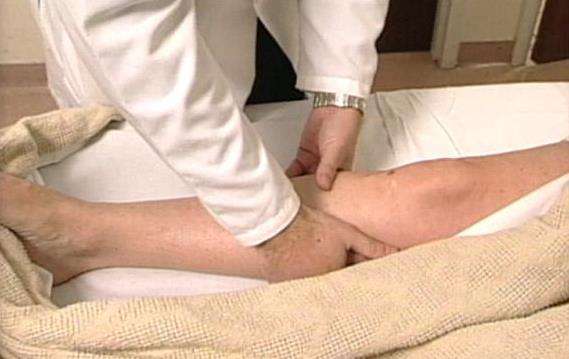
DVT takes more lives in this country than AIDS and breast cancer combined. "I had never heard of DVT, and to my knowledge, David had never heard of it. He didn't know that the leg pain was a warning sign," Melanie said.
Cancer patients, women on the pill or hormone therapy, those who've recently had surgery, heavier folks, individuals with respiratory or heart conditions: All of them are at risk.
But everyone, even someone as young as Gov. Jon Huntsman's daughter, is not immune. A blood clot formed in Mary Anne Huntsman's leg after sitting on several 10-hour flights last year. Fortunately, she got help before the clot moved.
"Long airplane travel, or what we call the ‘economy class syndrome,' where even that moderate amount of restricted ability increases someone's risk of a blood clot about four-fold," explained Dr. Robert Pendleton, of University Health Care Thrombosis Services.
If you can't get up, like when you're locked into a seat belt on a plane, Pendleton suggests extending and twisting the ankles and moving the calf muscles. Also, stay hydrated.
For more information on DVT, click the related link.