'%3e%3cpath%20d='M34.1406%205.85938C30.3906%202.10547%2025.3047%200%2020%200C14.6953%200%209.60938%202.10547%205.85938%205.85938C2.10938%209.61328%200%2014.6953%200%2020C0%2025.3047%202.10547%2030.3906%205.85938%2034.1406C9.61328%2037.8906%2014.6953%2040%2020%2040C25.3047%2040%2030.3906%2037.8945%2034.1406%2034.1406C37.8906%2030.3906%2040%2025.3047%2040%2020C40%2014.6953%2037.8945%209.60938%2034.1406%205.85938ZM37.0117%2023.543H31.1602V13.5391H27.6328V19.9414C28.1211%2020.6914%2028.3711%2021.582%2028.3711%2022.5625V22.625C28.3711%2023.668%2028.1172%2024.6055%2027.6328%2025.4297V26.6094H36.082C33.4883%2032.9375%2027.2891%2037.3789%2020.0039%2037.3789C10.3711%2037.3789%202.62109%2029.6289%202.62109%2020C2.62109%2010.3711%2010.3711%202.62109%2020%202.62109C29.6289%202.62109%2037.3789%2010.3711%2037.3789%2020C37.3789%2021.1484%2037.2617%2022.2656%2037.0508%2023.3477C37.0391%2023.4141%2037.0234%2023.4766%2037.0117%2023.543Z'%20fill='white'/%3e%3cpath%20d='M22.3086%2018.5352C20.4336%2018.125%2019.9531%2017.8398%2019.9766%2017.1836V17.1406C19.9766%2016.6992%2020.3477%2016.2148%2021.4023%2016.2148C22.582%2016.2148%2023.8867%2016.6797%2025.0781%2017.4766L26.8516%2015.0195C25.4453%2013.8906%2023.707%2013.3398%2021.5547%2013.3398C18.5195%2013.3398%2016.4375%2015%2016.4063%2017.4766V17.5352C16.3633%2020.2617%2018.5859%2020.9805%2021.293%2021.6016C23.0391%2021.9766%2023.5703%2022.3164%2023.5703%2022.9609L23.5469%2022.9766C23.5469%2023.3906%2023.2578%2023.7031%2022.7852%2023.8359C22.5742%2023.9062%2022.1289%2023.9727%2021.5156%2023.9727C20.7617%2023.9727%2019.7539%2023.8633%2018.6328%2023.4844C18.0898%2023.2891%2017.4727%2023.0039%2016.8047%2022.6133L20.1406%2026.625C20.2813%2026.6602%2021.0977%2026.8516%2021.7734%2026.8516C25.0039%2026.8516%2027.0859%2025.2461%2027.1094%2022.6328V22.5703C27.1602%2020.1133%2025.2148%2019.1719%2022.3086%2018.5352Z'%20fill='white'/%3e%3cpath%20d='M5.24219%2013.5664V26.6133H8.75391V23.7578L10.2969%2021.9531L14.2031%2026.6133H18.3867L12.3555%2019.5195L17.4023%2013.5664H13.4531L8.75391%2019.0586V13.5664H5.24219Z'%20fill='white'/%3e%3c/g%3e%3cdefs%3e%3cclipPath%20id='clip0_97_2430'%3e%3crect%20width='40'%20height='40'%20fill='white'/%3e%3c/clipPath%3e%3c/defs%3e%3c/svg%3e)




- The Great Salt Lake receives a $30 million donation from business community with Utah ties.
- Miller, Maverik and Marriott contributed funds for projects to improve lake levels and conservation.
- Utah leaders say the donations exemplify the community effort needed to preserve the lake.
Editor's note: This article is published through the Great Salt Lake Collaborative, a solutions journalism initiative that partners news, education and media organizations to help inform people about the plight of the Great Salt Lake.
FARMINGTON — The health of the Great Salt Lake factors into many environmental, recreational and economic sectors throughout Utah's population core, and protecting it should be a priority, says Greg Miller.
As the lake, which has dropped in recent years, faces its worst snowpack in recent history, he believes it's time for action.
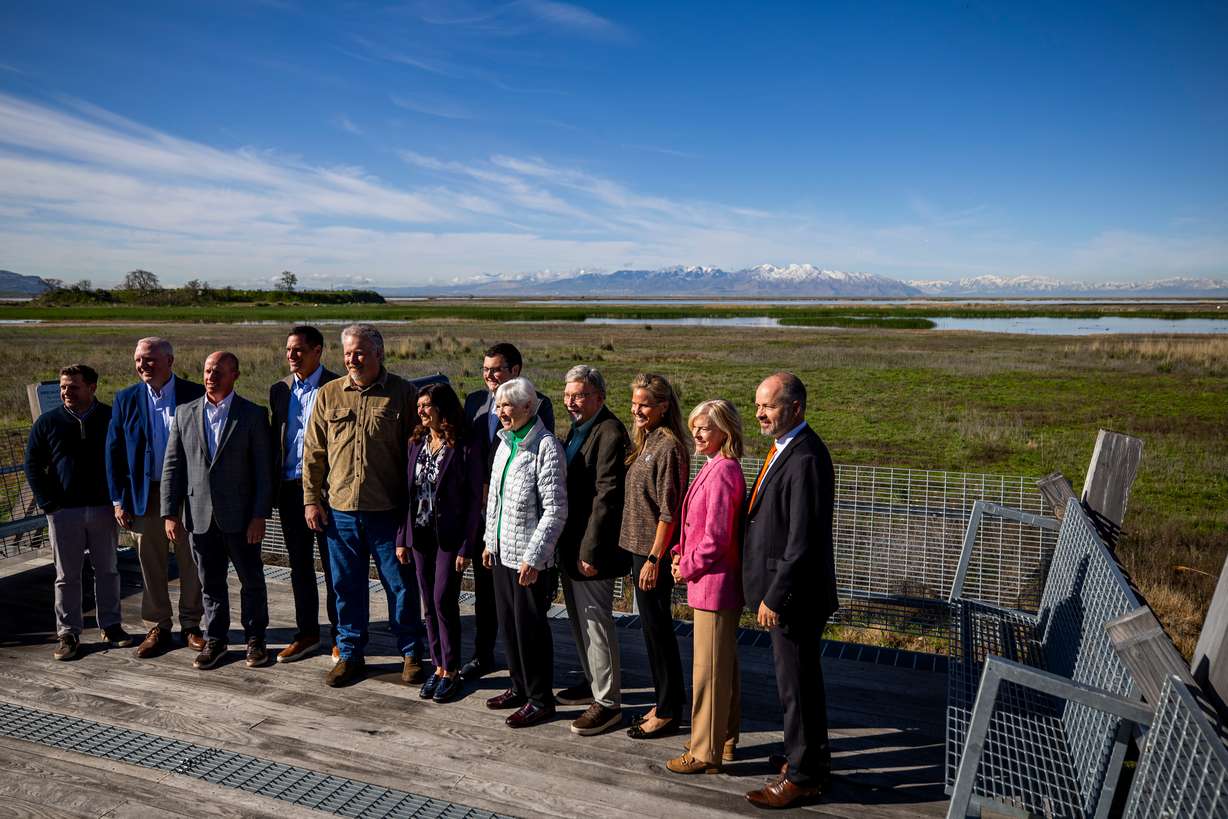
Miller, vice chairman of the Larry H. Miller Company, announced Monday that the Miller family will donate $10 million toward projects that seek to improve future lake levels. Representatives at Maverik and Marriott pledged the same amount, bringing the combined total to $30 million.
"Challenges of this scale are not solved alone. They require collaboration, courage and willingness to lead," Miller said, as he stood at a podium overseeing the lake's wetlands. "The decisions we make now will shape the future of this lake, and the future of this state."
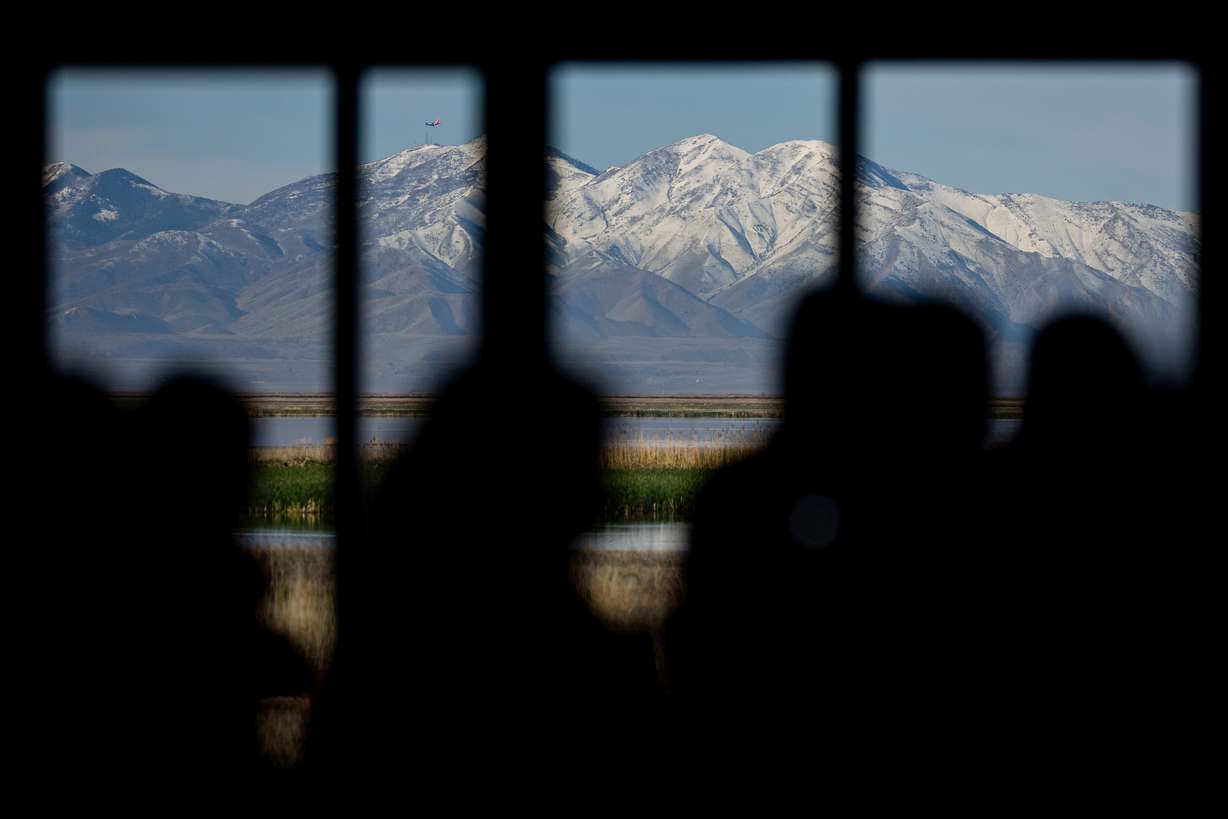
Monday's announcement comes as the Great Salt Lake's arms remain almost 6 to 6½ feet below what's considered its minimum healthy level. Its southern arm — home to most of its ecosystem and its recreational and economic ties — is teetering just above the state's threshold for "serious adverse effects."
It failed to gain much from the mountain snowpack that generally feeds the state's bodies of water. The lake's snowpack basin peaked at 10.7 inches of snow water equivalent last month, its lowest since at least the 1980s. Snowpack accounts for about 95% of the state's water supply altogether.
While recent storms have helped some, record-warm temperatures this spring have melted more than two-thirds of that peak. All of this is to say that its southern arm likely won't gain much more than its current state of 4192.2 feet elevation. Another hot, dry summer could bring it to the brink of its record-low level, set in 2022.
However, Mother Nature is only part of the lake's equation. About 80% of the lake's decline is tied to human consumption, according to Grow the Flow, a nonprofit led by local ecologists.
That's led to optimism that existing conservation programs that optimize agricultural water, create more water-wise landscaping and acquire more temporary or permanent water rights can bring more water to the lake, even during incredibly low snowpack years.
"We can fix that," said Josh Romney, of the Romney Group. "There's some many areas right now where we can really have a huge impact."
Romney convened local business leaders last year, leading to the creation of Great Salt Lake Rising, a philanthropic coalition that pledged to raise $100 million to address the lake's challenges. The goal is to at least match the $100 million that conservation nonprofit Ducks Unlimited pledged over the next decade.
Restoring the lake will not be accomplished by any one person or organization. It requires a community movement.
–Gov. Spencer Cox
The Romney, Boyer, Ivory and Gardner families were some of the first in the business community to contribute to the goal. Miller said he hopes that the new donations will accelerate existing work, inspire others to take action and reinforce the belief that stewardship is aligned with building strong communities.
Maverik heavily promotes outdoor adventures, which may include many lake activities or outdoor activities fueled by the lake, so it made sense to join, said Drew Maggelet, an executive of FJ Management, the gas station chain's parent company.
"We knew we had to act to preserve the adventures we all treasure," he said, adding that getting more water to the lake has other environmental and business benefits.
Although the J.W. and Alice S. Marriott Foundation is based in Washington, D.C., the Marriott hotel chain's "roots" are in Utah, and the lake was a piece of that history, said Karen Marriott, a board member of the foundation. That's why the family also joined in donating toward lake solutions.
"(Water conservation) is the fastest, most effective and most economically-sustainable way to prevent further decline, and ultimately to restore and sustain the lake," she said.
Gov. Spencer Cox, who is in Europe on a trade mission this week, sent a video thanking the Miller, Maggelet and Marriott families for their new support. Their donations tack onto the recent $53 million in federal and state funds that will go toward projects, on top of the initial $40 million for projects that launched lake-centric programs.
Utah leaders also pumped more than $200 million toward the state's agricultural water optimization program in 2022.
More money could also come through the federal government. President Donald Trump requested $1 billion for lake projects in his latest budget proposal, which would go into these programs. That's on top of limiting outdoor water use, which helps get water to the lake, state leaders added on Monday.
"Utah is serious about protecting the Great Salt Lake, and we are doing it the 'Utah way' — together," Cox said. "Restoring the lake will not be accomplished by any one person or organization. It requires a community movement."