'%3e%3cpath%20d='M34.1406%205.85938C30.3906%202.10547%2025.3047%200%2020%200C14.6953%200%209.60938%202.10547%205.85938%205.85938C2.10938%209.61328%200%2014.6953%200%2020C0%2025.3047%202.10547%2030.3906%205.85938%2034.1406C9.61328%2037.8906%2014.6953%2040%2020%2040C25.3047%2040%2030.3906%2037.8945%2034.1406%2034.1406C37.8906%2030.3906%2040%2025.3047%2040%2020C40%2014.6953%2037.8945%209.60938%2034.1406%205.85938ZM37.0117%2023.543H31.1602V13.5391H27.6328V19.9414C28.1211%2020.6914%2028.3711%2021.582%2028.3711%2022.5625V22.625C28.3711%2023.668%2028.1172%2024.6055%2027.6328%2025.4297V26.6094H36.082C33.4883%2032.9375%2027.2891%2037.3789%2020.0039%2037.3789C10.3711%2037.3789%202.62109%2029.6289%202.62109%2020C2.62109%2010.3711%2010.3711%202.62109%2020%202.62109C29.6289%202.62109%2037.3789%2010.3711%2037.3789%2020C37.3789%2021.1484%2037.2617%2022.2656%2037.0508%2023.3477C37.0391%2023.4141%2037.0234%2023.4766%2037.0117%2023.543Z'%20fill='white'/%3e%3cpath%20d='M22.3086%2018.5352C20.4336%2018.125%2019.9531%2017.8398%2019.9766%2017.1836V17.1406C19.9766%2016.6992%2020.3477%2016.2148%2021.4023%2016.2148C22.582%2016.2148%2023.8867%2016.6797%2025.0781%2017.4766L26.8516%2015.0195C25.4453%2013.8906%2023.707%2013.3398%2021.5547%2013.3398C18.5195%2013.3398%2016.4375%2015%2016.4063%2017.4766V17.5352C16.3633%2020.2617%2018.5859%2020.9805%2021.293%2021.6016C23.0391%2021.9766%2023.5703%2022.3164%2023.5703%2022.9609L23.5469%2022.9766C23.5469%2023.3906%2023.2578%2023.7031%2022.7852%2023.8359C22.5742%2023.9062%2022.1289%2023.9727%2021.5156%2023.9727C20.7617%2023.9727%2019.7539%2023.8633%2018.6328%2023.4844C18.0898%2023.2891%2017.4727%2023.0039%2016.8047%2022.6133L20.1406%2026.625C20.2813%2026.6602%2021.0977%2026.8516%2021.7734%2026.8516C25.0039%2026.8516%2027.0859%2025.2461%2027.1094%2022.6328V22.5703C27.1602%2020.1133%2025.2148%2019.1719%2022.3086%2018.5352Z'%20fill='white'/%3e%3cpath%20d='M5.24219%2013.5664V26.6133H8.75391V23.7578L10.2969%2021.9531L14.2031%2026.6133H18.3867L12.3555%2019.5195L17.4023%2013.5664H13.4531L8.75391%2019.0586V13.5664H5.24219Z'%20fill='white'/%3e%3c/g%3e%3cdefs%3e%3cclipPath%20id='clip0_97_2430'%3e%3crect%20width='40'%20height='40'%20fill='white'/%3e%3c/clipPath%3e%3c/defs%3e%3c/svg%3e)


- The Jordan River faces pollution issues, including E. coli and algal blooms.
- Efforts to improve water quality include upgrading facilities and restoring native plants.
- Recreation and cleanup events promote community engagement and environmental awareness.
Editor's note: This article is published through the Great Salt Lake Collaborative, a solutions journalism initiative that partners news, education and media organizations to help inform people about the plight of the Great Salt Lake. This article is published with support from the Jordan River Commission.
SALT LAKE CITY — On most summer Saturdays, like many Utahns, you can find Nancy Lombardo and her friends enjoying the outdoors and getting a good workout in.
But they usually aren't hiking. Or golfing. Or playing pickleball.
They're kayaking on the Jordan River.
"When you tell people that you do that they ask weird questions, like, 'Have you seen a dead body?'" she said. "Which, we have not."
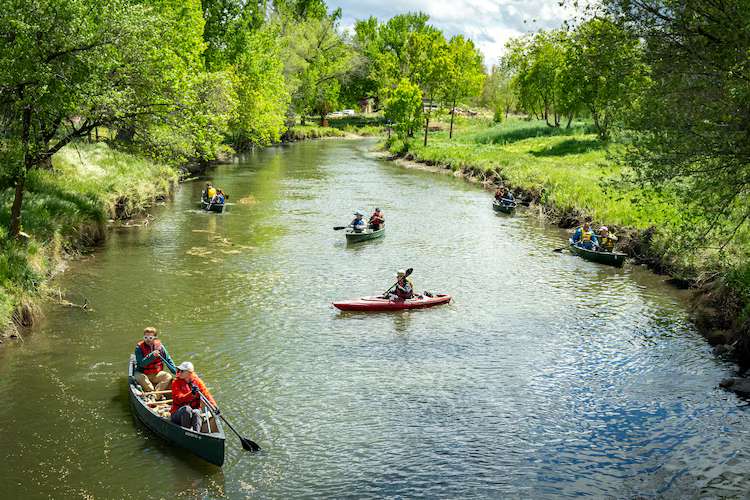
Lombardo's squad particularly enjoys paddling between 3900 South and 200 North along the waterway at the heart of the Salt Lake Valley.
"It's just super pleasant and relaxing," she said.
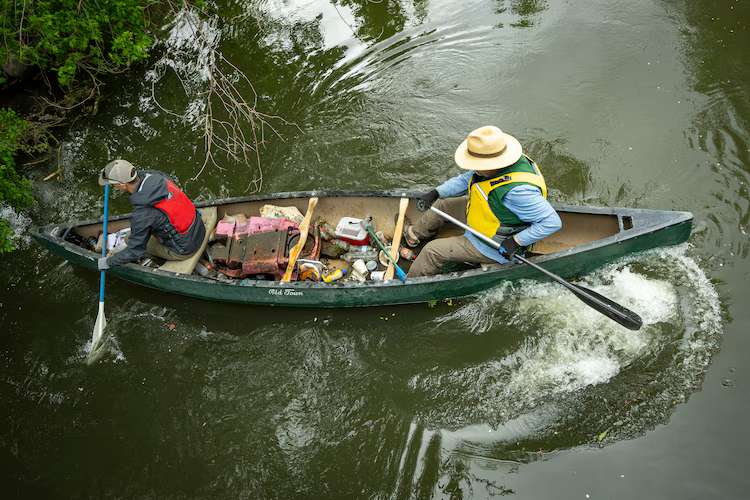
The river, however, is plagued by plenty of issues. Lombardo tries not to get wet because she knows the river harbors pollutants. She has also seen trash, even shopping carts, on her paddles.
The river, which connects Utah Lake and the Great Salt Lake, faces low dissolved oxygen levels, high E. coli numbers and harmful algal blooms .
In recent years, however, policymakers have turned their attention to the waterway, making changes to water reclamation facilities and increasing efforts to restore native plants in the corridor.
Recreating along the river's corridor
Lombardo enjoys the river, especially closer to its northern end, for its relatively mild current. Her trips usually result in good, but not dangerous, upper-body workouts. She called the Jordan River "a wonderful little practice route" between doing more strenuous runs on the Weber, Green and Salmon rivers.
Lombardo is also a birder and biker. She has spotted orioles and kingfishers along the river, and even beavers and muskrats.
The same group that often kayaks the waterway also goes for long rides along its banks on the Jordan River Trail. On those excursions, Lombardo says the trail gets busy with walkers, especially on the weekends.
That's a stark contrast to the paddling trips, when the friends are usually the only people on the water.
But Lombardo wouldn't risk swimming in it.
Water quality concerns
Jordan River Commission Executive Director Soren Simonsen said that some sections of the watercourse are, in fact, swimmable at some times of the year. He specifically pointed to the southern end of the river near Utah Lake as healthier for swimming and fishing — when algal blooms aren't happening in the summertime, that is.
That harmful algae is usually the result of slow-moving water, high loads of nutrients that feed the bacteria, sunlight and warm temperatures. The blooms can cause skin irritation and gastrointestinal issues for those who come in contact with them.
Last year, the Utah Department of Environmental Quality put out six updates between July and October indicating the presence of harmful algae in the river.
The microorganisms are just one type of pollution that state and federal officials track here. Parts of the waterway also carry too much E. coli, which can cause sickness, and too little dissolved oxygen, which can choke aquatic wildlife.
Simonsen said that the biggest source of pollution — both the small stuff humans can't see and the trash that clings to banks and trees — is untreated water that flows through street drains straight into the river or its tributaries.
"A lot of that stormwater is accumulating stuff that's on the streets and roads and parking lots and rooftops, and it ends up in the river," he said. "... That's all kinds of chemical pollutants, stuff that comes out of cars and on the surface of the road, microplastics, microrubber from tire wear and things like that. There's a lot of organic material that comes from our streets."
That organic material — think leaves and grass clippings — then decomposes in the river and uses up oxygen in the water. At least once last year, after a rainstorm flushed out the watershed's stormwater system, a large number of the river's fish died because they couldn't breathe.
The E. coli largely enters the river and its tributaries through untreated pipes, too, as dog poop, manure and wildlife droppings wash down into them.
Because the northern stretch of the Jordan River marks the lowest point in its basin and is where many of the major tributaries flow into its course, the water quality generally worsens as the river gets closer to the Great Salt Lake.
Low snowpack and river levels also impact pollution, making it more concentrated when flows are smaller.
Looking for improvement
It used to be worse.
As soon as the Latter-day Saint pioneers and others began settling in the Salt Lake Valley, the Jordan River became a repository for waste and raw sewage. Then, as the area industrialized, factories sprang up in the river corridor, poisoning the water with heavy metals. The river was later straightened and channelized to reduce flooding — that process destroyed wetlands that helped to clean the water.
The Clean Water Act and the federal Superfund program helped to clean up some of that earlier pollution.
More recently, though, work has started on restoring native plants and wetlands along the river. The Big Bend project in West Jordan, for example, is rebuilding habitat and adding an island in the waterway just across from the Sharon Steel Superfund site. State Sen. Lincoln Fillmore, R-South Jordan, also ran a bill this year that will expand a funding source for river restoration efforts .
Water reclamation facilities in the Jordan River watershed, which handle wastewater from homes and businesses, are also undergoing upgrades that will allow them to remove excess nutrients that fuel algal growth in the water.
As for stormwater, a new facility in Rose Park is filtering some runoff and sending it through a human-made wetland of native plants to the river. Other ideas, like stormwater retention at The Point, the planned development at the former state prison site in Draper, are percolating as well.
The Jordan River Commission, Simonsen's organization focused on the river, is also stepping up its education and volunteer cleanup efforts.
A peaceful place
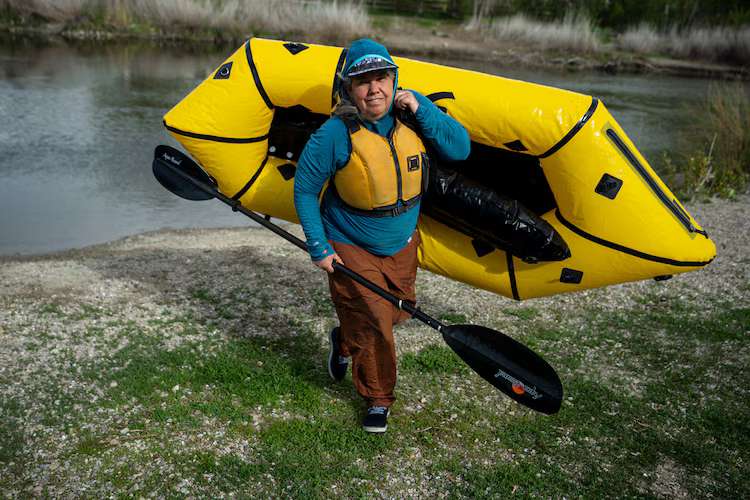
Amy Brunvand, who regularly takes a packraft down the river for miles-long floats, has participated in cleanups along the corridor.
She said getting more people recreating in or near the waterway would help its health — and help mitigate the human-caused pollution that vexes it.
"A really good way for people to connect to the Jordan River is to join one of those cleanup days, because they could come out and meet other people who care about the place," Brunvand said. "And it makes it just a little better every time you do it."
It's one way she shows her love of the river.
Brunvand, like Lombardo, enjoys seeing birds in the riparian corridor, like the bald eagle that posted up in a tree near Khadeeja Islamic Center over the winter, she said. The waterway is where she completed a two-day, 24-mile float with her friends. It's where she takes out-of-state visitors to see sweeping views of Mount Olympus and riverside cottonwood groves in Murray.
It's a serene place, and she wants to see it cared for.
"I like floating on water, because there's a sense of calm," Brunvand said. "It's an urban river, but along the river corridor there's birds and wildlife and birdsong, and so I just like the sense of peace."
Contributing: Shelby Lofton