Estimated read time: 2-3 minutes
- Some trees and plants are blooming early due to warmer-than-usual December temperatures.
- Salt Lake City is on pace for its warmest December since records began in 1874.
- Experts assure that early blooms aren't a stress response.
SALT LAKE CITY — Winter officially begins Sunday, but don't tell that to some of Utah's plants and trees.
Blossoms began to emerge from some of the pear trees outside the Triad Center in downtown Salt Lake City, while people have reported to KSL that their flowers or other plants are starting to show some activity in other parts of the state, too.
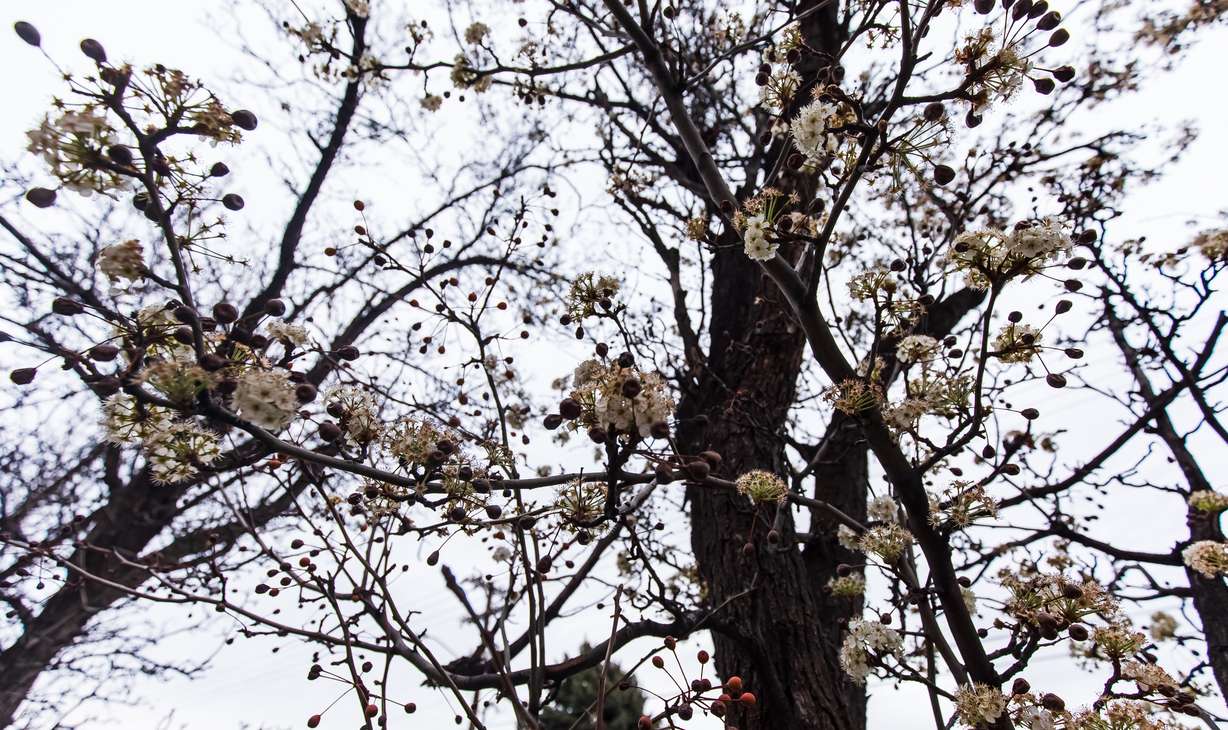
But experts say there's nothing to worry about, and it's fairly common to see some early activity when the conditions align.
"Occasionally, they will just simply flower this time of the year," said Tony Gliot, Salt Lake City's urban forester, pointing out that pear trees are more prone to these types of early signs, possibly because of warmer temperatures or other elements.
"Those trees themselves are healthy ... and this type of situation — this recent, warmer fall — would not cause flowerings that are some sort of stress response," he added.
Fruit trees typically require regular temperatures below 45 degrees to "set bloom properly," according to Covington Nursery in Texas. Warmer weather can fiddle with a tree's internal clock, causing early blooms.
Perennials can do the same when there are "cues of spring," adds the horticultural information website Garden Therapy.
Salt Lake City is currently on pace for its warmest December since at least 1874, with average highs near 51 degrees Fahrenheit and an average temperature of 42.1 degrees through the first 18 days of the month — something that's closer to the normal of early March, which is the start of meteorological spring, according to National Weather Service data.
It follows a November that wasn't just record-breaking in the city, but the entire state. Salt Lake City also posted its wettest October on record, starting the 2026 water year with 5.12 inches of rain, and other parts of the state also benefited from above-average moisture.
This could have accounted for the Triad trees and possibly other plants and trees with early activity, but Gliot said it shouldn't affect the trees' health. Trees will flower again after the dormant season. They may not flower "as prolifically" in the spring from the early bloom, Garden Therapy adds.
Meanwhile, the site notes that perennials' "plant energy" retreats to their root systems once temperatures drop below freezing again, helping prevent root damage in most cases. They note that flower bulbs are also used to a "seesaw of warm and cold temperatures."