'%3e%3cpath%20d='M34.1406%205.85938C30.3906%202.10547%2025.3047%200%2020%200C14.6953%200%209.60938%202.10547%205.85938%205.85938C2.10938%209.61328%200%2014.6953%200%2020C0%2025.3047%202.10547%2030.3906%205.85938%2034.1406C9.61328%2037.8906%2014.6953%2040%2020%2040C25.3047%2040%2030.3906%2037.8945%2034.1406%2034.1406C37.8906%2030.3906%2040%2025.3047%2040%2020C40%2014.6953%2037.8945%209.60938%2034.1406%205.85938ZM37.0117%2023.543H31.1602V13.5391H27.6328V19.9414C28.1211%2020.6914%2028.3711%2021.582%2028.3711%2022.5625V22.625C28.3711%2023.668%2028.1172%2024.6055%2027.6328%2025.4297V26.6094H36.082C33.4883%2032.9375%2027.2891%2037.3789%2020.0039%2037.3789C10.3711%2037.3789%202.62109%2029.6289%202.62109%2020C2.62109%2010.3711%2010.3711%202.62109%2020%202.62109C29.6289%202.62109%2037.3789%2010.3711%2037.3789%2020C37.3789%2021.1484%2037.2617%2022.2656%2037.0508%2023.3477C37.0391%2023.4141%2037.0234%2023.4766%2037.0117%2023.543Z'%20fill='white'/%3e%3cpath%20d='M22.3086%2018.5352C20.4336%2018.125%2019.9531%2017.8398%2019.9766%2017.1836V17.1406C19.9766%2016.6992%2020.3477%2016.2148%2021.4023%2016.2148C22.582%2016.2148%2023.8867%2016.6797%2025.0781%2017.4766L26.8516%2015.0195C25.4453%2013.8906%2023.707%2013.3398%2021.5547%2013.3398C18.5195%2013.3398%2016.4375%2015%2016.4063%2017.4766V17.5352C16.3633%2020.2617%2018.5859%2020.9805%2021.293%2021.6016C23.0391%2021.9766%2023.5703%2022.3164%2023.5703%2022.9609L23.5469%2022.9766C23.5469%2023.3906%2023.2578%2023.7031%2022.7852%2023.8359C22.5742%2023.9062%2022.1289%2023.9727%2021.5156%2023.9727C20.7617%2023.9727%2019.7539%2023.8633%2018.6328%2023.4844C18.0898%2023.2891%2017.4727%2023.0039%2016.8047%2022.6133L20.1406%2026.625C20.2813%2026.6602%2021.0977%2026.8516%2021.7734%2026.8516C25.0039%2026.8516%2027.0859%2025.2461%2027.1094%2022.6328V22.5703C27.1602%2020.1133%2025.2148%2019.1719%2022.3086%2018.5352Z'%20fill='white'/%3e%3cpath%20d='M5.24219%2013.5664V26.6133H8.75391V23.7578L10.2969%2021.9531L14.2031%2026.6133H18.3867L12.3555%2019.5195L17.4023%2013.5664H13.4531L8.75391%2019.0586V13.5664H5.24219Z'%20fill='white'/%3e%3c/g%3e%3cdefs%3e%3cclipPath%20id='clip0_97_2430'%3e%3crect%20width='40'%20height='40'%20fill='white'/%3e%3c/clipPath%3e%3c/defs%3e%3c/svg%3e)



Estimated read time: 3-4 minutes
- Two organizations are distributing signs to businesses as a counterpoint to the crackdown on illegal immigration by Immigration and Customs Enforcement, or ICE.
- In bold, black letters, they read: "No ICE allowed" and "ICE out of Utah" in bold, black letters.
- The signs are meant to convey that locales that post them welcome immigrants and are cognizant of their rights.
WEST VALLEY CITY — Amid rising tensions over continuing immigration enforcement actions, a pair of grassroots organizations has begun distributing signs to let business owners convey their displeasure with the crackdown and their support for immigrants.
So far, around 400 of the signs have been distributed around Salt Lake City and West Valley City, according to Dominique Byrd, executive director of Comunidades Unidas, a West Valley City-based immigrant advocacy group. Comunidades Unidas and Salt Lake Indivisible, formed in resistance to the administration of President Donald Trump, are teaming up in the effort.
"I think it serves two purposes, one being to stand in solidarity with the community and show that this business welcomes immigrants and is not in agreement with the enforcement actions that are taking place. But it also serves as a sign that the business owner knows their rights," Byrd said.
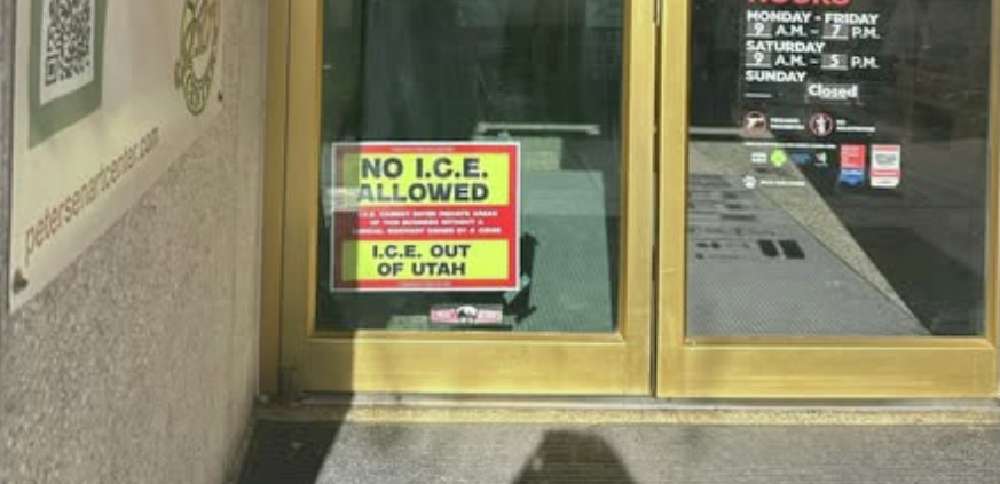
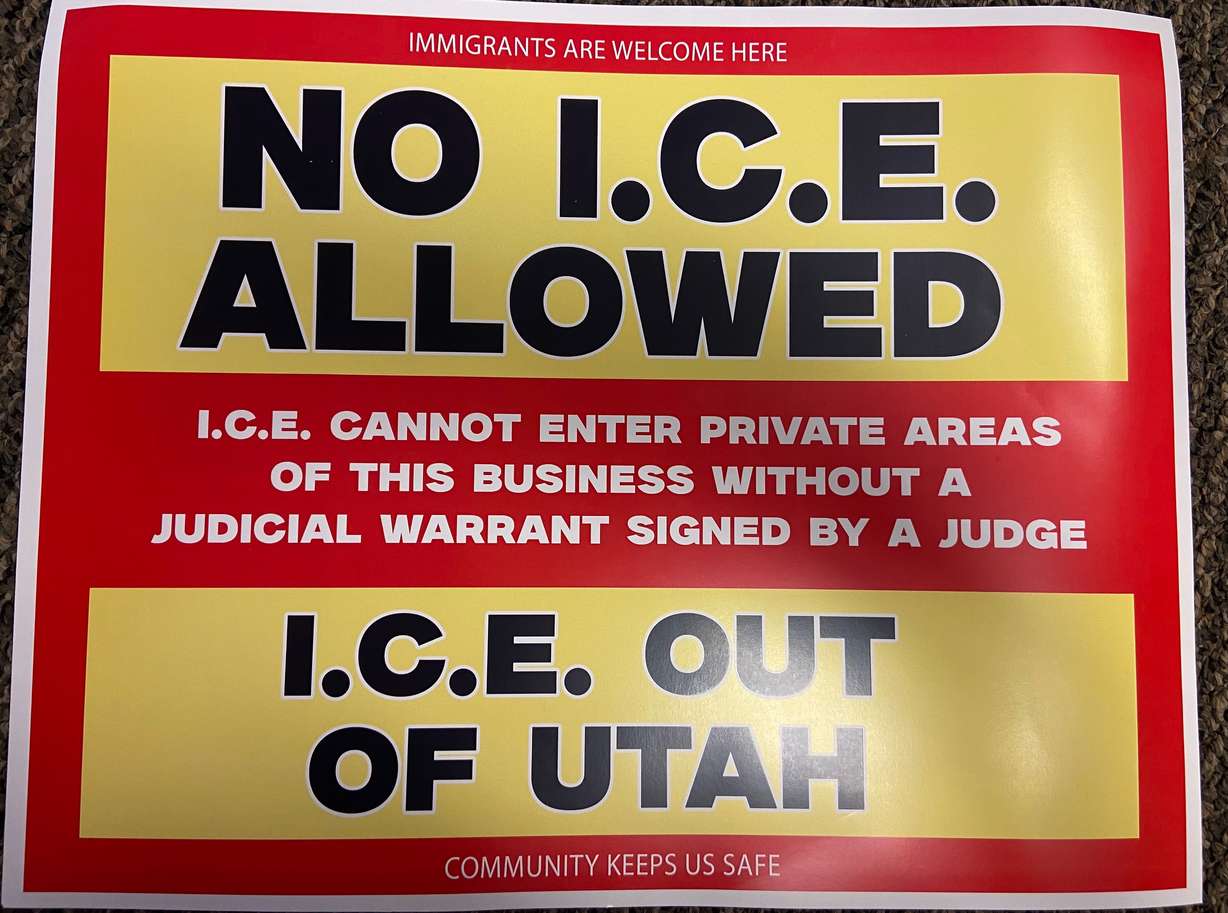
The red and yellow signs read, in part, "Immigrants are welcome here," and in much larger bold, black type, "No I.C.E. allowed" and "I.C.E. out of Utah." U.S. Immigration and Customs Enforcement, known as ICE, enforces U.S. immigration law and has been central in heightened efforts around Utah and the United States in detaining and deporting immigrants in the country illegally.
The Trump administration and its backers say immigrants in the country illegally pose a public safety risk and drain public resources. Many, in particular, point their fingers at former President Joe Biden, saying his administration's lax immigration policies led to a flood of immigrants into the country. Trump, they say, is trying to restore order to the immigration process.
But the uptick in enforcement action has sparked backlash among immigrant advocates who view it as heavy-handed and inhumane. Byrd said the increased enforcement has prompted a downturn at some businesses that cater to the immigrant community because many are leery of going out in public. The signs are meant as a form a reassurance to such jittery clientele.
"A lot of business owners want their customers to feel safe, and they want them to know that when they're shopping or when they're coming to work, that their employer or the business they're visiting knows their rights and is willing to use their rights," Byrd said. Businesses owned by Latinos, immigrants and others have posted the signs, many in the Rose Park, Fairpark and Sugar House areas of Salt Lake City.
When distributing the signs, the canvassers also inform business owners of their rights in light of possible enforcement action by immigration authorities, another prong of the outreach effort.
"Some people recognize the inherent risk that comes with putting up a sign like that — that it could draw in negative attention," Byrd said. "We're just mostly trying to educate folks, and the sign is something that can come with that. But if people don't want to hang up the sign, we just leave the education. That's their choice to make."
Read more:

Voces de Utah
Looking for more news from Utah's Latino community? Visit our Voces de Utah section for more stories, events and features.The impact the signs have on immigration enforcement agents remains to be seen. Anecdotal reports indicate many of their detention efforts take place on streets and in other public areas. But Utah Rep. John Arthur, a Democrat newly representing Cottonwood Heights who distributed signs with Comunidades Unidas on Saturday, says immigration officials can't enter private areas without a judicial warrant, as stated on the signs.
"If ICE shows up at your place of business insisting that they can come in and harass your patrons or your employees, they have to show up with a judicial warrant," he said on social media. "If they don't have that judicial warrant, you have the right as a business owner to say, 'No, you cannot come onto this property,'" he said.