'%3e%3cpath%20d='M34.1406%205.85938C30.3906%202.10547%2025.3047%200%2020%200C14.6953%200%209.60938%202.10547%205.85938%205.85938C2.10938%209.61328%200%2014.6953%200%2020C0%2025.3047%202.10547%2030.3906%205.85938%2034.1406C9.61328%2037.8906%2014.6953%2040%2020%2040C25.3047%2040%2030.3906%2037.8945%2034.1406%2034.1406C37.8906%2030.3906%2040%2025.3047%2040%2020C40%2014.6953%2037.8945%209.60938%2034.1406%205.85938ZM37.0117%2023.543H31.1602V13.5391H27.6328V19.9414C28.1211%2020.6914%2028.3711%2021.582%2028.3711%2022.5625V22.625C28.3711%2023.668%2028.1172%2024.6055%2027.6328%2025.4297V26.6094H36.082C33.4883%2032.9375%2027.2891%2037.3789%2020.0039%2037.3789C10.3711%2037.3789%202.62109%2029.6289%202.62109%2020C2.62109%2010.3711%2010.3711%202.62109%2020%202.62109C29.6289%202.62109%2037.3789%2010.3711%2037.3789%2020C37.3789%2021.1484%2037.2617%2022.2656%2037.0508%2023.3477C37.0391%2023.4141%2037.0234%2023.4766%2037.0117%2023.543Z'%20fill='white'/%3e%3cpath%20d='M22.3086%2018.5352C20.4336%2018.125%2019.9531%2017.8398%2019.9766%2017.1836V17.1406C19.9766%2016.6992%2020.3477%2016.2148%2021.4023%2016.2148C22.582%2016.2148%2023.8867%2016.6797%2025.0781%2017.4766L26.8516%2015.0195C25.4453%2013.8906%2023.707%2013.3398%2021.5547%2013.3398C18.5195%2013.3398%2016.4375%2015%2016.4063%2017.4766V17.5352C16.3633%2020.2617%2018.5859%2020.9805%2021.293%2021.6016C23.0391%2021.9766%2023.5703%2022.3164%2023.5703%2022.9609L23.5469%2022.9766C23.5469%2023.3906%2023.2578%2023.7031%2022.7852%2023.8359C22.5742%2023.9062%2022.1289%2023.9727%2021.5156%2023.9727C20.7617%2023.9727%2019.7539%2023.8633%2018.6328%2023.4844C18.0898%2023.2891%2017.4727%2023.0039%2016.8047%2022.6133L20.1406%2026.625C20.2813%2026.6602%2021.0977%2026.8516%2021.7734%2026.8516C25.0039%2026.8516%2027.0859%2025.2461%2027.1094%2022.6328V22.5703C27.1602%2020.1133%2025.2148%2019.1719%2022.3086%2018.5352Z'%20fill='white'/%3e%3cpath%20d='M5.24219%2013.5664V26.6133H8.75391V23.7578L10.2969%2021.9531L14.2031%2026.6133H18.3867L12.3555%2019.5195L17.4023%2013.5664H13.4531L8.75391%2019.0586V13.5664H5.24219Z'%20fill='white'/%3e%3c/g%3e%3cdefs%3e%3cclipPath%20id='clip0_97_2430'%3e%3crect%20width='40'%20height='40'%20fill='white'/%3e%3c/clipPath%3e%3c/defs%3e%3c/svg%3e)


- Tyler Robinson, accused of killing Charlie Kirk, appeared in court Thursday.
- Attorneys debated public access to Robinson's hearings and media involvement in the case.
- Judge Graf will rule on media access and other issues on Dec. 29.
PROVO — Tyler Robinson, the southern Utah man accused of shooting and killing Charlie Kirk, made his first public appearance in court on Thursday.
Robinson, who is charged with aggravated murder, a capital offense — and faces a potential death sentence if convicted — appeared in 4th District Judge Tony Graf's courtroom. But the hearing had less to do with the actual crime Robinson is accused of and focused more on public access to all his future court proceedings.
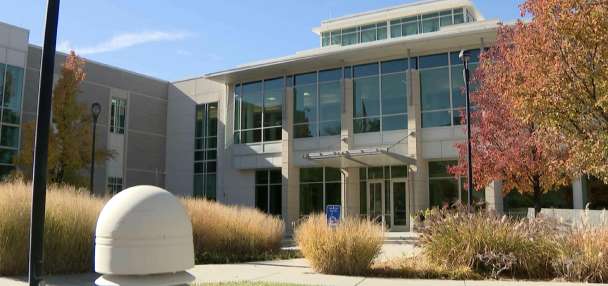
Robinson, 22, of Washington, Washington County, is accused of shooting and killing Charlie Kirk on Sept. 10 while Kirk was at Utah Valley University. Kirk, 31 — a conservative activist and co-founder of Turning Point USA — was sitting under a tent of an outdoor amphitheater-courtyard area at UVU, speaking in front of approximately 3,000 people, when he was shot in the neck by a gunman on the roof of the nearby Losee Center building.
On Thursday, Robinson entered the courtroom wearing a light blue dress shirt, slacks and a tie, and his hands and feet were shackled. He sat at a table next to his defense attorneys and appeared to be taking notes in a notebook during the hearing. Robinson's father, mother and brother also attended the hearing and sat in the front row of the audience area.
Although no representatives from Kirk's family were in attendance, Graf did agree to a request by the state on Thursday designating Kirk's widow, Erika Kirk, as the official victim representative for all future hearings.
Security for the hearing was tight, with nine Utah County sheriff's deputies inside the courtroom, including five wearing camo with "SWAT" written on their backs, and additional deputies and at least one police K-9 outside the courtroom. Utah County sheriff's deputies blocked off streets surrounding the 4th District Courthouse, limiting access to vehicles.
Three issues were discussed during Thursday's hearing:
- Whether audio and transcripts of a closed-door hearing on Oct. 24 should be released to the public.
- A motion to amend the publicity, or "gag order," issued for the case.
- Motions by attorneys representing the media to be recognized as limited party status interveners so they will automatically be notified of proposals to close court hearings from the public classify any documents as private.
The first issue took the longest to debate and was done in a closed setting so alleged sensitive information, such as court security, could be discussed. For two hours, members of the public, including the media, waited outside the courtroom while attorneys discussed the motion to release the audio and transcript of the October closed door hearing.
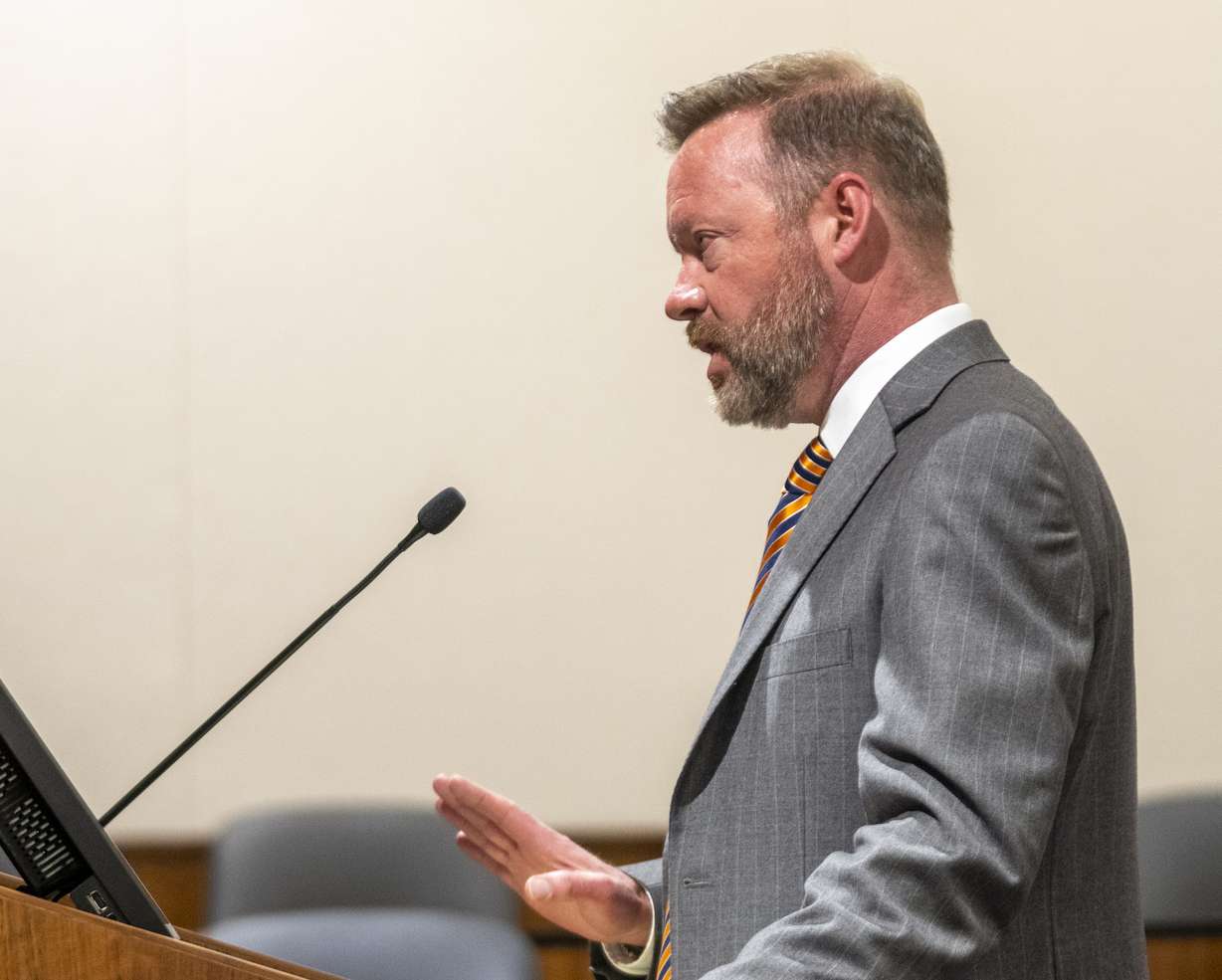
David Reymann, an attorney representing one group of media interveners — including KSL — debated with prosecutors and defense attorneys about which parts of the sealed information should be released to the public and what should remain redacted. Graf says he will announce his ruling on that issue on Dec. 29.
As for the issue of granting the media interveners limited party status, Reymann argued in court that attorneys for the media are there only to advocate for openness of the legal proceedings as they have argued in several previous criminal cases.
"If they file a motion that wants to classify something as nonpublic … we have the right to be heard on these issues," he said Thursday.
For example, the defense noted Thursday that they anticipate filing a motion soon requesting that no cameras be allowed in the courtroom — something Reymann says he will oppose.
Staci Visser, an attorney with Robinson's defense team, countered Reymann's arguments by saying the defense is worried about leaks to the media and that if the interveners are given limited party status, the judge should make it "very crystal clear" what they are allowed and not allowed to do.
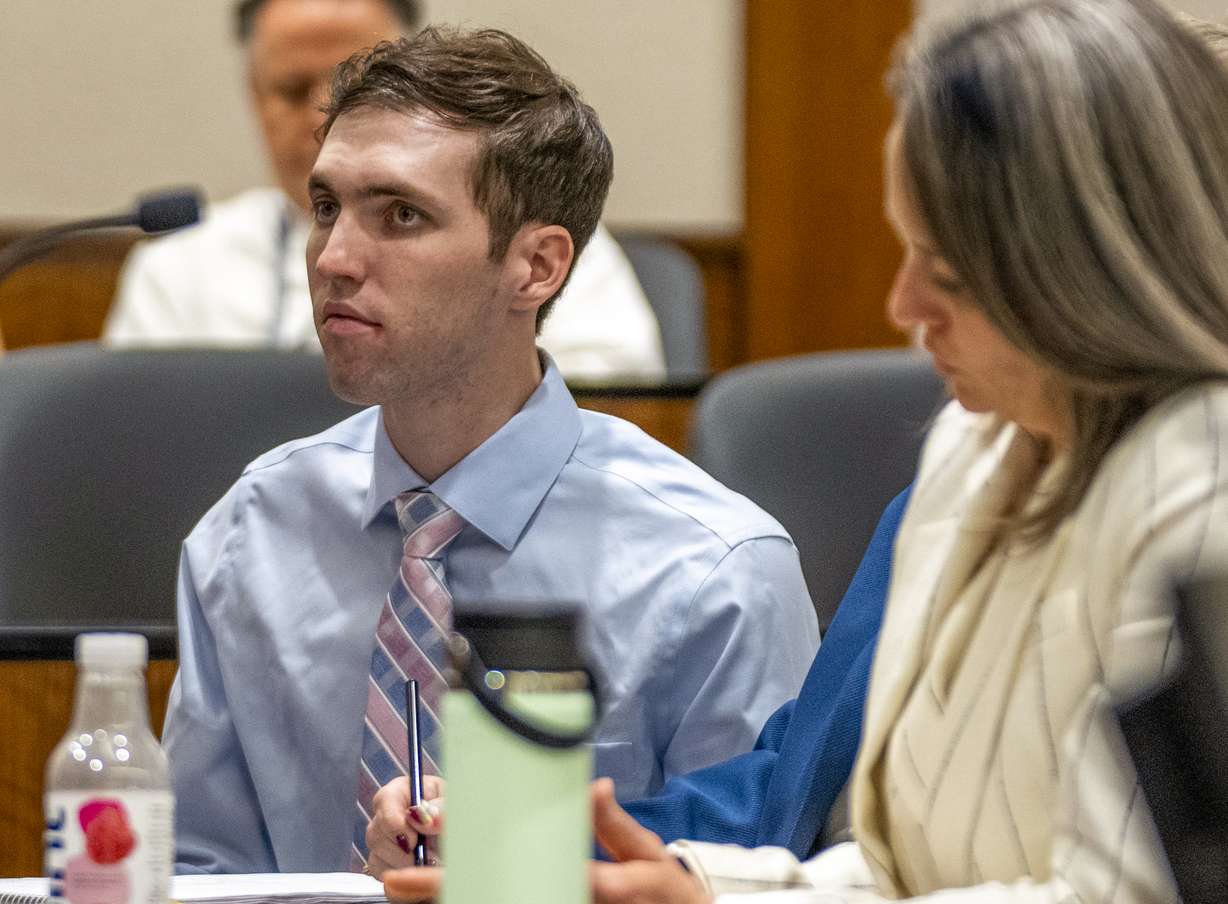
"This isn't about semantics; it's about substance," she said. "We don't want the chaos that is out in the media in this courtroom."
The judge said he would also issue his ruling on the media intervenors on Dec. 29.
Graf allowed Thursday's hearing to be livestreamed by the media but under tight restrictions, one of which was that Robinson's shackles could not be photographed or shown on video and that he could only be filmed or photographed while he was sitting. But early during Thursday's hearing, the livestream video inadvertently showed Robinson's handcuffs from a wide angle shot. Robinson's defense team asked Graf to suspend all video recording for the day. Graf issued a stern warning but allowed the livestreaming of the hearing to continue after the camera was moved to the opposite side of the courtroom
Robinson's defense team contends that the high publicity surrounding the case could potentially prejudice potential jurors and has argued for restrictions on media coverage. The media are also prohibited from recording or photographing Robinson's family inside the courtroom.
In their motion opposing any efforts to close or restrict Robinson's hearings, attorneys for a team of media organizations argue: "This is not the first high-profile criminal trial in Utah, nor will it be the last. Time and again, our courts have managed the delicate constitutional balance between the defendant's right to a fair trial and the public's right to observe the proceedings of the judicial process without sacrificing either. This case is no different."
The media expects this defense team to seek to close future court proceedings and associated records, "based solely on generalized assertions that pretrial publicity will make it impossible for the defendant to receive a fair trial. These kinds of blanket claims are not new. They arise in nearly every high-profile criminal prosecution, often at alarmingly early stages of the case, seeking to support broad prophylactic sealing orders with speculative predictions about what the jury pool might see in the news and how that might make it impossible to do, months or years from now, what courts do every day—seat a fair and impartial jury."
First Amendment attorneys have argued that there has been no case in Utah where it was found that a defendant did not receive a fair trial because of pretrial publicity, even though there have been many high-profile criminal cases in Utah.
As for the third motion, Graf modified his original pretrial publicity order on Thursday that attorneys for both the state and defense, as well as their investigators and anyone who has a high likelihood of being called to the witness stand to testify, cannot intentionally or knowingly make statements publicly that could theoretically prejudice a potential jury, and it's the duty of attorneys to notify those witnesses of the court order.
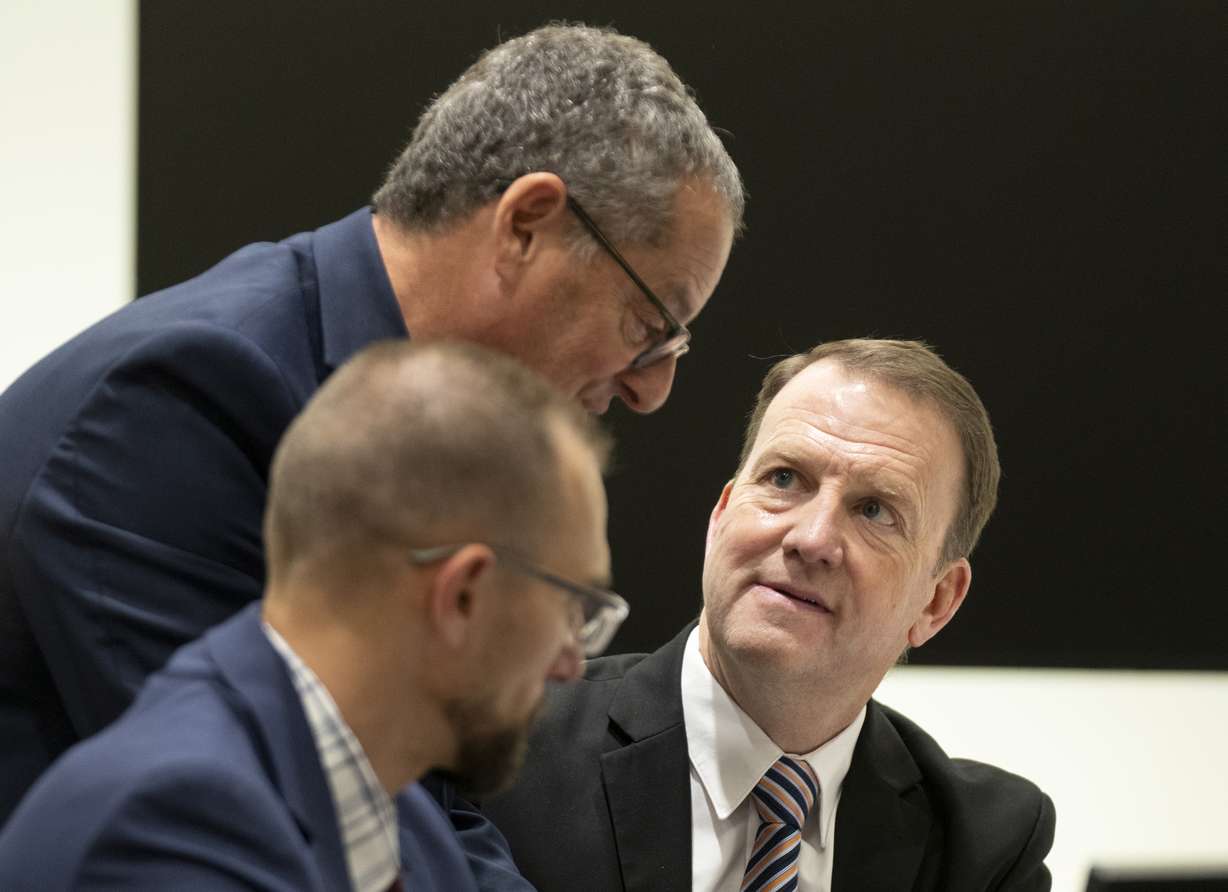
The next hearing to discuss additional motions is set for Jan. 16. During that hearing, the judge will consider a motion filed Wednesday under seal by Robinson's defense team to have the Utah County Attorney's Office disqualified from prosecuting the case. A second hearing was set for Feb. 3. During that hearing, the defense's yet-to-be-filed motion to keep cameras out of the courtroom is expected to be debated.
Also on Thursday, prosecutors updated the court on evidence that has been collected and shared with the defense. Nearly 14,000 files from law enforcement have now been collected by the state with nearly 8,000 files shared so far with the defense.
Prosecutors also on Thursday asked the judge to set dates for a preliminary hearing. Despite objections from Robinson's attorneys who argued that not only should other motions be settled first — including their motion to have prosecutors disqualified — and because they don't believe they will have enough time to sort through the mountain of evidence that's expected, Graf agreed to set a three-day preliminary hearing for May 18, 19 and 21.