'%3e%3cpath%20d='M34.1406%205.85938C30.3906%202.10547%2025.3047%200%2020%200C14.6953%200%209.60938%202.10547%205.85938%205.85938C2.10938%209.61328%200%2014.6953%200%2020C0%2025.3047%202.10547%2030.3906%205.85938%2034.1406C9.61328%2037.8906%2014.6953%2040%2020%2040C25.3047%2040%2030.3906%2037.8945%2034.1406%2034.1406C37.8906%2030.3906%2040%2025.3047%2040%2020C40%2014.6953%2037.8945%209.60938%2034.1406%205.85938ZM37.0117%2023.543H31.1602V13.5391H27.6328V19.9414C28.1211%2020.6914%2028.3711%2021.582%2028.3711%2022.5625V22.625C28.3711%2023.668%2028.1172%2024.6055%2027.6328%2025.4297V26.6094H36.082C33.4883%2032.9375%2027.2891%2037.3789%2020.0039%2037.3789C10.3711%2037.3789%202.62109%2029.6289%202.62109%2020C2.62109%2010.3711%2010.3711%202.62109%2020%202.62109C29.6289%202.62109%2037.3789%2010.3711%2037.3789%2020C37.3789%2021.1484%2037.2617%2022.2656%2037.0508%2023.3477C37.0391%2023.4141%2037.0234%2023.4766%2037.0117%2023.543Z'%20fill='white'/%3e%3cpath%20d='M22.3086%2018.5352C20.4336%2018.125%2019.9531%2017.8398%2019.9766%2017.1836V17.1406C19.9766%2016.6992%2020.3477%2016.2148%2021.4023%2016.2148C22.582%2016.2148%2023.8867%2016.6797%2025.0781%2017.4766L26.8516%2015.0195C25.4453%2013.8906%2023.707%2013.3398%2021.5547%2013.3398C18.5195%2013.3398%2016.4375%2015%2016.4063%2017.4766V17.5352C16.3633%2020.2617%2018.5859%2020.9805%2021.293%2021.6016C23.0391%2021.9766%2023.5703%2022.3164%2023.5703%2022.9609L23.5469%2022.9766C23.5469%2023.3906%2023.2578%2023.7031%2022.7852%2023.8359C22.5742%2023.9062%2022.1289%2023.9727%2021.5156%2023.9727C20.7617%2023.9727%2019.7539%2023.8633%2018.6328%2023.4844C18.0898%2023.2891%2017.4727%2023.0039%2016.8047%2022.6133L20.1406%2026.625C20.2813%2026.6602%2021.0977%2026.8516%2021.7734%2026.8516C25.0039%2026.8516%2027.0859%2025.2461%2027.1094%2022.6328V22.5703C27.1602%2020.1133%2025.2148%2019.1719%2022.3086%2018.5352Z'%20fill='white'/%3e%3cpath%20d='M5.24219%2013.5664V26.6133H8.75391V23.7578L10.2969%2021.9531L14.2031%2026.6133H18.3867L12.3555%2019.5195L17.4023%2013.5664H13.4531L8.75391%2019.0586V13.5664H5.24219Z'%20fill='white'/%3e%3c/g%3e%3cdefs%3e%3cclipPath%20id='clip0_97_2430'%3e%3crect%20width='40'%20height='40'%20fill='white'/%3e%3c/clipPath%3e%3c/defs%3e%3c/svg%3e)







- The Department of Homeland Security accused Jair Celis of being a predator on social media.
- His attorneys claimed the allegations are libelous, citing they were based on sealed juvenile records.
- Celis faces deportation for a visa overstay; his legal team plans to sue DHS for defamation.
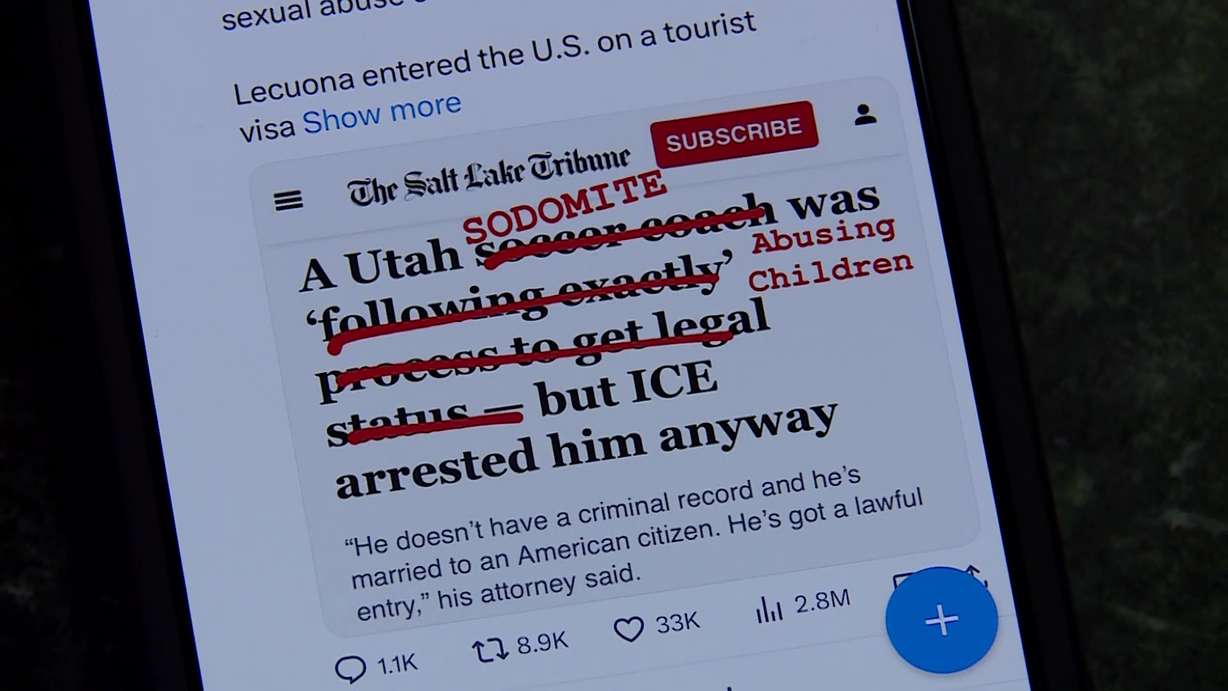
SALT LAKE CITY — After a Utah man was arrested by ICE, the Department of Homeland Security is now being accused of libel by his legal representation due to comments it made on social media alleging he's a predator.
The man arrested, Jair Celis, was waiting with his wife for a final green card interview when Immigration and Customs Enforcement agents arrested him last week. He was taken to an Arizona detention center.
On Tuesday, ICE told KSL that Celis was arrested for overstaying his visa, which his attorneys said was true.
One of them, Andy Armstrong, said Celis came to the U.S. from Mexico as a child. Recently, he started the process to get his green card. His wife, who attended many of his meetings, is a U.S. citizen.
The social media post made by the official DHS X account claims Celis has a history of child sexual abuse and sodomy, but another attorney for Celis, Adam Crayk, says the department is referencing juvenile court records from when he was a minor, which are not public by default. Juvenile court cases are also civil by default, not criminal.
"This is so far beyond the pale, so far beyond what any authorities should be doing, that it just makes no sense," Crayk said.
KSL-TV was able to obtain the documents in the juvenile case, which revealed Celis was accused of sexual abuse of a child when he was underage. However, Crayk said Celis and his girlfriend at the time were having a sexual relationship as teenagers. Celis followed the terms set by the judge at the time, Crayk said, and the case was resolved.
"You can't use juvenile," Crayk said. "You can't because of the nature of the proceedings; it's not a conviction. It does not meet the threshold requirements for conviction."
Crayk argued the case history is irrelevant to Celis' citizenship status. He is also uncertain how DHS obtained the sealed juvenile court records.
"We have, like, 200 letters of support. There's so many people, and they've all said, 'Look, we don't care. This is a juvenile case. We understand,'" Crayk said. "That's why we have juvenile. That's why we have juvenile court, because we get that kids, little kids (and) teenagers make mistakes all the time."
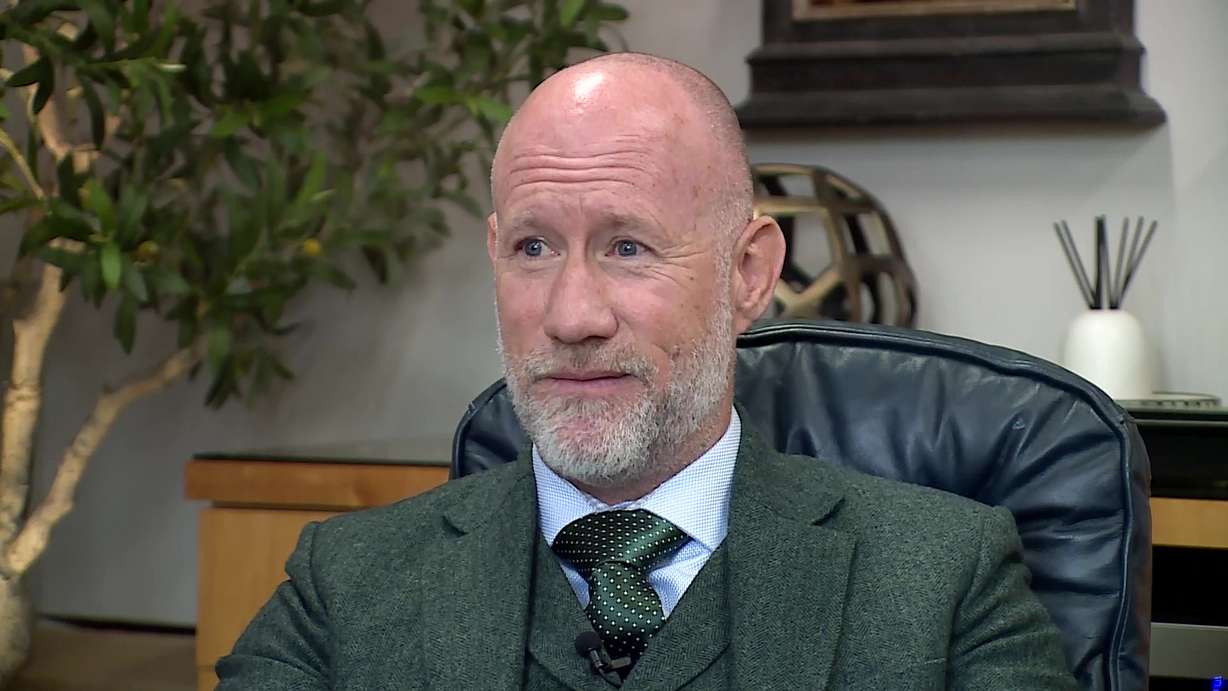
Crayk said he is now looking to partner with other attorneys to sue DHS for libel.
Celis' wife, Lexie Coletti Celis, issued a statement Wednesday:
"As this process has played out, I knew that there would be lies and wrongful accusations, but to have it come from our own Government to fit their inhumane narrative and agenda is absolutely disgusting, but ultimately not surprising. My husband has the biggest community around him. The people who know him know who he is- and it is nothing along the lines of what he has been accused. I'm grateful for the immense amount of support we have received.
At this time I ask you respect our family's privacy as we navigate these inhumane and awful circumstances that the Government has created for an innocent family."
Crayk says the only unlawful act Celis committed was overstaying his visa.
"When he turns 18, he has two choices: He stays here with his family and mom and dad. Mom is a permanent resident. Dad's a citizen of the United States. Or, you leave, you just pack up and go home," Crayk said. "Nobody's going to do that."
He said it's far easier to get a marriage-based green card, which is what Celis was pursuing with his wife of five years.
KSL asked about the timeline of his application.
"One of the issues that you have there is the pandemic occurred," Crayk said. "The pandemic basically closed everything for 14 months."
Crayk said Celis also declined the COVID-19 vaccine, which was a requirement until recently.
Crayk said Celis has a hearing before an immigration judge Friday. He said he would file a bond request for Celis Wednesday.
"We have two things we have to prove: Number one, that he's not a danger to the community, and number two, that he's not a flight risk," Crayk said.
DHS response
When KSL reviewed the documents in the juvenile case, reporters could not find any instances of sodomy, but some sections were redacted.
In an email Wednesday, DHS Assistant Secretary Tricia McLaughlin told KSL, "Because you refuse to do your own research, we can provide you the criminal records. These charges were not filed as a juvenile arrest. DHS stands by arresting a sodomite and child abuser, and we believe it was completely appropriate to alert the public about one less sicko off America's streets. Get a grip."
KSL verified with the Salt Lake County Sheriff's Office that the charges DHS referenced were not official charges, but a jail booking sheet.