'%3e%3cpath%20d='M34.1406%205.85938C30.3906%202.10547%2025.3047%200%2020%200C14.6953%200%209.60938%202.10547%205.85938%205.85938C2.10938%209.61328%200%2014.6953%200%2020C0%2025.3047%202.10547%2030.3906%205.85938%2034.1406C9.61328%2037.8906%2014.6953%2040%2020%2040C25.3047%2040%2030.3906%2037.8945%2034.1406%2034.1406C37.8906%2030.3906%2040%2025.3047%2040%2020C40%2014.6953%2037.8945%209.60938%2034.1406%205.85938ZM37.0117%2023.543H31.1602V13.5391H27.6328V19.9414C28.1211%2020.6914%2028.3711%2021.582%2028.3711%2022.5625V22.625C28.3711%2023.668%2028.1172%2024.6055%2027.6328%2025.4297V26.6094H36.082C33.4883%2032.9375%2027.2891%2037.3789%2020.0039%2037.3789C10.3711%2037.3789%202.62109%2029.6289%202.62109%2020C2.62109%2010.3711%2010.3711%202.62109%2020%202.62109C29.6289%202.62109%2037.3789%2010.3711%2037.3789%2020C37.3789%2021.1484%2037.2617%2022.2656%2037.0508%2023.3477C37.0391%2023.4141%2037.0234%2023.4766%2037.0117%2023.543Z'%20fill='white'/%3e%3cpath%20d='M22.3086%2018.5352C20.4336%2018.125%2019.9531%2017.8398%2019.9766%2017.1836V17.1406C19.9766%2016.6992%2020.3477%2016.2148%2021.4023%2016.2148C22.582%2016.2148%2023.8867%2016.6797%2025.0781%2017.4766L26.8516%2015.0195C25.4453%2013.8906%2023.707%2013.3398%2021.5547%2013.3398C18.5195%2013.3398%2016.4375%2015%2016.4063%2017.4766V17.5352C16.3633%2020.2617%2018.5859%2020.9805%2021.293%2021.6016C23.0391%2021.9766%2023.5703%2022.3164%2023.5703%2022.9609L23.5469%2022.9766C23.5469%2023.3906%2023.2578%2023.7031%2022.7852%2023.8359C22.5742%2023.9062%2022.1289%2023.9727%2021.5156%2023.9727C20.7617%2023.9727%2019.7539%2023.8633%2018.6328%2023.4844C18.0898%2023.2891%2017.4727%2023.0039%2016.8047%2022.6133L20.1406%2026.625C20.2813%2026.6602%2021.0977%2026.8516%2021.7734%2026.8516C25.0039%2026.8516%2027.0859%2025.2461%2027.1094%2022.6328V22.5703C27.1602%2020.1133%2025.2148%2019.1719%2022.3086%2018.5352Z'%20fill='white'/%3e%3cpath%20d='M5.24219%2013.5664V26.6133H8.75391V23.7578L10.2969%2021.9531L14.2031%2026.6133H18.3867L12.3555%2019.5195L17.4023%2013.5664H13.4531L8.75391%2019.0586V13.5664H5.24219Z'%20fill='white'/%3e%3c/g%3e%3cdefs%3e%3cclipPath%20id='clip0_97_2430'%3e%3crect%20width='40'%20height='40'%20fill='white'/%3e%3c/clipPath%3e%3c/defs%3e%3c/svg%3e)


Get ready to "fall back," Utah. Daylight saving time is coming to an end, and that means lighter mornings, darker evenings and potentially one extra hour of sleep.
Here's everything Utahns need to know about when to change clocks, what to expect and whether the state might ever ditch the time change for good.
When does daylight saving time end in Utah?
Daylight saving time in Utah ends at 2 a.m. on Sunday, Nov. 2. That's when clocks are turned back an hour, giving Utahns a little extra rest. The time change means the sun will rise earlier in the morning, but evenings will grow darker sooner.
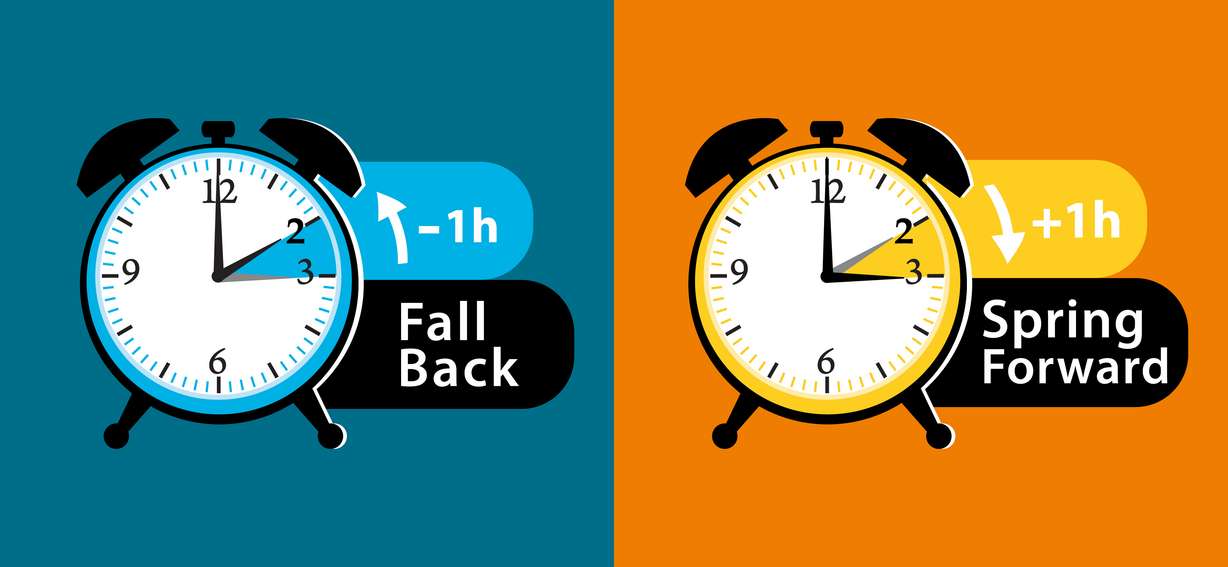
The next shift comes on Sunday, March 8, 2026, when clocks move forward to mark the start of daylight saving time. For those who like routines, the shift in November can feel easier than the spring "spring forward" because it gives you an extra hour of sleep.
Does Utah have daylight saving time?
Utah follows daylight saving time. Most states do, except for Arizona (excluding the Navajo Nation), Hawaii and U.S. territories such as Puerto Rico, Guam and the U.S. Virgin Islands. For nearly every other state, changing clocks in March and November is a regular part of life, even if many residents would prefer to keep the time the same year-round.
Is Utah getting rid of daylight saving time?
Utah lawmakers have debated ending the twice-yearly time change for years. A 2024 bill that would have eliminated daylight saving time stalled in the State Senate, even though polls show most Utahns support the idea.
That means Utahns will continue to switch their clocks twice a year … for now.
When is daylight saving time in Utah?
While the actual date changes every year, daylight saving time begins on the second Sunday of March and ends on the first Sunday of November. Even if your phone or computer automatically changes the time, the time changes look like this:
- Daylight saving time ends: Sunday, Nov. 2, 2025, at 2 a.m. (move clocks back one hour).
- Daylight saving time starts: Sunday, March 8, 2026, at 2 a.m. (move clocks forward one hour).
Understanding the cycle can help you plan schedules, appointments and activities throughout the year. Morning routines will feel brighter during daylight saving time, while evenings get darker after the November change.
Tips for adjusting to the time change
The "fall back" time change can disrupt sleep, particularly for kids, students and early risers. A few simple strategies can help Utahns adjust smoothly:
- Stick to a consistent schedule: Going to bed and waking up at the same time each day helps your body reset.
- Get morning sunlight: Exposure to natural light in the morning signals your body clock to adjust.
- Limit screen time before bed: Reducing phone, TV or tablet use an hour before sleep can improve rest.
- Take short naps if needed: A 20- to 30-minute nap can help counter fatigue without affecting nighttime sleep.
- Update manual clocks: Not all devices adjust automatically, so remember to reset clocks on ovens, microwaves, wall clocks and vehicles.
With these tips, the time change can feel less jarring, and Utahns can make the most of the shorter winter days.
What to expect after the change
After the clocks fall back, mornings will be brighter, making it easier to get up and start the day. On the other hand, that means the evenings will get darker sooner, which can feel like winter is arriving early. While some people enjoy the extra morning light, others may find the earlier darkness a little harder to adjust to, especially in outdoor activities and commutes.
Daylight saving time in Utah may continue to be a routine twice-yearly event, but being prepared can make the transition easier. Knowing when clocks change, what adjustments to make, and the current legislative status helps Utahns stay on schedule — no matter what time the clock says.