'%3e%3cpath%20d='M34.1406%205.85938C30.3906%202.10547%2025.3047%200%2020%200C14.6953%200%209.60938%202.10547%205.85938%205.85938C2.10938%209.61328%200%2014.6953%200%2020C0%2025.3047%202.10547%2030.3906%205.85938%2034.1406C9.61328%2037.8906%2014.6953%2040%2020%2040C25.3047%2040%2030.3906%2037.8945%2034.1406%2034.1406C37.8906%2030.3906%2040%2025.3047%2040%2020C40%2014.6953%2037.8945%209.60938%2034.1406%205.85938ZM37.0117%2023.543H31.1602V13.5391H27.6328V19.9414C28.1211%2020.6914%2028.3711%2021.582%2028.3711%2022.5625V22.625C28.3711%2023.668%2028.1172%2024.6055%2027.6328%2025.4297V26.6094H36.082C33.4883%2032.9375%2027.2891%2037.3789%2020.0039%2037.3789C10.3711%2037.3789%202.62109%2029.6289%202.62109%2020C2.62109%2010.3711%2010.3711%202.62109%2020%202.62109C29.6289%202.62109%2037.3789%2010.3711%2037.3789%2020C37.3789%2021.1484%2037.2617%2022.2656%2037.0508%2023.3477C37.0391%2023.4141%2037.0234%2023.4766%2037.0117%2023.543Z'%20fill='white'/%3e%3cpath%20d='M22.3086%2018.5352C20.4336%2018.125%2019.9531%2017.8398%2019.9766%2017.1836V17.1406C19.9766%2016.6992%2020.3477%2016.2148%2021.4023%2016.2148C22.582%2016.2148%2023.8867%2016.6797%2025.0781%2017.4766L26.8516%2015.0195C25.4453%2013.8906%2023.707%2013.3398%2021.5547%2013.3398C18.5195%2013.3398%2016.4375%2015%2016.4063%2017.4766V17.5352C16.3633%2020.2617%2018.5859%2020.9805%2021.293%2021.6016C23.0391%2021.9766%2023.5703%2022.3164%2023.5703%2022.9609L23.5469%2022.9766C23.5469%2023.3906%2023.2578%2023.7031%2022.7852%2023.8359C22.5742%2023.9062%2022.1289%2023.9727%2021.5156%2023.9727C20.7617%2023.9727%2019.7539%2023.8633%2018.6328%2023.4844C18.0898%2023.2891%2017.4727%2023.0039%2016.8047%2022.6133L20.1406%2026.625C20.2813%2026.6602%2021.0977%2026.8516%2021.7734%2026.8516C25.0039%2026.8516%2027.0859%2025.2461%2027.1094%2022.6328V22.5703C27.1602%2020.1133%2025.2148%2019.1719%2022.3086%2018.5352Z'%20fill='white'/%3e%3cpath%20d='M5.24219%2013.5664V26.6133H8.75391V23.7578L10.2969%2021.9531L14.2031%2026.6133H18.3867L12.3555%2019.5195L17.4023%2013.5664H13.4531L8.75391%2019.0586V13.5664H5.24219Z'%20fill='white'/%3e%3c/g%3e%3cdefs%3e%3cclipPath%20id='clip0_97_2430'%3e%3crect%20width='40'%20height='40'%20fill='white'/%3e%3c/clipPath%3e%3c/defs%3e%3c/svg%3e)


This archived news story is available only for your personal, non-commercial use. Information in the story may be outdated or superseded by additional information. Reading or replaying the story in its archived form does not constitute a republication of the story.
- Utah Transit Authority promotes transit economic benefits, highlighting $5.11 return per every $1 invested.
- A Metro Analytics study showed UTA supports 79,000 jobs, translating to $2.9 billion in income.
- UTA's expansion plans include new TRAX line and FrontRunner improvements before 2034 Olympics.
SALT LAKE CITY — Utah transit leaders rolled out a sleek new way to depict how their projects are spurring economic growth in the state.
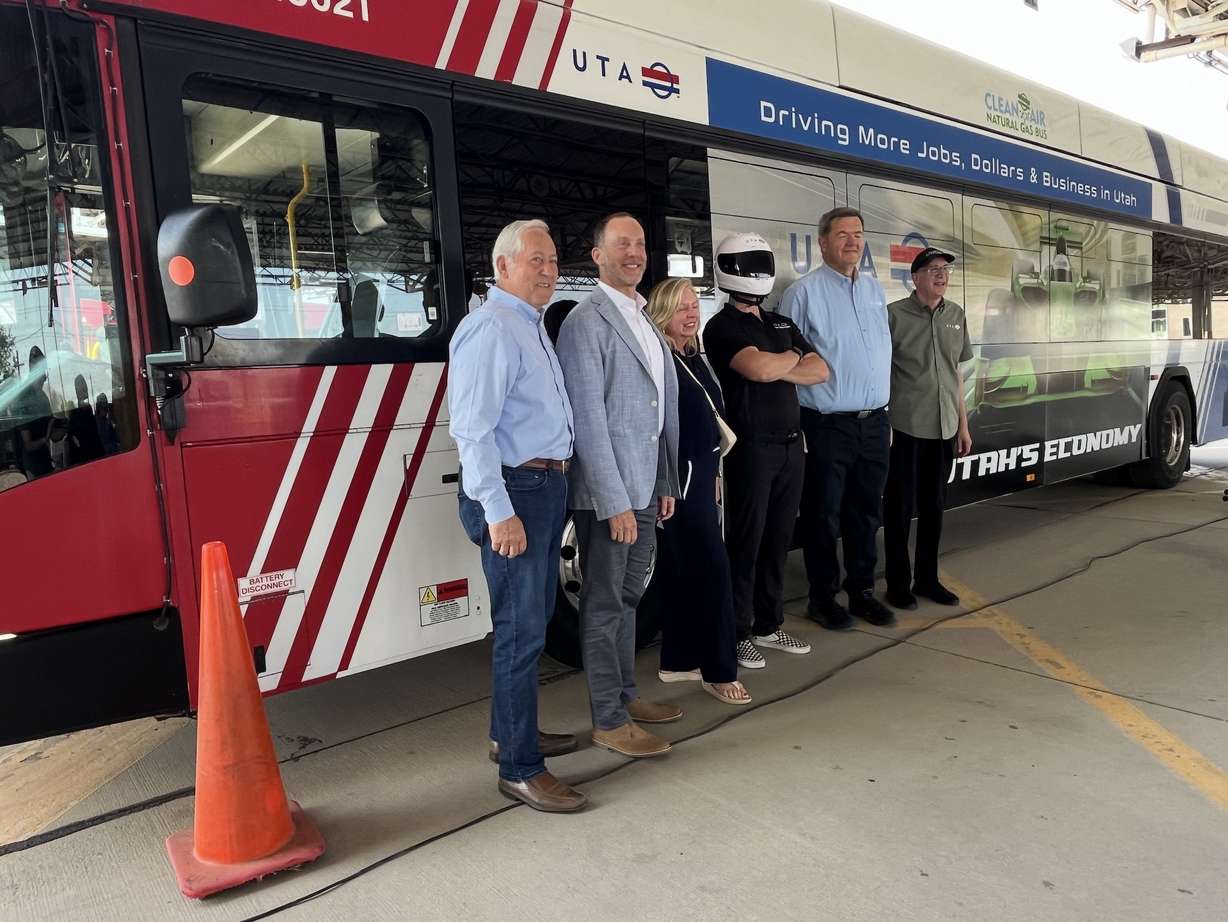
On Wednesday, Utah Transit Authority executives climbed out of a bus wrapped with the image of a Formula 1 car, featuring a pair of slogans: "Driving More Jobs, Dollars and Business in Utah" above it, and "Fueling Utah's Economy" below. All of this is aimed at highlighting recent studies that underscore the value of investing in transit projects, including a statistic that shows $1 invested in UTA yields $5.11 in economic return.
"Every Utahn benefits from the economic investment of transit in the state of Utah," said Carlton Christensen, chairman of the UTA board of trustees, as he stood in front of the new bus wrap.
The findings are based on a 2023 economic value study conducted by Metro Analytics, a North Carolina-based firm specializing in urban planning analysis. The study also found that the UTA system directly and indirectly supported approximately 79,000 jobs, contributing $2.9 billion in annual household income earned, while also creating $717 million in combined household and business efficiency and generating $377 million in tax revenue for the state.
These are numbers often impossible to see for the everyday rider who uses transit to commute, said UTA Executive Director Jay Fox.
"This system creates an economic impact above and beyond what the customer experience is for where they got to get to go," he told KSL.com. "We're showing numbers that our investment in transit is producing tremendous return."
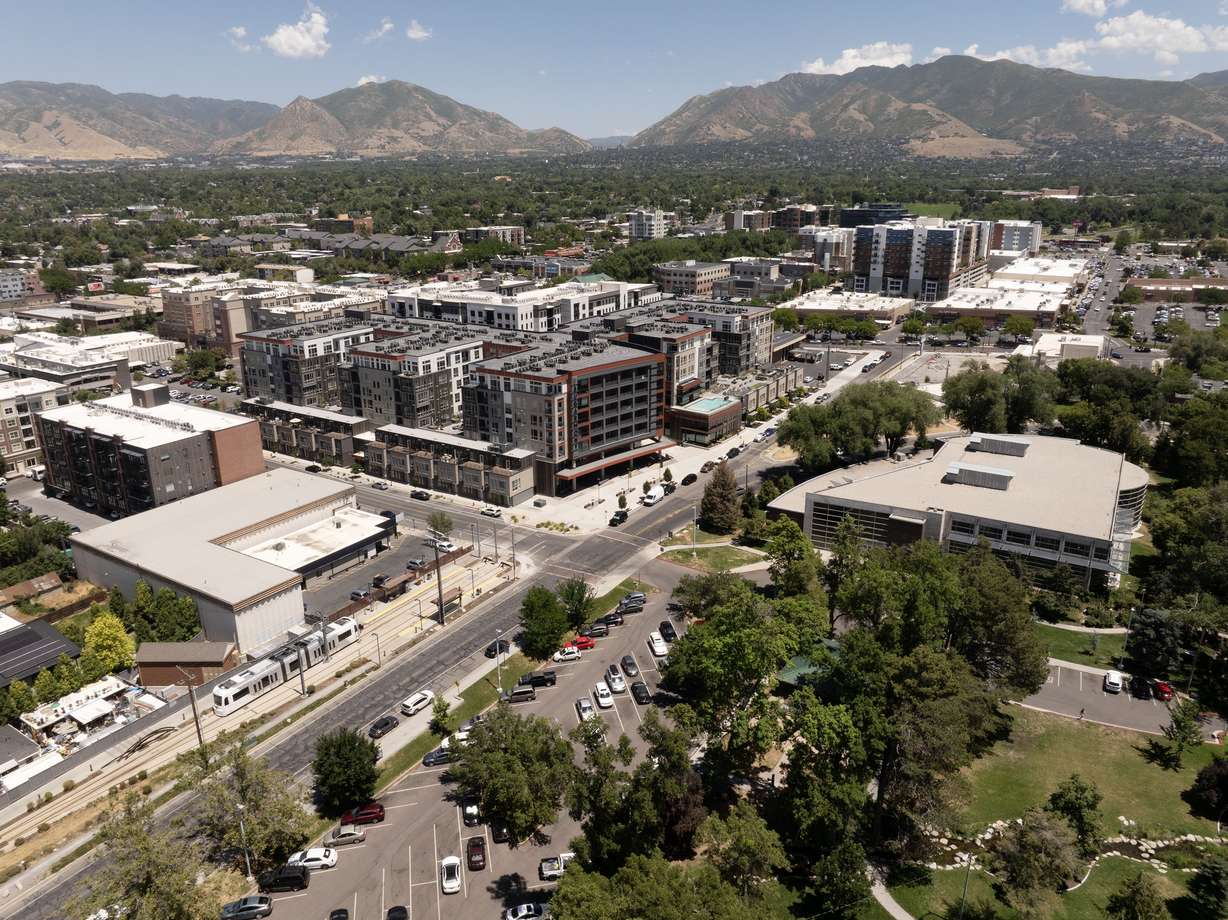
It has also stimulated major redevelopment in areas that didn't seem likely a decade or two ago. Perhaps the most noticeable is the tiny S-Line streetcar, which runs from South Salt Lake to Sugar House just south of 2100 South. UTA created it through a $26 million federal grant, and the area has since experienced over $2 billion in new investment.
South Salt Lake placed its downtown along the line, while several new developments have opened near the line in Sugar House. Other Wasatch Front cities have also zeroed in on major new developments near transit services, factoring in the region's population growth.
"The evidence is on the ground. You don't just have to look at the studies," said Andrew Gruber, director of the Wasatch Front Regional Council, pointing to the growth around the S-Line and South Jordan's Daybreak community. All these city centers are linked together by transit, he said.
Transit has also been a key factor in business location decisions, Gruber added. Still, transit agencies have also encountered hurdles in securing funding for their projects. U.S. Transportation Secretary Sean Duffy said he wanted to see results when it comes to funding transit projects, following a short ride on UTA's FrontRunner in April.
"I want to invest in great train transit projects — the ones that are on budget, that are clean, that are safe, that move people, that actually have projections on ridership and actually meet those projections or exceed those projections," he said.
Similar conversations have taken place with state leaders. Even though research showing the benefits of investing in transit has been out there for years, Fox says UTA hasn't been as vocal as perhaps it should be in highlighting it — which is even more important as a public agency.
The new efforts come as UTA and the Utah Department of Transportation seek to expand the Wasatch Front's transit network. Members of the Utah Transportation Commission voted last month to approve $4 million for an environmental study of the TechLink TRAX Study, a plan to offer a fourth light-rail line and expand service in Salt Lake City.
The commission is expected to vote next month on whether to award additional funds for UTA's planned S-Line expansion, as well, after some hesitation about the project last month. The state is also looking to double-track more of the FrontRunner line from Ogden to Provo, which would allow the agency to increase train frequency and travel time.
These are all features that UTA officials say they'd like to see implemented over the next decade as the region prepares for the 2034 Winter Olympics and Paralympics.