'%3e%3cpath%20d='M34.1406%205.85938C30.3906%202.10547%2025.3047%200%2020%200C14.6953%200%209.60938%202.10547%205.85938%205.85938C2.10938%209.61328%200%2014.6953%200%2020C0%2025.3047%202.10547%2030.3906%205.85938%2034.1406C9.61328%2037.8906%2014.6953%2040%2020%2040C25.3047%2040%2030.3906%2037.8945%2034.1406%2034.1406C37.8906%2030.3906%2040%2025.3047%2040%2020C40%2014.6953%2037.8945%209.60938%2034.1406%205.85938ZM37.0117%2023.543H31.1602V13.5391H27.6328V19.9414C28.1211%2020.6914%2028.3711%2021.582%2028.3711%2022.5625V22.625C28.3711%2023.668%2028.1172%2024.6055%2027.6328%2025.4297V26.6094H36.082C33.4883%2032.9375%2027.2891%2037.3789%2020.0039%2037.3789C10.3711%2037.3789%202.62109%2029.6289%202.62109%2020C2.62109%2010.3711%2010.3711%202.62109%2020%202.62109C29.6289%202.62109%2037.3789%2010.3711%2037.3789%2020C37.3789%2021.1484%2037.2617%2022.2656%2037.0508%2023.3477C37.0391%2023.4141%2037.0234%2023.4766%2037.0117%2023.543Z'%20fill='white'/%3e%3cpath%20d='M22.3086%2018.5352C20.4336%2018.125%2019.9531%2017.8398%2019.9766%2017.1836V17.1406C19.9766%2016.6992%2020.3477%2016.2148%2021.4023%2016.2148C22.582%2016.2148%2023.8867%2016.6797%2025.0781%2017.4766L26.8516%2015.0195C25.4453%2013.8906%2023.707%2013.3398%2021.5547%2013.3398C18.5195%2013.3398%2016.4375%2015%2016.4063%2017.4766V17.5352C16.3633%2020.2617%2018.5859%2020.9805%2021.293%2021.6016C23.0391%2021.9766%2023.5703%2022.3164%2023.5703%2022.9609L23.5469%2022.9766C23.5469%2023.3906%2023.2578%2023.7031%2022.7852%2023.8359C22.5742%2023.9062%2022.1289%2023.9727%2021.5156%2023.9727C20.7617%2023.9727%2019.7539%2023.8633%2018.6328%2023.4844C18.0898%2023.2891%2017.4727%2023.0039%2016.8047%2022.6133L20.1406%2026.625C20.2813%2026.6602%2021.0977%2026.8516%2021.7734%2026.8516C25.0039%2026.8516%2027.0859%2025.2461%2027.1094%2022.6328V22.5703C27.1602%2020.1133%2025.2148%2019.1719%2022.3086%2018.5352Z'%20fill='white'/%3e%3cpath%20d='M5.24219%2013.5664V26.6133H8.75391V23.7578L10.2969%2021.9531L14.2031%2026.6133H18.3867L12.3555%2019.5195L17.4023%2013.5664H13.4531L8.75391%2019.0586V13.5664H5.24219Z'%20fill='white'/%3e%3c/g%3e%3cdefs%3e%3cclipPath%20id='clip0_97_2430'%3e%3crect%20width='40'%20height='40'%20fill='white'/%3e%3c/clipPath%3e%3c/defs%3e%3c/svg%3e)


This archived news story is available only for your personal, non-commercial use. Information in the story may be outdated or superseded by additional information. Reading or replaying the story in its archived form does not constitute a republication of the story.
- Hikers on Mount Timpanogos encountered mountain goats, prompting safety reminders from experts.
- Mountain goats, especially with kids, can be territorial; give them 150 feet space.
- During rut in November, male goats become aggressive; avoid close encounters, Utah DWR advises.
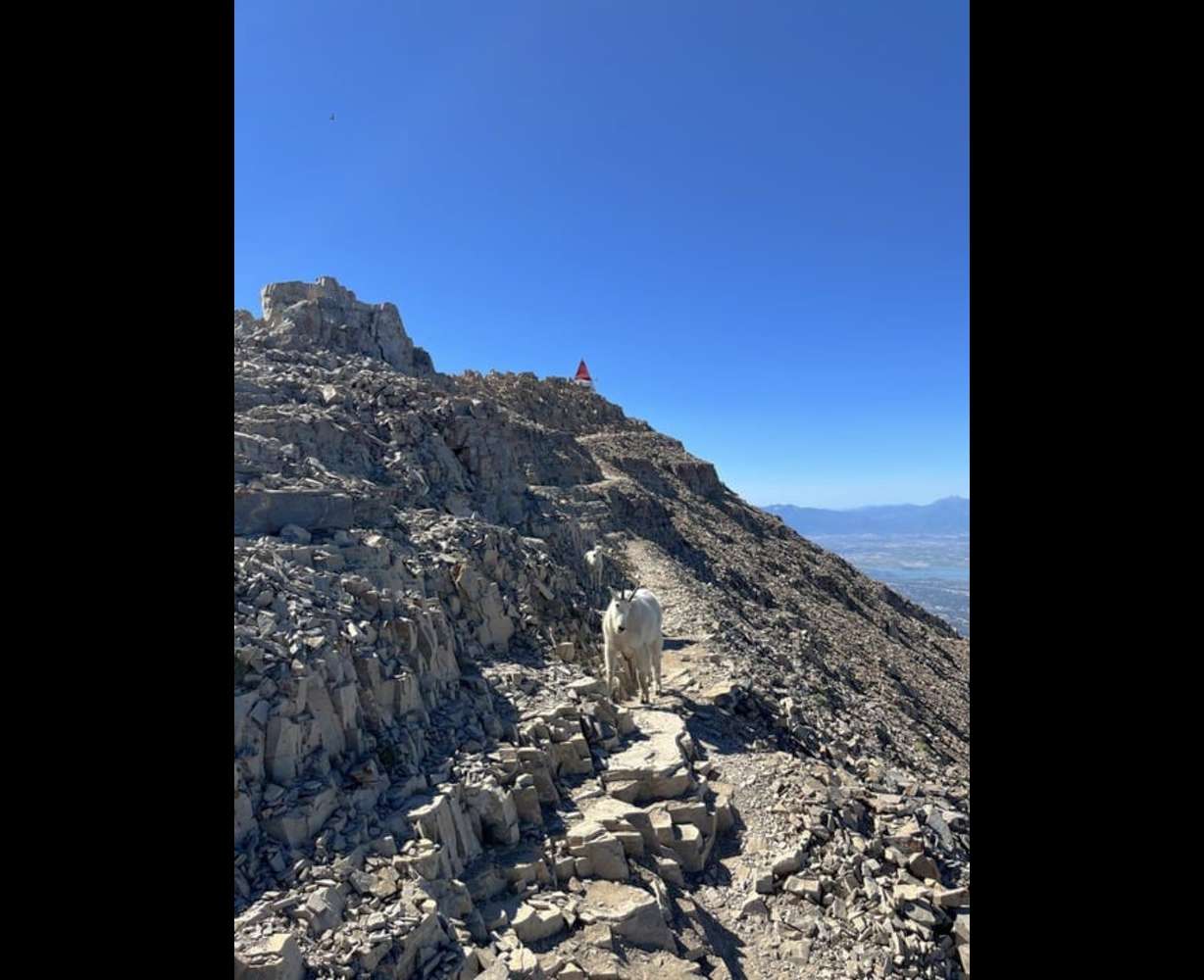
SALT LAKE CITY — On a recent hike to the top of Mount Timpanogos, our group of four encountered mountain goats and their young several times along the trail.
We were careful not to get too close or impede their path as we admired their white coats and spiky black horns along with their amazing agility. We just eyed each other and went on our way.
But mountain goats can be more aggressive at certain times of the year.
Know mountain goat behavior
Nanny goats typically give birth in late May, so it's common to see them with a kid in tow during the summer. They mostly graze in meadows with abundant feed while nursing their kids. The nannies are often territorial during this period, especially when their kids are with them, according to the Utah Division of Wildlife Resources.
Male mountain goats, or billies, typically get more aggressive during their breeding season, known as the rut, which usually takes place in November.
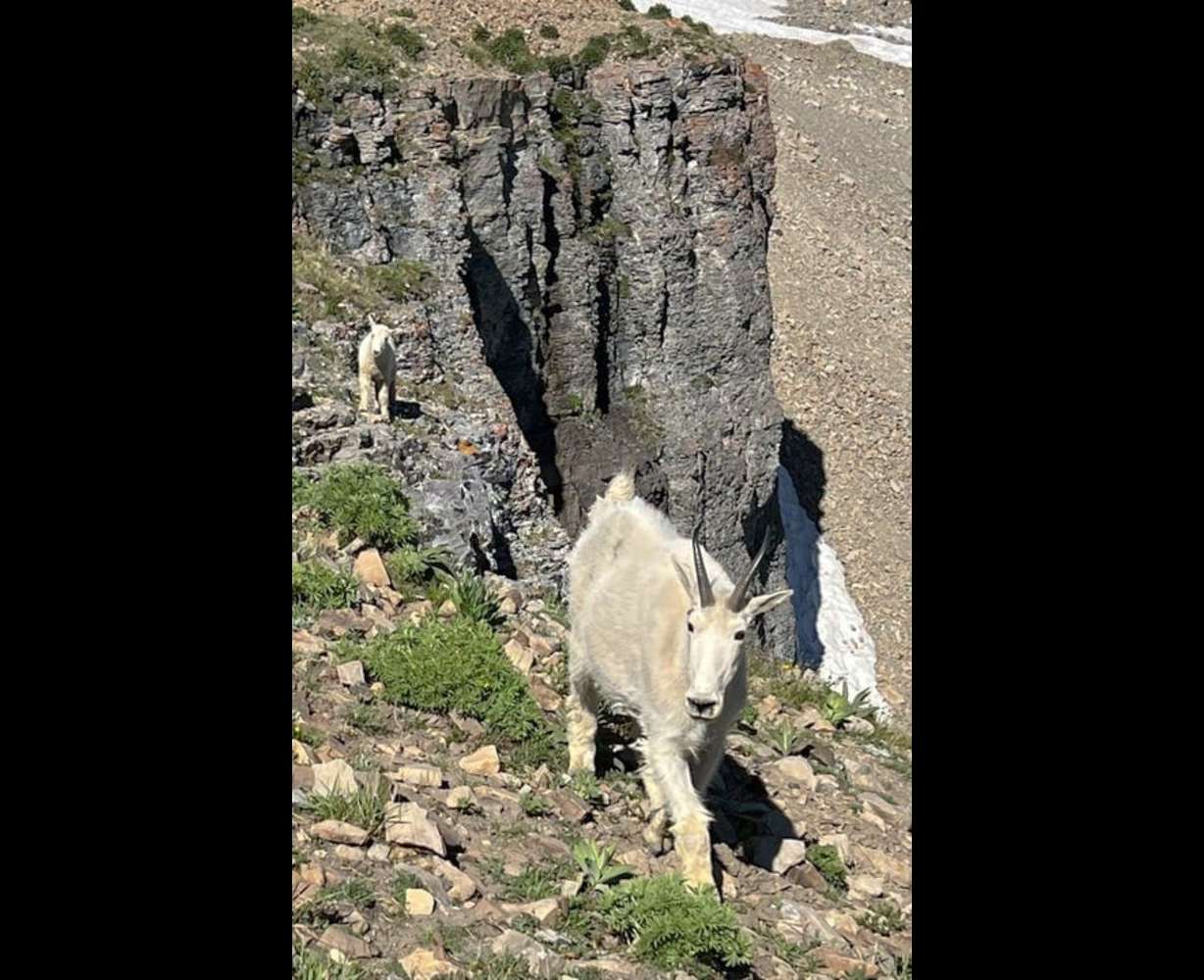
"Mountain goats are one of the few local big game species where both the males and females grow horns, so it's hard to tell them apart," said Rusty Robinson, Utah Division of Wildlife Resources once-in-a-lifetime species coordinator. "However, the female goats have a thinner horn at the base and typically have a bigger gap between their horns. The male goats are also typically larger in size."
Robinson said mountain goats can impale you with their horns, so you don't want to risk coming into contact with one.
"Remember that they are wild animals, so always give them plenty of space. They are found in some pretty extreme terrain, so you don't want to risk getting too close to one while on the edge of a cliff," he said. "Be aware of your surroundings, stay alert and don't put yourself in those situations. If you need to turn around and cut your hike short, do it."
Where to see mountain goats
Utah is home to roughly 1,500 mountain goats in high-elevation areas with rugged, rocky alpine terrain.
The largest herds are found in the Uinta Mountains and the Tushar Mountains. There are also herds scattered throughout the Wasatch mountains, including on Mount Timpanogos, Cascade Mountain, Provo Peak and in Little Cottonwood Canyon.
Robinson said mountain goats are adapted to snowy weather and high-elevation conditions. Unlike other big game animals, they don't have hard hooves.
"Their hooves are more rubbery, which helps them grip the rocks when they are climbing a steep cliffside. They also grow really long, thick hair in the winter, and then shed it in the spring when the weather warms up," he said.
Mountain goats mainly eat grasses and flowering plants as well as shrubs and mossy lichen. They don't migrate long distances, but sometimes move to slightly lower elevations in the mountains during extreme winter conditions, per the DWR. They are fairly active during the day, except for in the middle of the day when it is really hot in the summer.
What to do if you cross paths with a mountain goat
If you encounter a mountain goat while hiking or backpacking, here are some tips from the DWR to help keep you safe:
- Give them plenty of space (roughly 150 feet or more). Mountain goats will often stand their ground or charge you if you get too close.
- If you see a mountain goat coming down the trail you are on, turn around and head back down the trail to avoid getting too close to them.
- Like other big game animals, mountain goats can be especially aggressive toward dogs. Keep dogs leashed and under control. It is against Utah law to allow dogs to chase or harass protected hoofed wildlife, like mountain goats.
- If a mountain goat approaches you, slowly back away and give it some distance. If it continues approaching, wave your arms and make loud noises to try and scare it away.
- Talk to the land-managing agency for the area where you're hiking and look for signs at trailheads to know if a particular trail has had reports of aggressive mountain goats.
- Never feed a mountain goat or allow it to lick your skin.