'%3e%3cpath%20d='M34.1406%205.85938C30.3906%202.10547%2025.3047%200%2020%200C14.6953%200%209.60938%202.10547%205.85938%205.85938C2.10938%209.61328%200%2014.6953%200%2020C0%2025.3047%202.10547%2030.3906%205.85938%2034.1406C9.61328%2037.8906%2014.6953%2040%2020%2040C25.3047%2040%2030.3906%2037.8945%2034.1406%2034.1406C37.8906%2030.3906%2040%2025.3047%2040%2020C40%2014.6953%2037.8945%209.60938%2034.1406%205.85938ZM37.0117%2023.543H31.1602V13.5391H27.6328V19.9414C28.1211%2020.6914%2028.3711%2021.582%2028.3711%2022.5625V22.625C28.3711%2023.668%2028.1172%2024.6055%2027.6328%2025.4297V26.6094H36.082C33.4883%2032.9375%2027.2891%2037.3789%2020.0039%2037.3789C10.3711%2037.3789%202.62109%2029.6289%202.62109%2020C2.62109%2010.3711%2010.3711%202.62109%2020%202.62109C29.6289%202.62109%2037.3789%2010.3711%2037.3789%2020C37.3789%2021.1484%2037.2617%2022.2656%2037.0508%2023.3477C37.0391%2023.4141%2037.0234%2023.4766%2037.0117%2023.543Z'%20fill='white'/%3e%3cpath%20d='M22.3086%2018.5352C20.4336%2018.125%2019.9531%2017.8398%2019.9766%2017.1836V17.1406C19.9766%2016.6992%2020.3477%2016.2148%2021.4023%2016.2148C22.582%2016.2148%2023.8867%2016.6797%2025.0781%2017.4766L26.8516%2015.0195C25.4453%2013.8906%2023.707%2013.3398%2021.5547%2013.3398C18.5195%2013.3398%2016.4375%2015%2016.4063%2017.4766V17.5352C16.3633%2020.2617%2018.5859%2020.9805%2021.293%2021.6016C23.0391%2021.9766%2023.5703%2022.3164%2023.5703%2022.9609L23.5469%2022.9766C23.5469%2023.3906%2023.2578%2023.7031%2022.7852%2023.8359C22.5742%2023.9062%2022.1289%2023.9727%2021.5156%2023.9727C20.7617%2023.9727%2019.7539%2023.8633%2018.6328%2023.4844C18.0898%2023.2891%2017.4727%2023.0039%2016.8047%2022.6133L20.1406%2026.625C20.2813%2026.6602%2021.0977%2026.8516%2021.7734%2026.8516C25.0039%2026.8516%2027.0859%2025.2461%2027.1094%2022.6328V22.5703C27.1602%2020.1133%2025.2148%2019.1719%2022.3086%2018.5352Z'%20fill='white'/%3e%3cpath%20d='M5.24219%2013.5664V26.6133H8.75391V23.7578L10.2969%2021.9531L14.2031%2026.6133H18.3867L12.3555%2019.5195L17.4023%2013.5664H13.4531L8.75391%2019.0586V13.5664H5.24219Z'%20fill='white'/%3e%3c/g%3e%3cdefs%3e%3cclipPath%20id='clip0_97_2430'%3e%3crect%20width='40'%20height='40'%20fill='white'/%3e%3c/clipPath%3e%3c/defs%3e%3c/svg%3e)




Estimated read time: 4-5 minutes
This archived news story is available only for your personal, non-commercial use. Information in the story may be outdated or superseded by additional information. Reading or replaying the story in its archived form does not constitute a republication of the story.
SALT LAKE CITY — Federal Railroad Administration officials could announce as early as this month whether plans to reconnect Salt Lake City to Boise and Las Vegas via commuter rail will receive federal funding to move forward to a planning stage, Utah and federal railroad experts say.
The plans, spearheaded by the Utah, Idaho and Nevada departments of transportation, are two of 47 proposed new corridor projects that the federal agency is considering to provide grants for through its Corridor Identification and Development Program. The grant would allow for the three states to further explore the logistics behind the restoration of Amtrak service between the three cities.
"We're certainly going to hear on those grants by the end of the year. We're hoping to hear this month," Jay Fox, executive director of the Utah Transit Authority, which is assisting the Utah Department of Transportation with Utah's applications, told KSL.com on Friday.
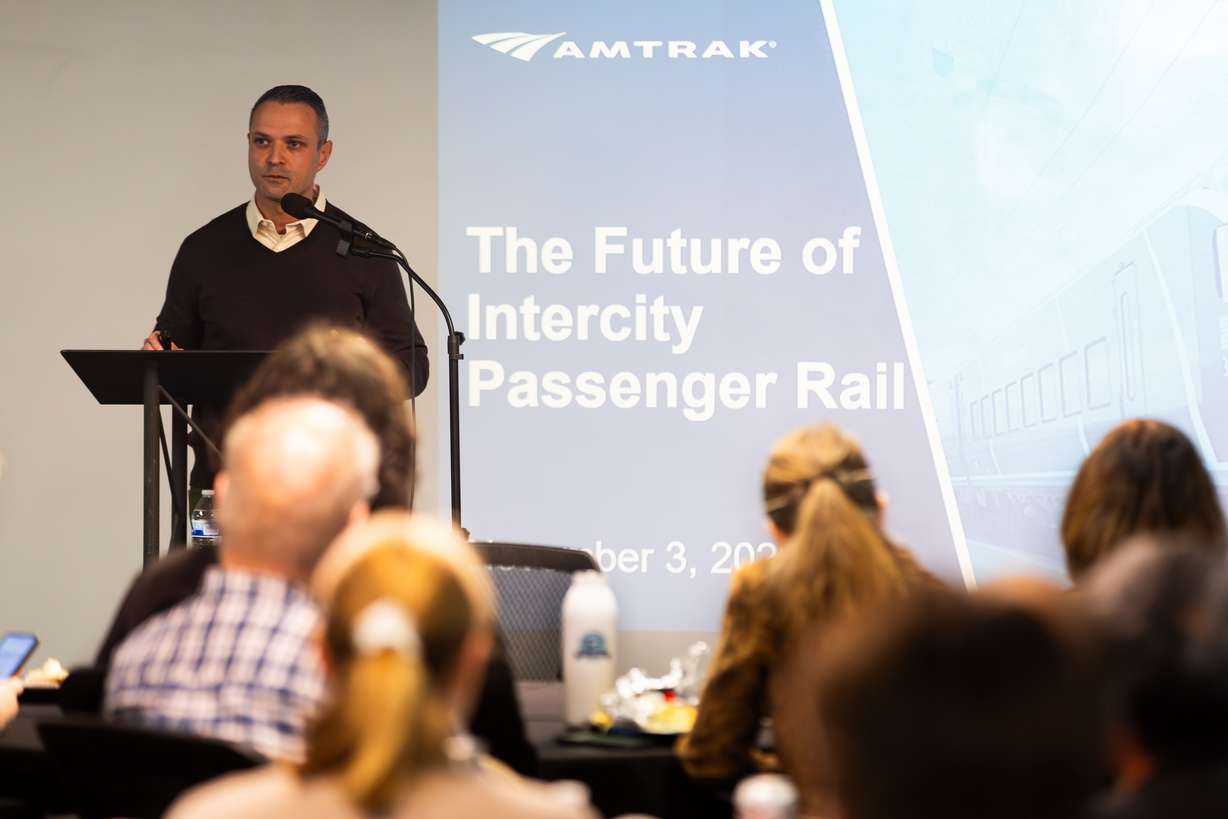
UTA held an event Friday where Amtrak officials and federal railroad experts provided updates on the project. If the project receives funds and planning yields the desire to restore rail service, it could resume within the next decade.
"I think everybody's excited," Fox added.
The three states applied for the grant earlier this year after Boise city officials sparked the idea of restoring the old Pioneer Line commuter service corridor that connected Idaho's and Utah's capital cities, with stops to a few cities in between. As those talks grew, so did talks to restore the former Desert Wind line that connects Salt Lake City to Las Vegas.
Amtrak discontinued the routes in the 1990s, but the federal government allocated $66 billion in funds to go toward advancing passenger rail projects through a 2021 infrastructure bill that opens the door for new routes to be created or restored.
A good chunk of this money is expected to be divvied out to states over the next two years, according to Caroline Decker, senior vice president and national rail business director of the environmental consulting group WSP, which is helping the Federal Railroad Administration and Amtrak in the program process.
Utah, Idaho and Nevada could stand to benefit from that, but they are certainly not alone in seeking funding. Other proposed new corridors include a project in Colorado, as well as 44 other plans across the country, according to Alex Khalfin, Amtrak's director of government affairs.
"We're in a holding pattern for now to wait and hear what the FRA says, which is a good place to be," he said. "We'll see what corridors make it."
Amtrak's interest in Utah
Amtrak's ridership is close to returning to a place where it is looking to expand for the first time in a while, Khalfin said Friday during the meeting. That's where Utah and the three-state project come into play.
The federal commuter rail corporation does have some service in Utah at the moment, as the California Zephyr, which runs from Chicago to San Francisco, normally passes through Salt Lake City in the early morning hours. Ridership into and out of Utah's capital is decent considering the inconvenience of when it arrives and departs, Khalfin told KSL.com.
This, along with the state's and Salt Lake City's rapid growth, is why Amtrak believes that expanding operations in the Beehive State could work.
"When you look at Salt Lake City, there really isn't a reason it can't be a transit center for intercity passenger rail — not just with long-distance service, but also state-supported service going up into Boise and down into Vegas. ... There's a whole market here that I think is not being tapped into," he said.
Amtrak's 15-year outlook, he explains, seeks to increase service to more people across the country. Its lack of service also includes other cities in the West like Denver, Boise, Las Vegas and Phoenix, too. These gaps could play in favor of the three states' plan because it links up some of these underserved areas.
What happens next?
Should the three states receive the grant, they would begin planning right away. This includes early preliminary engineering and determining where potential stops and stations could be placed between the three cities, as well as train speeds, ridership projections and cost analysis, Fox said.
It should take about a year to complete this plan, he notes. There would then need to be an environmental review and more planning on how to implement the service should the states proceed with the project.
Khalfin estimates it may take seven years to go from planning to operation, meaning service may resume in the early 2030s at the earliest.
"This is sort of a longer-term project," he said. "These are pretty significant projects and they require a lot of resources."
Still, those who support the plan are supportive of the progress.
Mike Christensen, president of the Utah Rail Passengers Association, has pushed the state to look into getting a share of the $66 billion since it was announced. He contends that expanding rail service provides more regional travel options for those who can't drive or fly for age or medical reasons.
"It's really exciting to see it reach this step," he said. "Hopefully we will advance to the next round, as far as federal funding goes so we can actually start studying it."