Estimated read time: 4-5 minutes
This archived news story is available only for your personal, non-commercial use. Information in the story may be outdated or superseded by additional information. Reading or replaying the story in its archived form does not constitute a republication of the story.
SALT LAKE CITY — Last month was Utah's ninth-wettest January on record, producing a statewide average of 2.7 inches of precipitation, according to federal climate data released Wednesday.
National Centers for Environmental Information data also shows how vastly different last month was compared to January 2022, which remains the third-driest in state history. In fact, last month's precipitation average ended up nearly nine times higher than the previous January.
The difference between the two years is a key reason why Utah's statewide snowpack is currently 4.2 inches above the 2022 water year's highest point.
The numbers are based on National Weather Service data collected all over the state, which the agency has done since 1895. The record high in that time is 3.47 inches, which was set all the way back in 1916; the record low is 0.08 inches, set three years later.
Last month was also the Beehive State's 53rd-warmest month on record, as the average temperature of 26 degrees Fahrenheit notched itself only 0.7 degrees above the 20th-century normal. If it felt colder this year, it's because the average was 3.3 degrees colder than the January 2022 average. Utah's record high for January is 35.2 degrees Fahrenheit, set 20 years ago; while the record low is a frigid 9.7 degrees, set in 1937.
Different Januarys in the West
Utah's wet January is primarily because of nine atmospheric river events that slammed the West from late December through mid-January. But, interestingly enough, not every state in the region capitalized on the moisture.
It appears that the jetstream generally set up lower in the Pacific in January, resulting in a very wet month for California, concentrated heavily in the central part of the state as the storms made landfall. The Golden State ended up with an average of 7.88 inches of precipitation, marking its 13th-wettest January on record.
The system also led to well-above-normal precipitation figures in a line from California to Iowa, with Utah in the middle of a belt that it formed. Arizona, New Mexico and Wyoming also ended up benefiting from above-normal precipitation, too.
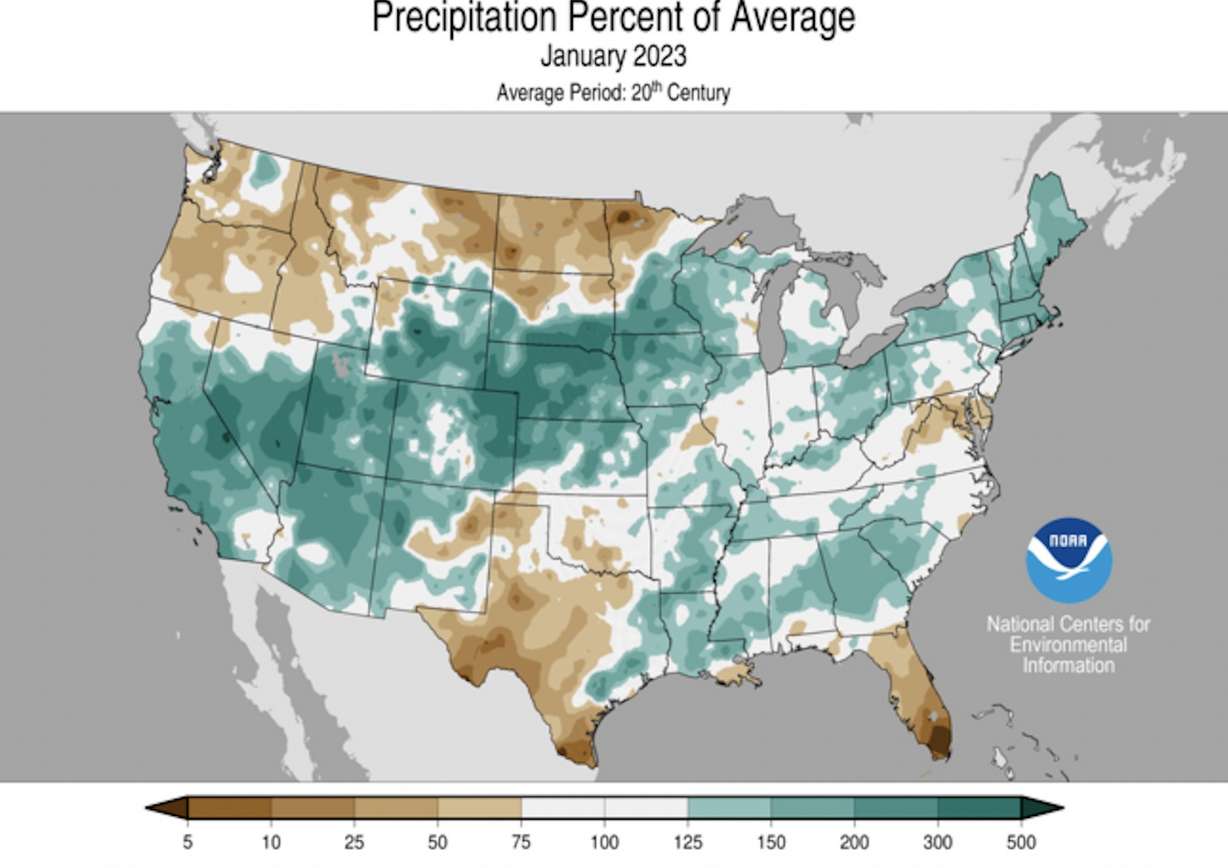
However, Idaho, Oregon, Washington and Montana ended up with below-normal precipitation levels as many of the weather events fell below them. All four states posted precipitation levels that land among the 30 driest Januarys on record in the respective states' record books. North Dakota, in the upper Midwest, had its 13th-driest January on record, too.
Still, the West's overall drought has weakened since the start of the water year. The U.S. Drought Monitor currently lists fewer than 4% of the West in extreme drought or worse, down from nearly one-fifth of the region on Oct. 1. While about 60% of the West remains in at least moderate drought, the amount of land no longer in drought has jumped from nearly 4% to 18%.
Why was the US warmer than usual?
Utah — and the lower half of the West in general — ended up with a much cooler January than other parts of the county, National Centers for Environmental Information climate experts acknowledged in a report Wednesday. There wasn't as much of a variation in precipitation because most states ended up with above-normal levels.
Last month's national average was 2.85 inches of precipitation, 0.54 inches above the January normal. The average temperature ended up at 35.2 degrees Fahrenheit, 5.1 degrees above normal and ranking as the sixth-warmest January on record.
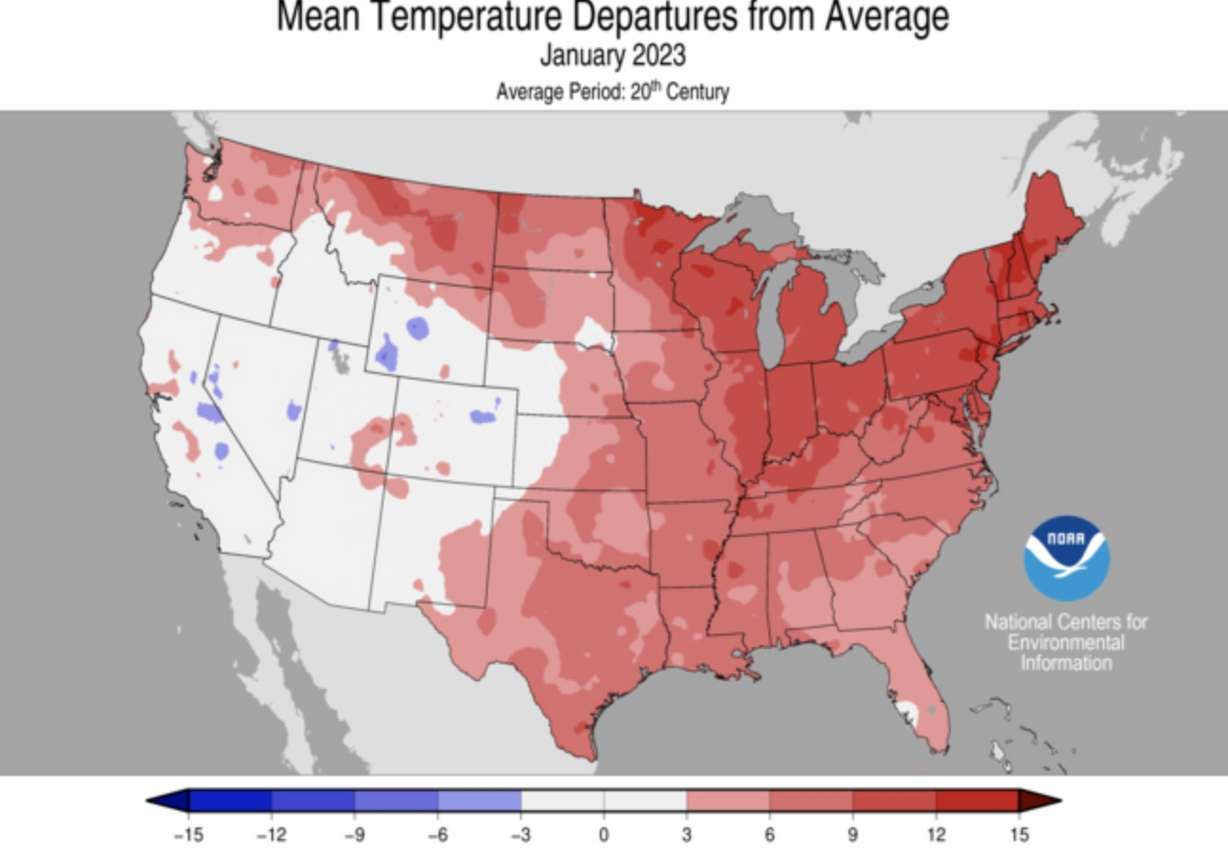
While the West was generally closer to normal, the East — particularly the Northeast — was much warmer. So what happened?
The Washington Post explained last week that the atmospheric river systems that cooled down parts of the West also pumped "mild, Pacific air" toward the rest of the country as it moved east. But the region also dealt with more high-pressure systems and storms from the South that drew mild air northward from the Atlantic and the Gulf of Mexico, as well, the outlet added.
Connecticut, Maine, Massachusetts, New Hampshire, New Jersey, Rhode Island and Vermont ultimately all broke average high-temperature records, according to the climate data. Wednesday's report even notes that New York City didn't record any snow in January for the first time on record. Its previous record for the latest first snow in a calendar year was Jan. 29, 1973.
Meanwhile, the different systems also created the perfect conditions for severe storms. The report acknowledges there were more than 100 confirmed tornadoes last month, only the third time that's happened since 1950 and the last since 2017.