'%3e%3cpath%20d='M34.1406%205.85938C30.3906%202.10547%2025.3047%200%2020%200C14.6953%200%209.60938%202.10547%205.85938%205.85938C2.10938%209.61328%200%2014.6953%200%2020C0%2025.3047%202.10547%2030.3906%205.85938%2034.1406C9.61328%2037.8906%2014.6953%2040%2020%2040C25.3047%2040%2030.3906%2037.8945%2034.1406%2034.1406C37.8906%2030.3906%2040%2025.3047%2040%2020C40%2014.6953%2037.8945%209.60938%2034.1406%205.85938ZM37.0117%2023.543H31.1602V13.5391H27.6328V19.9414C28.1211%2020.6914%2028.3711%2021.582%2028.3711%2022.5625V22.625C28.3711%2023.668%2028.1172%2024.6055%2027.6328%2025.4297V26.6094H36.082C33.4883%2032.9375%2027.2891%2037.3789%2020.0039%2037.3789C10.3711%2037.3789%202.62109%2029.6289%202.62109%2020C2.62109%2010.3711%2010.3711%202.62109%2020%202.62109C29.6289%202.62109%2037.3789%2010.3711%2037.3789%2020C37.3789%2021.1484%2037.2617%2022.2656%2037.0508%2023.3477C37.0391%2023.4141%2037.0234%2023.4766%2037.0117%2023.543Z'%20fill='white'/%3e%3cpath%20d='M22.3086%2018.5352C20.4336%2018.125%2019.9531%2017.8398%2019.9766%2017.1836V17.1406C19.9766%2016.6992%2020.3477%2016.2148%2021.4023%2016.2148C22.582%2016.2148%2023.8867%2016.6797%2025.0781%2017.4766L26.8516%2015.0195C25.4453%2013.8906%2023.707%2013.3398%2021.5547%2013.3398C18.5195%2013.3398%2016.4375%2015%2016.4063%2017.4766V17.5352C16.3633%2020.2617%2018.5859%2020.9805%2021.293%2021.6016C23.0391%2021.9766%2023.5703%2022.3164%2023.5703%2022.9609L23.5469%2022.9766C23.5469%2023.3906%2023.2578%2023.7031%2022.7852%2023.8359C22.5742%2023.9062%2022.1289%2023.9727%2021.5156%2023.9727C20.7617%2023.9727%2019.7539%2023.8633%2018.6328%2023.4844C18.0898%2023.2891%2017.4727%2023.0039%2016.8047%2022.6133L20.1406%2026.625C20.2813%2026.6602%2021.0977%2026.8516%2021.7734%2026.8516C25.0039%2026.8516%2027.0859%2025.2461%2027.1094%2022.6328V22.5703C27.1602%2020.1133%2025.2148%2019.1719%2022.3086%2018.5352Z'%20fill='white'/%3e%3cpath%20d='M5.24219%2013.5664V26.6133H8.75391V23.7578L10.2969%2021.9531L14.2031%2026.6133H18.3867L12.3555%2019.5195L17.4023%2013.5664H13.4531L8.75391%2019.0586V13.5664H5.24219Z'%20fill='white'/%3e%3c/g%3e%3cdefs%3e%3cclipPath%20id='clip0_97_2430'%3e%3crect%20width='40'%20height='40'%20fill='white'/%3e%3c/clipPath%3e%3c/defs%3e%3c/svg%3e)




- A coalition of groups, mostly environmental organizations, opposes the EnergySolutions proposal to import Canadian radioactive waste for disposal in Utah.
- The proposal calls for bringing in up to 1.31 million cubic yards of low-level radioactive waste to a Tooele County facility.
- EnergySolutions defends the proposal, saying it doesn't represent a departure from what it's already doing.
SALT LAKE CITY — Two days ahead of a meeting focused on a proposal to dispose of Canadian radioactive waste at a Tooele County facility, a coalition of 85 groups, most of them environmental organizations, has come out against the plans.
"This would be the very first time that licensed radioactive waste or radioactive hazardous waste from other countries would be permanently disposed of in the United States. It could open the floodgates for more from Canada and all over the world," reads a statement issued Wednesday by the coalition.
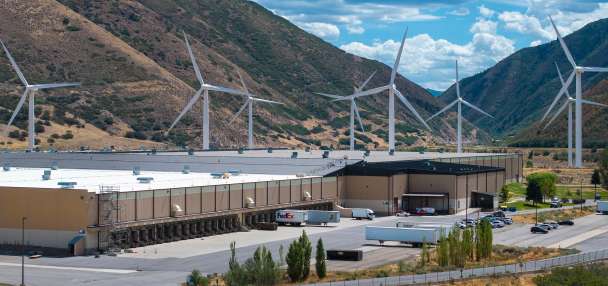
The public statement, addressed to the commissioners of the Northwest Interstate Compact for Low-Level Nuclear Waste Management, says the 85 U.S. and Canadian organizations "stand firmly opposed" to the EnergySolutions proposal. The Salt Lake-based firm has crafted a proposal to import 1.31 million cubic yards of low-level radioactive waste from Ontario, Canada, and dispose of it at its Clive facility in Tooele County, about 80 miles west of the Utah capital.
EnergySolutions said the proposal doesn't represent a departure from what it's already doing at the Utah facility — moreover, the firm will not pursue additional foreign customers.
The material that would come from Canada "is the same waste stream and type that EnergySolutions regularly receives from domestic customers and for which EnergySolutions is licensed to safely dispose," a statement from the company says. What's more, the material, class A radioactive waste, "is the lowest category of Low-Level Radioactive Waste from a hazard perspective."
Among the 85 signatories to the statement of opposition are leaders from the Healthy Environment Alliance of Utah, the Sierra Club of Utah and Moab-based Uranium Watch. Other signatories include other environmental and watchdog groups around the United States and Canada.
The EnergySolutions proposal is to be discussed on Friday by the Northwest Interstate Compact on Low-Level Radioactive Waste Management, with possible action by the group. The compact represents eight Western states, including Utah, and helps manage the disposal of low-level radioactive waste. Friday's gathering is to be held at the Washington State Department of Health offices in Tumwater, Washington.
The EnergySolutions proposal, which publicly emerged last September, faces scrutiny from a number of groups. Aside from Northwest Interstate Compact support, the plans would require a license from the U.S. Nuclear Regulatory Commission to bring in foreign radioactive waste and a permit from Canada, according to the Healthy Environment Alliance of Utah.
Meantime, the groups lined up against the proposal have a long list of questions about it and called on the commissioners of the Northwest Interstate Compact to "fully review and understand" the varied aspects of the proposal.
"Since the commission agenda indicates that you are considering approving this request, please assure yourselves and the public that you are clear on all aspects and implications of such approval, and hold off on voting until you are," reads Wednesday's statement. According to the groups opposing the proposal, the waste would come to Utah over a 10-year period.
The EnergySolutions proposal comes amid a push by many Utah leaders, including Gov. Spencer Cox, to encourage the addition of more nuclear power to the state's energy portfolio. According to a presentation on the plans prepared by EnergySolutions, Utah leaders support the proposal.
The company said the waste coming in as part of the new proposal would come from nuclear power plants in Ontario, and it further noted that energy produced in the Canadian province benefits the United States. Nuclear power generated in Ontario and other parts of Canada is exported to Michigan, New York, Maine and Minnesota, among other U.S. states.
As part of its statement, the coalition opposing the EnergySolutions proposal provided a list of questions to be addressed.
"First, what is the radioactive content of the waste?" reads the statement. Low-level waste, the statement went on, "is not low risk, and much of it is not low-dose. Every amount of radioactivity can cause health damage."
EnergySolutions said the length of radioactivity "depends on the isotopes," but stressed that it is already handling the sort of waste that would be coming from Canada.
The critics also wonder whether the proposal, if approved, would pave the way for radioactive waste from other countries, from which Canadian facilities the waste would come, how much EnergySolutions stands to earn and who would be liable in the event of contamination. They wonder what route the waste would follow from Canada to Utah, whether funds would be set aside to cover the costs of any accidents and more.
EnergySolutions won't pursue disposal deals with other countries, the company said, and it would take the lead in responding to any accident. At the same time, it noted that some three million shipments of radioactive material occur each year in the United States without incident and that EnergySolutions has "extensive experience" in transporting such waste.
"In the unlikely event of a spill, our emergency response team would be immediately notified and would promptly contain and remediate the situation. All costs associated with any response or cleanup would be the sole responsibility of EnergySolutions," according to the EnergySolutions statement.
Specific routes, the company said, would be determined by the railway companies actually hauling the material.
Notwithstanding such assurances, the proposal's critics remain uneasy.
"Before Utah is asked to become a dumping ground for foreign radioactive waste, the public deserves clear answers. We still don't know what's in this waste, who made it, how much long-lived radioactivity it contains, who is liable if something goes wrong or which communities will be put at risk along transport routes," Lexi Tuddenham, the executive director of the Healthy Environment Alliance of Utah, said in a statement.
"Decisions of this magnitude should not be rushed or made behind closed doors."
Correction: This article has been updated to correct the number and characterization of the organizations that signed a statement against EnergySolutions' plans. Most are environmental groups, though not all; the list totals 85, not 88 as was previously reported.