
Estimated read time: 2-3 minutes
This archived news story is available only for your personal, non-commercial use. Information in the story may be outdated or superseded by additional information. Reading or replaying the story in its archived form does not constitute a republication of the story.
SALT LAKE CITY — Pancreatic cancer is the deadliest of all major cancers because it is difficult to detect until it has already done a lot of damage. But, pancreatic cancer is not a death sentence. This Pancreatic Cancer Awareness Month, a cancer survivor who lives life at a fast pace shared his journey.
Men can be notoriously bad about going to the doctor to get anything checked out. Last year, in the midst of the COVID-19 pandemic, Kevin Moore put things off even longer despite his abdominal pain. He waited five months before he saw his doctor about the persistent pain.
"I'm a triathlete, and I noticed I was starting to get slower," Moore said.
He had raced a grueling Ironman Triathlon only months before. But, he knew there was something wrong.
"I lost 20 pounds in one month," he said, and he was losing muscle mass, too.
That was April 2020, as the COVID-19 pandemic was ramping up. He tried to ignore his symptoms.
Moore is a doctor and has been a pediatric radiologist at Primary Children's Hospital for 16 years. "I'm a physician and yet, I still managed to explain away all of these things that in hindsight I should have been worried about," he said.
By the time he was diagnosed with pancreatic cancer, it had metastasized. "When I had my first surgery, they found out that it had spread all throughout my abdomen, and I had stage four cancer, which is typically considered incurable," Moore said.
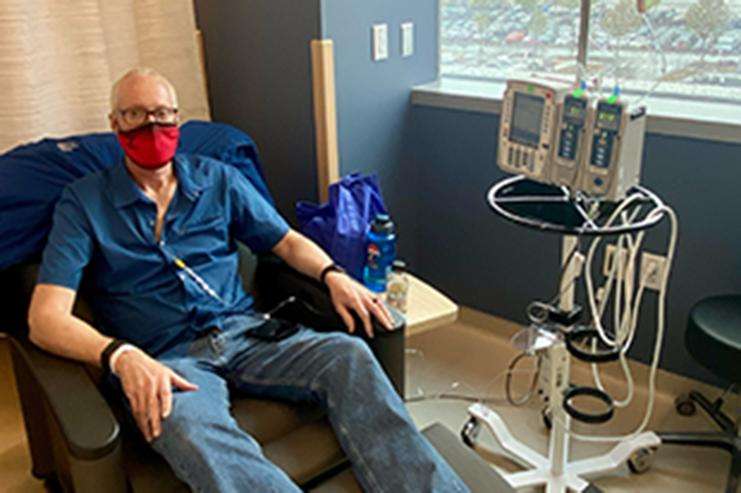
More than 60,000 Americans are expected to be diagnosed with pancreatic cancer this year, and more than 48,000 are expected to die from the disease. But, not Dr. Moore. After a year of chemotherapy and five surgeries, he's free of cancer. He credits genetics, luck and exercise. His cancer doctor agrees.
"The larger message is that you can actually remain active to some degree even during cancer treatment," said Dr. Mark Lewis, a medical oncologist at Intermountain Healthcare who is also a survivor of pancreatic cancer.
"Pancreatic tumors rarely produce symptoms in earlier stages," Lewis said.
The cancer is typically detected in advanced stages. "It is often clinically silent until it is quite advanced," Lewis said. "So, 85% of my patients at the time of diagnosis are already outside the window where surgery would cure them."
To stay alert for signs of pancreatic cancer, Lewis recommends that people pay attention to unexpected weight loss, nausea, vomiting, pain near the rib cage and jaundice. Treatment includes surgery, chemotherapy and radiation. The only cure is surgery.
After his bout with cancer, Moore is back to working full time, riding in bike races, and he rode to the summit of a mountain in France as part of a bicycle tour in September.
"I'm back. I work. I feel good most of the time."
He feels so good that he bought a new bike, and plans more races next year. Moore is cautiously optimistic about his future.