'%3e%3cpath%20d='M34.1406%205.85938C30.3906%202.10547%2025.3047%200%2020%200C14.6953%200%209.60938%202.10547%205.85938%205.85938C2.10938%209.61328%200%2014.6953%200%2020C0%2025.3047%202.10547%2030.3906%205.85938%2034.1406C9.61328%2037.8906%2014.6953%2040%2020%2040C25.3047%2040%2030.3906%2037.8945%2034.1406%2034.1406C37.8906%2030.3906%2040%2025.3047%2040%2020C40%2014.6953%2037.8945%209.60938%2034.1406%205.85938ZM37.0117%2023.543H31.1602V13.5391H27.6328V19.9414C28.1211%2020.6914%2028.3711%2021.582%2028.3711%2022.5625V22.625C28.3711%2023.668%2028.1172%2024.6055%2027.6328%2025.4297V26.6094H36.082C33.4883%2032.9375%2027.2891%2037.3789%2020.0039%2037.3789C10.3711%2037.3789%202.62109%2029.6289%202.62109%2020C2.62109%2010.3711%2010.3711%202.62109%2020%202.62109C29.6289%202.62109%2037.3789%2010.3711%2037.3789%2020C37.3789%2021.1484%2037.2617%2022.2656%2037.0508%2023.3477C37.0391%2023.4141%2037.0234%2023.4766%2037.0117%2023.543Z'%20fill='white'/%3e%3cpath%20d='M22.3086%2018.5352C20.4336%2018.125%2019.9531%2017.8398%2019.9766%2017.1836V17.1406C19.9766%2016.6992%2020.3477%2016.2148%2021.4023%2016.2148C22.582%2016.2148%2023.8867%2016.6797%2025.0781%2017.4766L26.8516%2015.0195C25.4453%2013.8906%2023.707%2013.3398%2021.5547%2013.3398C18.5195%2013.3398%2016.4375%2015%2016.4063%2017.4766V17.5352C16.3633%2020.2617%2018.5859%2020.9805%2021.293%2021.6016C23.0391%2021.9766%2023.5703%2022.3164%2023.5703%2022.9609L23.5469%2022.9766C23.5469%2023.3906%2023.2578%2023.7031%2022.7852%2023.8359C22.5742%2023.9062%2022.1289%2023.9727%2021.5156%2023.9727C20.7617%2023.9727%2019.7539%2023.8633%2018.6328%2023.4844C18.0898%2023.2891%2017.4727%2023.0039%2016.8047%2022.6133L20.1406%2026.625C20.2813%2026.6602%2021.0977%2026.8516%2021.7734%2026.8516C25.0039%2026.8516%2027.0859%2025.2461%2027.1094%2022.6328V22.5703C27.1602%2020.1133%2025.2148%2019.1719%2022.3086%2018.5352Z'%20fill='white'/%3e%3cpath%20d='M5.24219%2013.5664V26.6133H8.75391V23.7578L10.2969%2021.9531L14.2031%2026.6133H18.3867L12.3555%2019.5195L17.4023%2013.5664H13.4531L8.75391%2019.0586V13.5664H5.24219Z'%20fill='white'/%3e%3c/g%3e%3cdefs%3e%3cclipPath%20id='clip0_97_2430'%3e%3crect%20width='40'%20height='40'%20fill='white'/%3e%3c/clipPath%3e%3c/defs%3e%3c/svg%3e)



Estimated read time: 4-5 minutes
This archived news story is available only for your personal, non-commercial use. Information in the story may be outdated or superseded by additional information. Reading or replaying the story in its archived form does not constitute a republication of the story.
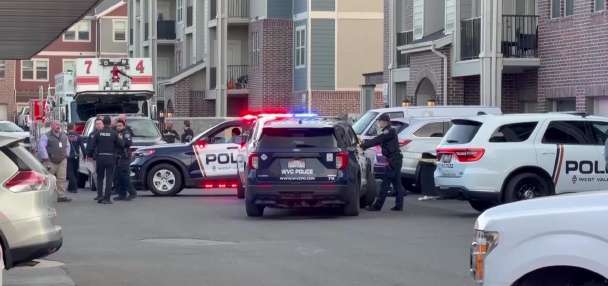
SALT LAKE CITY — Salt Lake City will now see physicians joining firefighters when they respond to some of the most critical medical emergencies like cardiac arrests and mass casualty incidents.
Doctors and first responders hope the first-of-its-kind program in the Intermountain West can help improve care for patients throughout the region.
Salt Lake Fire Capt. Anthony Burton said physicians have been involved in the fire service "for years."
"We've had guidance by physicians in how we do our medical care, in our protocols and the drugs that we carry. Now we have an enhancement of that," Burton said, as a group of doctors from University of Utah Health are going into the field with EMTs to respond to some calls that appear especially serious.
"This is exciting for us because it enhances the care that we can give in the streets. It enhances the opportunities for our physicians to directly be on the scenes with the patients and see the types of incidents that we have, and that greatly gives them the opportunity to alter or enhance the program and the way we deliver that care," Burton explained.
"It's hard to convey to medical staff that aren't in the field what it's like to pull someone out of a collapsed structure or any of the conditions that we encounter," he said.
In some cases, the physicians will be dispatched directly to a scene based on certain criteria passed along by dispatchers, but Burton said they'll have the opportunity to go on any calls they choose, including minor calls.
U. Health is the only medical school in the Intermountain West with an accredited emergency medical services fellowship program, said Dr. Scott Youngquist, associate professor of emergency medicine.
Youngquist is also a working emergency physician and holds specialty certification in emergency medical services.
The idea of physicians going on the scenes of emergency calls isn't new — it's how protocols for emergency medical teams were originally developed. But Youngquist said to his knowledge, no agencies in the region have done a program like this.
"And so part of the scene response is training the next generation of EMS physicians so they understand the difficulties of providing care in the field, they understand what their paramedics and EMTs face every day to provide the great care that they provide," Youngquist said.
He called the care that Salt Lake City's first responders already provide "excellent."
"In fact, we have among the highest survival rates from cardiac arrest in the world. We're consistently nearly double the national average in Salt Lake City," Youngquist said.
The new program isn't necessarily meant to improve care, he said, but "to help us understand on a continuous quality improvement process how to better provide care in the unique setting of the pre-hospital environment, and to train those physician learners who want to go on after residency and do what we do currently."
Youngquist and the two other physicians in the program won't take over care, nor will they be responding to emergency calls every day, but they will serve as consultants on scene, he said. Physicians also won't direct where a patient gets transported — EMTs follow state guidelines for the delivery of patients to certain hospitals, according to Youngquist.
"It is an opportunity where you may see us arriving with the team and helping take care in the field," he said.
Youngquist said physicians have enjoyed doing ride-alongs with firefighters in the past, but often they don't end up going on medical calls during those trips.
"So you don't get a good sense of what's going on throughout the entire city. This is exciting because we can station ourselves in the middle of the city, listen to calls and jump on critical incidents or incidents that might benefit from physician direction in the field," he said.
On calls like cardiac arrests, the physicians help with "basically providing ICU-level care on the street," Youngquist said.
Dr. Hill Stoecklein, assistant professor of emergency medicine at the U. and the fire department's assistant medical director, said that having future medical directors get trained through the program could improve health in rural communities, which typically face more challenges than urban areas in responding to emergency calls.