
Estimated read time: 3-4 minutes
This archived news story is available only for your personal, non-commercial use. Information in the story may be outdated or superseded by additional information. Reading or replaying the story in its archived form does not constitute a republication of the story.
SALT LAKE CITY — There was a cry for transparency and accountability outside of the Unified Police Department Wednesday as the department's board considered what to do with its body camera program.
“It shouldn’t even be a question,” one protester yelled during a rally preceding a public hearing at UPD headquarters. “We shouldn’t even be here today!”
UPD board members have three options when it comes to the department’s body cameras:
- keep the existing program,
- expand the number of cameras to include all officers, or
- get rid of the body cameras entirely
The board made it clear, however, that no one is advocating to shut down the program.
“I am a big supporter of body cameras,” board member Apollo Pazell said. “I believe that they are a standard of practice.”
Pazell said he also knows “there’s a big appetite to balance the budget” among board members.
The U.S. Department of Justice awarded a grant to help fund 125 body cameras for UPD in September 2015. About one year later, the police department entered into a five-year contract with the company Axon to supply the cameras. The body cameras went live about six months after that.
The grant has since expired, but there are still two years remaining in the contract with Axon.
“This is part of our budget process,” said Salt Lake County Sheriff Rosie Rivera, who leads the Unified Police Department.
During the public hearing, Rivera told the board she recommends keeping the current program as is and putting more effort into gathering data and tracking the cameras’ impact on the department and the community.
The 125 cameras cover about one-third of the 410 total number of sworn UPD members. From the data they’ve gathered up to this point, Rivera said they haven’t seen any real difference.
Protesters rally outside of @UPDSL ahead of a public hearing on the use of body cameras. Currently the dept. has about 125 body cameras. The dept. is preparing to update the UPD board and provide a recommendation on use of the cameras. @KSL5TVpic.twitter.com/bwBBgJOdr9
— Matt Rascon (@MattRasconNews) April 10, 2019
“Our complaints didn’t go up, they didn’t go down,” she said. “… We haven’t had a real issue with the body cameras except for the cost of storage and the time it takes to download.”
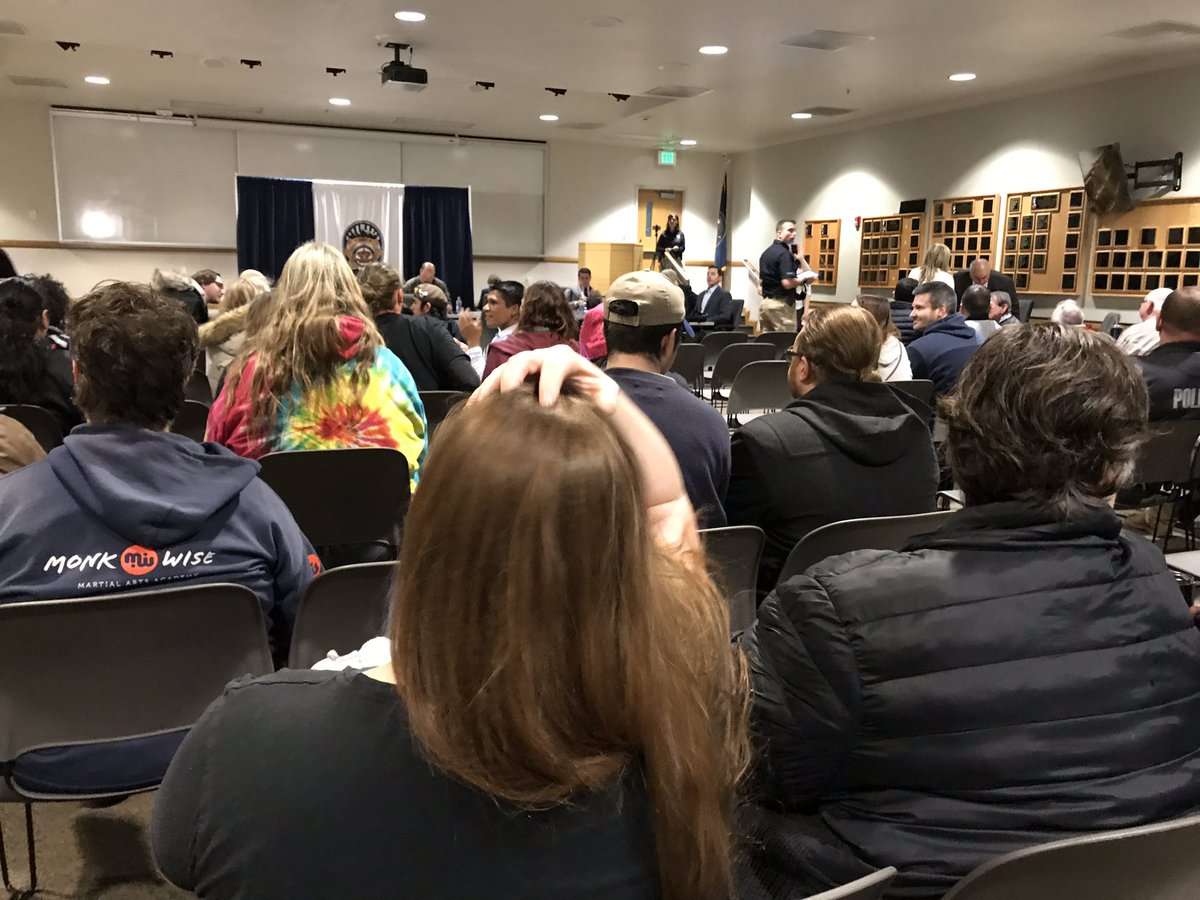
The public hearing included input from men and women from both in and outside of UPD’s jurisdiction, most of them very supportive of implementing a body camera program for all of the department’s officers.
“Why are we even considering anything less than a full rollout of bodycams?” one man asked.
“It should be a standard piece of their equipment,” another person noted.
A woman told the board, “I think this will save lives, and I think it protects both sides.”
Others weren’t as optimistic, pointing out that one camera attached to a moving officer’s uniform doesn’t provide the whole picture.
“Many here have actually called it life-saving,” one man said. “It would be great if it were that simple.”
A complete rollout to provide cameras for all officers has an estimated initial cost of $400,000,1 and then $200,000 annually.
“If the UPD board is willing to pay for it, we’re fine with that,” Rivera said when asked about providing cameras to all of her officers. “But this comes at a time when we’re asking for raises … and for various benefits for police officers.”
At this point there is no set date for when the board will review the public input and vote on the future of body cameras at UPD.