Estimated read time: 5-6 minutes
- The Utah Legislature reversed a controversial public union law after a referendum campaign.
- Internal polling showed voter disapproval despite support for specific provisions, said state Sen. Kirk Cullimore.
- The repeal aimed to counter perceptions of Republican lawmakers being out of touch.
SALT LAKE CITY — The Utah Legislature took the rare step on Tuesday of reversing course on a controversial new law that galvanized the state's public unions and their national interest groups.
The surprise move came after a record-setting referendum campaign forced legislative leadership to reconsider the policy, and its messaging, according to interviews with the bill sponsors.
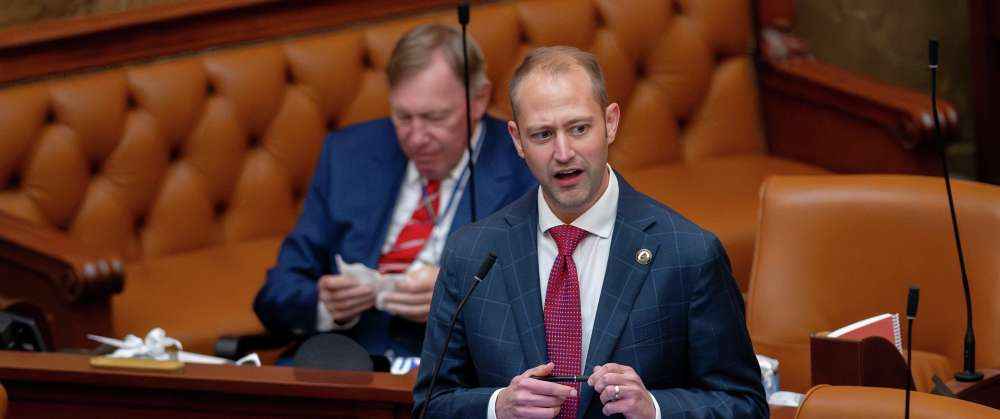
Internal polling showed that while Utah voters approved of specific provisions, they held negative views toward the bill as a whole, Senate Majority Leader Kirk Cullimore, R-Draper, told the Deseret News.
"We had to look deep inside ourselves and figure out, 'OK, what does this mean?'" Cullimore said. "We don't want it to look like it's the Legislature versus public employees. That's not the case. And so better to just repeal it and move on."
To refocus resources on other policy challenges, Cullimore said he would have supported repealing the bill much earlier — something union groups had lobbied for during the Legislature's October special session over redistricting.
Discussions with Cullimore, and the bill's primary sponsor, House Rules Chairman Jordan Teuscher, R-South Jordan, revealed that top lawmakers saw the repeal as necessary to work toward consensus in the spirit of the "Utah Way."
Protect Utah Workers, the public interest committee managing the referendum on behalf of two dozen unions, had pushed for a repeal all along as the only condition for backing off of the referendum.
Both groups agreed the process leading up to Tuesday's bipartisan vote repealing HB267 demonstrated that GOP lawmakers are serious about countering the perception that they are out of touch with Utah voters.
What is HB267?
In February, after weeks of negotiations with public labor associations, Republican lawmakers passed a prohibition on taxpayer-funded union activities and public sector collective bargaining that cut out non-union members.
This would have prevented public employers from engaging exclusively with union representatives, who sometimes do not represent a majority of employees, and would have cut off union leaders from the Utah Retirement System.
During the first weeks of the legislative session, thousands of teachers, firefighters and police officers — many of whom were not directly impacted by the bill — swarmed the Capitol to protest what they said was an attack on their rights.
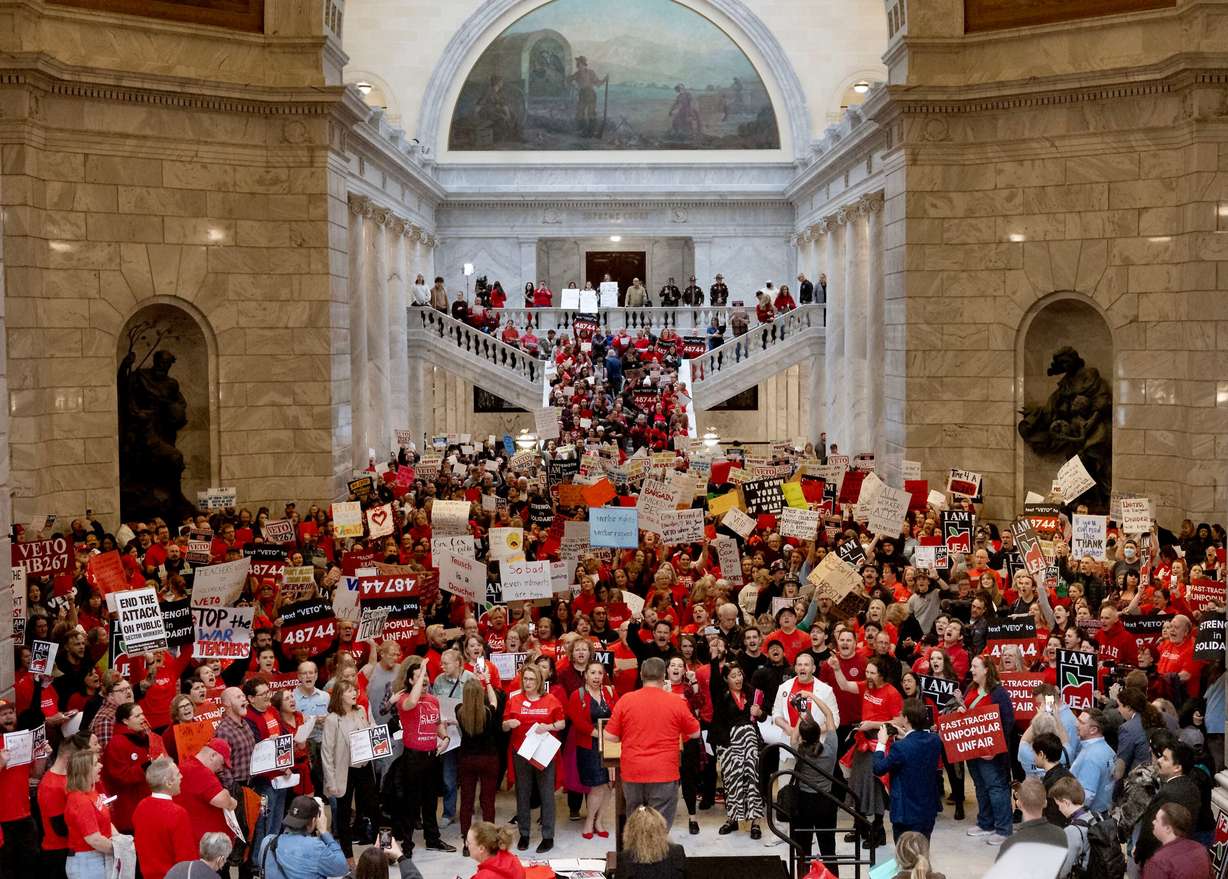
Opponents of the legislation said it would make it harder for public employees to put pressure on government officials for wage increases, policy changes and worker safety improvements that are necessary to fulfill their jobs.
After the bill's sponsors failed to find consensus with labor groups on several compromise proposals, they moved forward with the original text of the bill, which passed narrowly in both the state House and Senate.
Just over a month after the 2025 legislative session, Protect Utah Workers submitted over 320,000 signatures in a record-breaking referendum campaign to repeal the new law by placing it before voters on the November 2026 ballot.
This became the primary bargaining chip in negotiations between unions and legislators, which began immediately following the end of the session, according to Jack Tidrow, the president of Professional Firefighters of Utah.
House Speaker Mike Schultz, R-Hooper, and House Majority Leader Casey Snider, R-Paradise, worked to find a third way between a repeal and a referendum that would allow for future policy negotiations, Tidrow told the Deseret News.
"I will give credit where credit's due," Tidrow said. "House leadership did not want to hurt public labor unions. They wanted to find a solution."
There may have also been some political considerations in this decision, Tidrow acknowledged. Messaging on the HB267 referendum may have hurt some reelection prospects, and distracted from Republicans' own initiative efforts.
What's next?
As the lawmaker who spearheaded the bill — and took the heat for its divisiveness — Teuscher said he was disappointed the same groups that formed Protect Utah Workers were unwilling to find compromise during the session.
What the bill did was not accurately communicated by union bosses to members, according to Teuscher, nor during the referendum effort bankrolled by more than $4 million in donations from NEA — the largest labor union in America.
GOP lawmakers were willing and prepared to fund a similar effort, Teuscher told the Deseret News, but he said they decided the healthiest way to debate the actual underlying policies would be to remove HB267 from the table.
We don't want it to look like it's the Legislature versus public employees. That's not the case.
–Kirk Cullimore, Utah Senate majority leader
"The Utah Way is listening to people, trying to find consensus and moving forward," Teuscher said. "As outside money has poured into our state, in campaigns or initiatives, referendums, you start to see that type of negative Washington-style campaigning."
Teuscher expects Utah will become the target of more national special interests hoping to shift policy in the state, especially since the Utah Supreme Court ruled in 2024 that lawmakers cannot amend or repeal certain ballot initiatives.
Beyond redistricting and referendums, conservative elected officials worry the new status quo could bring in new groups seeking a liberalization of alcohol sales, gambling venues and recreational marijuana, according to Teuscher.
This is the "threat to a representative form of government" that is in the "back of everybody's mind," Cullimore said. Regardless of the issue it appears that "outside money," with its focus on "billboards" and "30-second sound bites" could be gaining greater sway over Beehive State politics.
"The reason why we have a representative form of government is because good policy usually requires debate," Cullimore said. "It usually requires some nuance and some compromise and stakeholder input. And you just don't get that through an initiative process or anything like that."