'%3e%3cpath%20d='M34.1406%205.85938C30.3906%202.10547%2025.3047%200%2020%200C14.6953%200%209.60938%202.10547%205.85938%205.85938C2.10938%209.61328%200%2014.6953%200%2020C0%2025.3047%202.10547%2030.3906%205.85938%2034.1406C9.61328%2037.8906%2014.6953%2040%2020%2040C25.3047%2040%2030.3906%2037.8945%2034.1406%2034.1406C37.8906%2030.3906%2040%2025.3047%2040%2020C40%2014.6953%2037.8945%209.60938%2034.1406%205.85938ZM37.0117%2023.543H31.1602V13.5391H27.6328V19.9414C28.1211%2020.6914%2028.3711%2021.582%2028.3711%2022.5625V22.625C28.3711%2023.668%2028.1172%2024.6055%2027.6328%2025.4297V26.6094H36.082C33.4883%2032.9375%2027.2891%2037.3789%2020.0039%2037.3789C10.3711%2037.3789%202.62109%2029.6289%202.62109%2020C2.62109%2010.3711%2010.3711%202.62109%2020%202.62109C29.6289%202.62109%2037.3789%2010.3711%2037.3789%2020C37.3789%2021.1484%2037.2617%2022.2656%2037.0508%2023.3477C37.0391%2023.4141%2037.0234%2023.4766%2037.0117%2023.543Z'%20fill='white'/%3e%3cpath%20d='M22.3086%2018.5352C20.4336%2018.125%2019.9531%2017.8398%2019.9766%2017.1836V17.1406C19.9766%2016.6992%2020.3477%2016.2148%2021.4023%2016.2148C22.582%2016.2148%2023.8867%2016.6797%2025.0781%2017.4766L26.8516%2015.0195C25.4453%2013.8906%2023.707%2013.3398%2021.5547%2013.3398C18.5195%2013.3398%2016.4375%2015%2016.4063%2017.4766V17.5352C16.3633%2020.2617%2018.5859%2020.9805%2021.293%2021.6016C23.0391%2021.9766%2023.5703%2022.3164%2023.5703%2022.9609L23.5469%2022.9766C23.5469%2023.3906%2023.2578%2023.7031%2022.7852%2023.8359C22.5742%2023.9062%2022.1289%2023.9727%2021.5156%2023.9727C20.7617%2023.9727%2019.7539%2023.8633%2018.6328%2023.4844C18.0898%2023.2891%2017.4727%2023.0039%2016.8047%2022.6133L20.1406%2026.625C20.2813%2026.6602%2021.0977%2026.8516%2021.7734%2026.8516C25.0039%2026.8516%2027.0859%2025.2461%2027.1094%2022.6328V22.5703C27.1602%2020.1133%2025.2148%2019.1719%2022.3086%2018.5352Z'%20fill='white'/%3e%3cpath%20d='M5.24219%2013.5664V26.6133H8.75391V23.7578L10.2969%2021.9531L14.2031%2026.6133H18.3867L12.3555%2019.5195L17.4023%2013.5664H13.4531L8.75391%2019.0586V13.5664H5.24219Z'%20fill='white'/%3e%3c/g%3e%3cdefs%3e%3cclipPath%20id='clip0_97_2430'%3e%3crect%20width='40'%20height='40'%20fill='white'/%3e%3c/clipPath%3e%3c/defs%3e%3c/svg%3e)




Estimated read time: 3-4 minutes
This archived news story is available only for your personal, non-commercial use. Information in the story may be outdated or superseded by additional information. Reading or replaying the story in its archived form does not constitute a republication of the story.
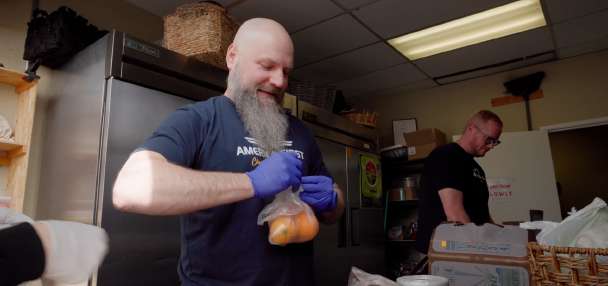
SALT LAKE CITY — Russ Faust knows pain and rattles off the reasons why.
“Seven broken bones in that foot, four knee surgeries, two back surgeries," he said. "The last one, they fused some of it. Both rotator cuffs and thumb joint replacement.”
Faust said he’s tried lots of options for pain relief, including opioids.
“I’ve been on opiates, per se, forever,” he said.
The pills work, Faust said, but he doesn’t like the side effects.
“The pain pills kinda made me feel fuzzy — my wife said grumpy — and I just did not like them so I was actually looking for a way to try and get off of ‘em,” he said.
A doctor at the VA Salt Lake City Health Care System steered the veteran toward the VA’s Integrative Health Program — a holistic program that includes acupuncture, hypnosis, qigong and mindfulness — and he ended up in a yoga and meditation class.
At first, Faust wasn’t impressed.
“I’m a redneck from Tennessee and thought this class was a bunch of hocus-pocus,” he said.
He kept returning to the class and after about a month, he said he started to feel better. Faust said he feels so much better now that he no longer needs the pills.
“Your brain goes to a different place and goes away from the pain,” he said.
It’s because of stories like Faust’s that the federal government is paying more attention to mindfulness as a way to ease chronic pain and avoid opioids, which lead to tens of thousands of overdose deaths a year.
In Utah, 24 people die from prescription opioid overdoses a month, according to the Utah Department of Health.
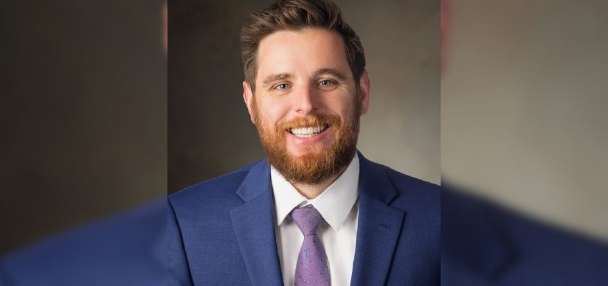
The Department of Defense and the National Institutes of Health have handed University of Utah professor Eric Garland $23 million in grants to research mindfulness as a way to regulate pain and opioid use. Garland, at his virtual Center on Mindfulness and Integrative Health Intervention Development at the College of Social Work, uses a combination of mindfulness, cognitive behavior therapy and positive psychology to help patients deal with chronic pain.
Related:

Opioid epidemic shares chilling similarities with the past
While declaring the opioid crisis a national public health emergency Thursday, President Donald Trump said: "Nobody has seen anything like what's going on now."He teaches patients to focus on their pain and separate out the physical sensations from the emotional parts of pain and then “zoom out.”
“To expand the scope of attention so that you’re not just focusing on what hurts but you’re also focusing on the parts of your experience that feel OK,” Garland explained “You’re not trying to push the pain away or ignore it or forget about it, it’s just no longer the central focus."
Mindfulness is not a panacea, he said, but it does work.
In one recent study, 244 patients at the University of Utah Hospital who reported unmanageable pain participated in one of three 15-minute sessions: pain-coping education, hypnosis or mindfulness. The first group reported a 9 percent reduction in pain. The hypnosis group reported a 29 percent reduction. The mindfulness group reported 23 percent less pain.
Don Glover, the VA Salt Lake City Health Care System’s associate director of integrative health, said when someone has chronic pain, the neural network that’s responsible for the sensation of pain becomes stronger over time.
“What mindfulness does, what meditation does, it’s a way to help retrain the brain to get those pathways changed,” Glover said. “We can slow down some of that signaling into that pain network.”
“I can — ignore is not the right word — but I can control it,” Faust said.
The Center on Mindfulness and Integrative Health Intervention Development is looking for people with chronic pain who take opioid painkillers to participate in research. There’s more information here.