
Estimated read time: 2-3 minutes
This archived news story is available only for your personal, non-commercial use. Information in the story may be outdated or superseded by additional information. Reading or replaying the story in its archived form does not constitute a republication of the story.
NORTHERN UTAH -- There are a lot of people out there who fly radio-controlled airplanes as a hobby, but how many of them get their hobby confused with a UFO sighting?
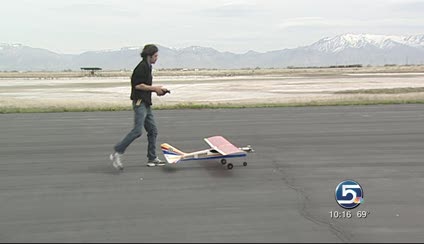
Ever since the dawn of time, man has been fascinated with flying. Shane Constable is just continuing that attraction.
"I like it. It's bad. It's a drug," Shane says. "Some guys have $10,000 planes, even more, and they do some amazing stuff."He is a member of the Northern Utah Radio Controlled Airplane Club. The group has a runway in Weber County.
But what sets Shane apart from most of the other guys is when he lights up his plane and takes off at night. Red lights, clear lights, up, down, left and right -- to many people, it looks like a UFO.
"We've seen some brake lights come on; people hitting their brakes and wondering," Shane says.
"A few fellow fliers say, ‘I don't know how you don't get disoriented,'" Shane continues, "but it's real easy. Red is top; clear is bottom."
Seeing these airplanes is obviously a lot of fun, but if you want to get really advanced with some model-type aviation, you should see a project some Stansbury High School students are working on.
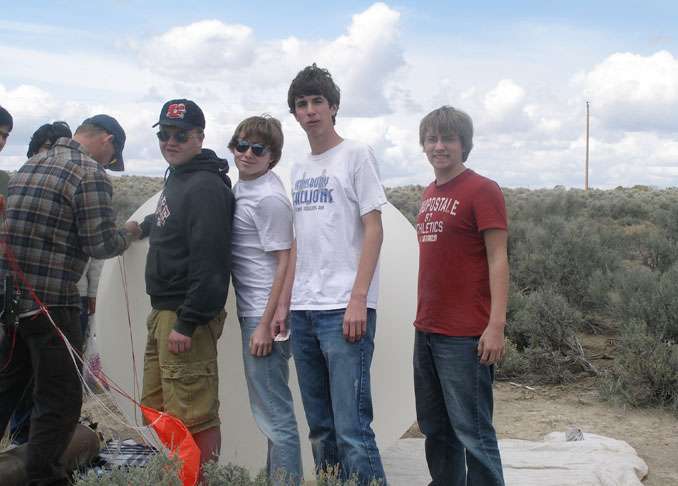
"We're actually testing moisture in the stratosphere," says project adviser Jonathan Adams.
It's all part of a NASA project. The students are launching a weather balloon into the stratosphere to test moisture content and temperatures.
"We're finding out there is some belief that there is less moisture content in the stratosphere, so less moisture allows less heat transfer through," Adams says.
At nearly 80,000 feet up, Stansbury High is one of only four schools in the country doing this NASA experiment.
E-mail: acabrero@ksl.com