
Estimated read time: 3-4 minutes
This archived news story is available only for your personal, non-commercial use. Information in the story may be outdated or superseded by additional information. Reading or replaying the story in its archived form does not constitute a republication of the story.
DRAPER -- UTA construction on FrontRunner South violated its permit, and the U.S. Army Corps of Engineers is now weighing enforcement options. Critics call for a broad investigation. UTA says it is addressing the problems.
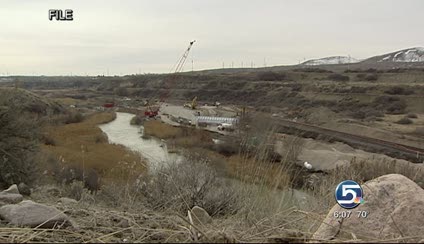
A Notice of Noncompliance from the U.S. Army Corps of Engineers went to the Utah Transit Authority last week. In it, the Corps says crews dumped piles of dirt over a property line onto a protected ancient village site, apparently with no damage.
The notice also states UTA changed the alignment of a rail bed in the Jordan River narrows without permission.
The notice from the Corps states "work has occurred outside the permitted project boundaries." The Corps tells the transit authority it could face penalties for the alleged violations.
Construction on FrontRunner South rolls along, but the rail builders must stop any work outside of the original permit area.
One environmental advocacy group charges that UTA thinks it is above the law.
"UTA is totally out of control," says Zach Frankel of the Utah Rivers Council. "The list of laws that UTA has violated is very long."
The Corps cites two areas of concern: work that impacted wetlands and work that potentially disturbed cultural areas, specifically grounds considered sacred to Native Americans.
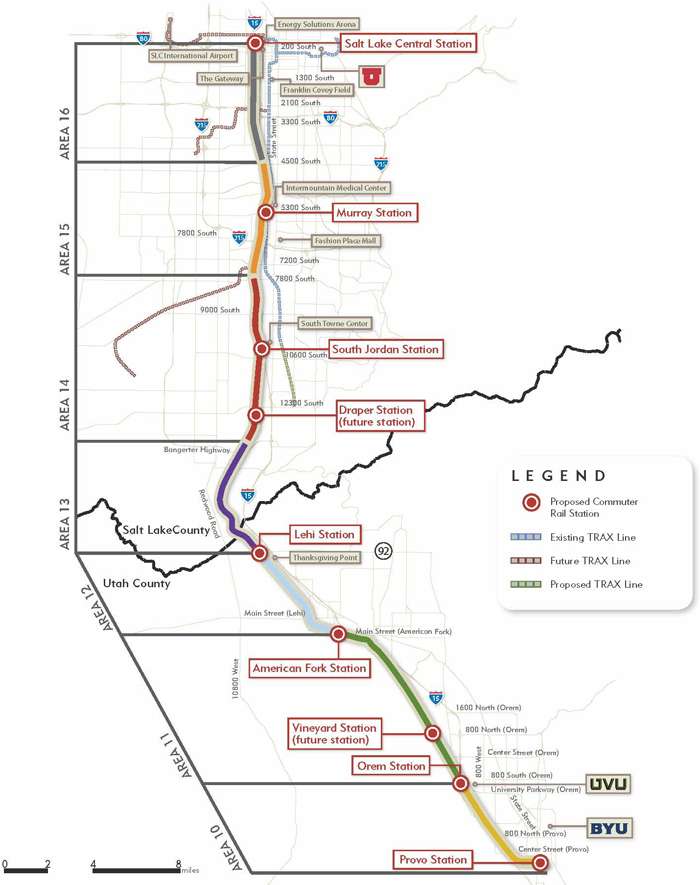
A battle erupted last year over a proposed stop at 13500 South on archaeologically-rich, state-owned open space known as the Galena site.
That area is now protected, and UTA instead selected the site at 12800 South for that stop.
UTA spokesman Gerry Carpenter says they met recently with concerned Native American nations and will work with state agencies in those sensitive areas to make sure no artifacts are disturbed.
"Our intent has been, and always will be, to stay within the full compliance of the law and work only in the bounds that we're authorized to work in," says Carpenter.
UTA submitted a request for a permit modification March 22 and met with the chief of the Corps' regulatory branch at the culturally sensitive area two days later. UTA says it has already pulled out of the non-permitted areas.
"The area of noncompliance is where we inadvertently crossed the line, and were working in areas we were not permitted to work," says Carpenter.
In the permit modification, UTA says it will end up impacting a fewer acres of wetlands, than originally stated in the permit.
The Corps states in the notice, "We are conducting an investigation to determine the most appropriate enforcement action to address the alleged violation."
That could mean fines or halting work on the line. Frankel thinks enforcement options should go beyond that. The Utah Rivers Council wants a complete audit of the project by the Legislative Auditor General.
"It is time to open this agency up to external review," he says, "so that we can shine the light of day to figure out not if the law has been broken, but how many laws were broken for what purpose, and by who."
UTA says it will comply with any enforcement that may be levied by the Corps of Engineers.
"There's going to be times when situations arise that are unanticipated on a project of this magnitude," says Carpenter. "By meeting with the Army Corps of Engineers, we hope to address that and come back into full compliance."
E-mail: jboal@ksl.com