'%3e%3cpath%20d='M34.1406%205.85938C30.3906%202.10547%2025.3047%200%2020%200C14.6953%200%209.60938%202.10547%205.85938%205.85938C2.10938%209.61328%200%2014.6953%200%2020C0%2025.3047%202.10547%2030.3906%205.85938%2034.1406C9.61328%2037.8906%2014.6953%2040%2020%2040C25.3047%2040%2030.3906%2037.8945%2034.1406%2034.1406C37.8906%2030.3906%2040%2025.3047%2040%2020C40%2014.6953%2037.8945%209.60938%2034.1406%205.85938ZM37.0117%2023.543H31.1602V13.5391H27.6328V19.9414C28.1211%2020.6914%2028.3711%2021.582%2028.3711%2022.5625V22.625C28.3711%2023.668%2028.1172%2024.6055%2027.6328%2025.4297V26.6094H36.082C33.4883%2032.9375%2027.2891%2037.3789%2020.0039%2037.3789C10.3711%2037.3789%202.62109%2029.6289%202.62109%2020C2.62109%2010.3711%2010.3711%202.62109%2020%202.62109C29.6289%202.62109%2037.3789%2010.3711%2037.3789%2020C37.3789%2021.1484%2037.2617%2022.2656%2037.0508%2023.3477C37.0391%2023.4141%2037.0234%2023.4766%2037.0117%2023.543Z'%20fill='white'/%3e%3cpath%20d='M22.3086%2018.5352C20.4336%2018.125%2019.9531%2017.8398%2019.9766%2017.1836V17.1406C19.9766%2016.6992%2020.3477%2016.2148%2021.4023%2016.2148C22.582%2016.2148%2023.8867%2016.6797%2025.0781%2017.4766L26.8516%2015.0195C25.4453%2013.8906%2023.707%2013.3398%2021.5547%2013.3398C18.5195%2013.3398%2016.4375%2015%2016.4063%2017.4766V17.5352C16.3633%2020.2617%2018.5859%2020.9805%2021.293%2021.6016C23.0391%2021.9766%2023.5703%2022.3164%2023.5703%2022.9609L23.5469%2022.9766C23.5469%2023.3906%2023.2578%2023.7031%2022.7852%2023.8359C22.5742%2023.9062%2022.1289%2023.9727%2021.5156%2023.9727C20.7617%2023.9727%2019.7539%2023.8633%2018.6328%2023.4844C18.0898%2023.2891%2017.4727%2023.0039%2016.8047%2022.6133L20.1406%2026.625C20.2813%2026.6602%2021.0977%2026.8516%2021.7734%2026.8516C25.0039%2026.8516%2027.0859%2025.2461%2027.1094%2022.6328V22.5703C27.1602%2020.1133%2025.2148%2019.1719%2022.3086%2018.5352Z'%20fill='white'/%3e%3cpath%20d='M5.24219%2013.5664V26.6133H8.75391V23.7578L10.2969%2021.9531L14.2031%2026.6133H18.3867L12.3555%2019.5195L17.4023%2013.5664H13.4531L8.75391%2019.0586V13.5664H5.24219Z'%20fill='white'/%3e%3c/g%3e%3cdefs%3e%3cclipPath%20id='clip0_97_2430'%3e%3crect%20width='40'%20height='40'%20fill='white'/%3e%3c/clipPath%3e%3c/defs%3e%3c/svg%3e)


- Retired Air Force pilot Paul Strickland analyzed the Idaho air show collision video.
- Strickland suggested the wingman lost sight of lead aircraft, causing the collision on Sunday.
- The Navy will investigate the incident, aiming to prevent future occurrences, Strickland states.
LAYTON — Video of two planes colliding during an air show at Mountain Home Air Force Base in Idaho has the public and officials wondering what went wrong in the sky.
Paul Strickland is a retired Air Force pilot who served with the Thunderbirds and goes by his call name "Sticky." He said what was captured on video at the Gunfighter Skies Air Show Sunday was all too real, showing the risk that comes with these events. He estimates he's participated in hundreds.
"There's going to be a lot of sanitized airspace, and they're going to work a lot on safety and choreographing what and where the airplanes can fly," Strickland said.
Strickland said, in the videos out of Idaho, it appears the wingman was trying to cross from one side of the aircraft to the other.
"Normally, it should go under, and that pilot should never lose sight of the lead aircraft," he said. "What appears in the video is that the aircraft, the wingman, went above and behind the lead aircraft, lost sight of this aircraft, and then assumed it was safe to come back down into the left wing position. Instead, (it) came back down right on top."
That's when we see the airplanes hugging each other.
"One of the fundamental rules is when you have one or two or three or four airplanes flying in the same airspace, they all have to keep sight of each other," he said.
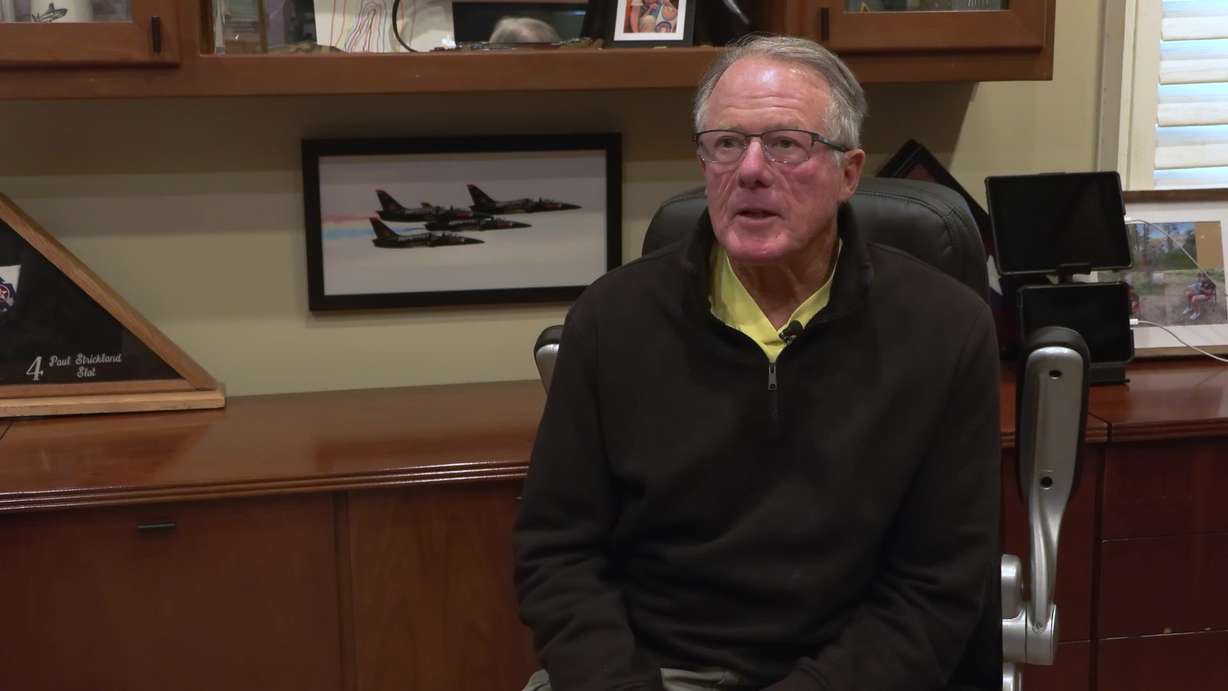
Strickland thinks it's possible that crew members knew this wasn't a salvageable situation. He said the aircrafts were probably going 400 mph, low to the ground.
"There might be a fraction of a thought that says 'My God, what has just happened?'" he said.
They had seconds to eject. Whoever pulled the handle may have done it without warning.
"If one of the crew members pulls the handle, it's generally the back seater that's going to go first and then the front seater," Strickland said.
He said it's aggressive.
"It's usually about a 16G whack in the butt as you go flying out of the airplane with a rocket, and it has a rocket attached to each of the ejection seats," Strickland said. "Then the whole parachute deployment and everything, that is all automatic."
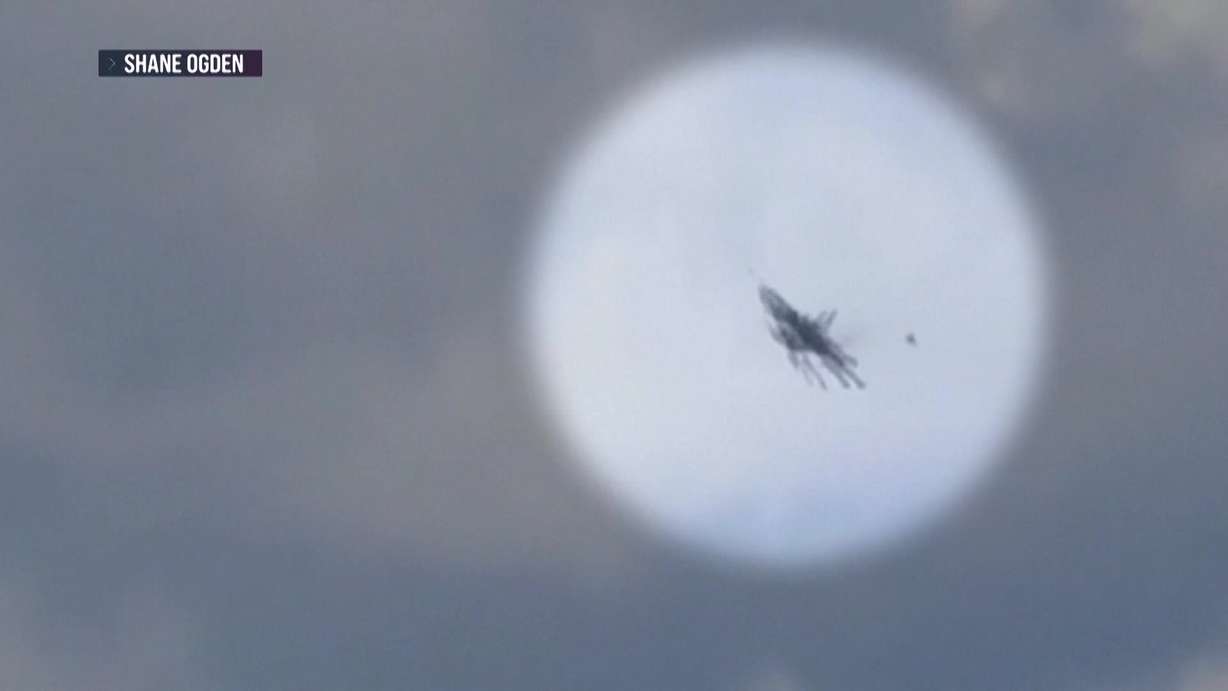
Strickland said there was very little time to recognize what was happening and to decide what to do. That's where the training comes in.
"Clearly, when the airplanes are careening out of control and not flying anymore, it's time to get out," he said.
Strickland said the Navy will do a thorough investigation into the incident to determine the cause and contributing factors. He said its goal is to prevent this from happening again.
Strickland said he's glad the aircrew is still alive. He said air shows bring a lot of unity, patriotism and support to communities.
"The military doesn't have another venue to basically demonstrate to the public what their taxpayer dollars are going to, and that is an extremely good venue to, not only demonstrate that, but to promote a sense of participation in with the community," he said.