'%3e%3cpath%20d='M34.1406%205.85938C30.3906%202.10547%2025.3047%200%2020%200C14.6953%200%209.60938%202.10547%205.85938%205.85938C2.10938%209.61328%200%2014.6953%200%2020C0%2025.3047%202.10547%2030.3906%205.85938%2034.1406C9.61328%2037.8906%2014.6953%2040%2020%2040C25.3047%2040%2030.3906%2037.8945%2034.1406%2034.1406C37.8906%2030.3906%2040%2025.3047%2040%2020C40%2014.6953%2037.8945%209.60938%2034.1406%205.85938ZM37.0117%2023.543H31.1602V13.5391H27.6328V19.9414C28.1211%2020.6914%2028.3711%2021.582%2028.3711%2022.5625V22.625C28.3711%2023.668%2028.1172%2024.6055%2027.6328%2025.4297V26.6094H36.082C33.4883%2032.9375%2027.2891%2037.3789%2020.0039%2037.3789C10.3711%2037.3789%202.62109%2029.6289%202.62109%2020C2.62109%2010.3711%2010.3711%202.62109%2020%202.62109C29.6289%202.62109%2037.3789%2010.3711%2037.3789%2020C37.3789%2021.1484%2037.2617%2022.2656%2037.0508%2023.3477C37.0391%2023.4141%2037.0234%2023.4766%2037.0117%2023.543Z'%20fill='white'/%3e%3cpath%20d='M22.3086%2018.5352C20.4336%2018.125%2019.9531%2017.8398%2019.9766%2017.1836V17.1406C19.9766%2016.6992%2020.3477%2016.2148%2021.4023%2016.2148C22.582%2016.2148%2023.8867%2016.6797%2025.0781%2017.4766L26.8516%2015.0195C25.4453%2013.8906%2023.707%2013.3398%2021.5547%2013.3398C18.5195%2013.3398%2016.4375%2015%2016.4063%2017.4766V17.5352C16.3633%2020.2617%2018.5859%2020.9805%2021.293%2021.6016C23.0391%2021.9766%2023.5703%2022.3164%2023.5703%2022.9609L23.5469%2022.9766C23.5469%2023.3906%2023.2578%2023.7031%2022.7852%2023.8359C22.5742%2023.9062%2022.1289%2023.9727%2021.5156%2023.9727C20.7617%2023.9727%2019.7539%2023.8633%2018.6328%2023.4844C18.0898%2023.2891%2017.4727%2023.0039%2016.8047%2022.6133L20.1406%2026.625C20.2813%2026.6602%2021.0977%2026.8516%2021.7734%2026.8516C25.0039%2026.8516%2027.0859%2025.2461%2027.1094%2022.6328V22.5703C27.1602%2020.1133%2025.2148%2019.1719%2022.3086%2018.5352Z'%20fill='white'/%3e%3cpath%20d='M5.24219%2013.5664V26.6133H8.75391V23.7578L10.2969%2021.9531L14.2031%2026.6133H18.3867L12.3555%2019.5195L17.4023%2013.5664H13.4531L8.75391%2019.0586V13.5664H5.24219Z'%20fill='white'/%3e%3c/g%3e%3cdefs%3e%3cclipPath%20id='clip0_97_2430'%3e%3crect%20width='40'%20height='40'%20fill='white'/%3e%3c/clipPath%3e%3c/defs%3e%3c/svg%3e)


Estimated read time: 7-8 minutes
- The Cache Employment and Training Center in Logan has been an integral resource for people with disabilities and their families since the 1960s.
- The center offers work-oriented programs alongside behavioral plans, enhancing self-worth and societal contributions.
- Utah faces a tremendous demand for services for people with disabilities, with a waitlist of over 6,800 individuals.
LOGAN — By anyone's standards, Tony LaFevre is a busy guy.
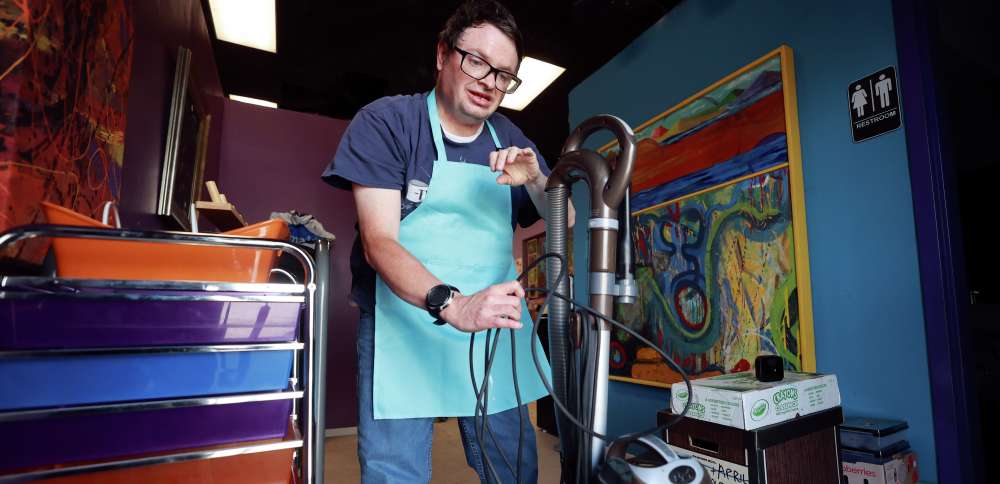
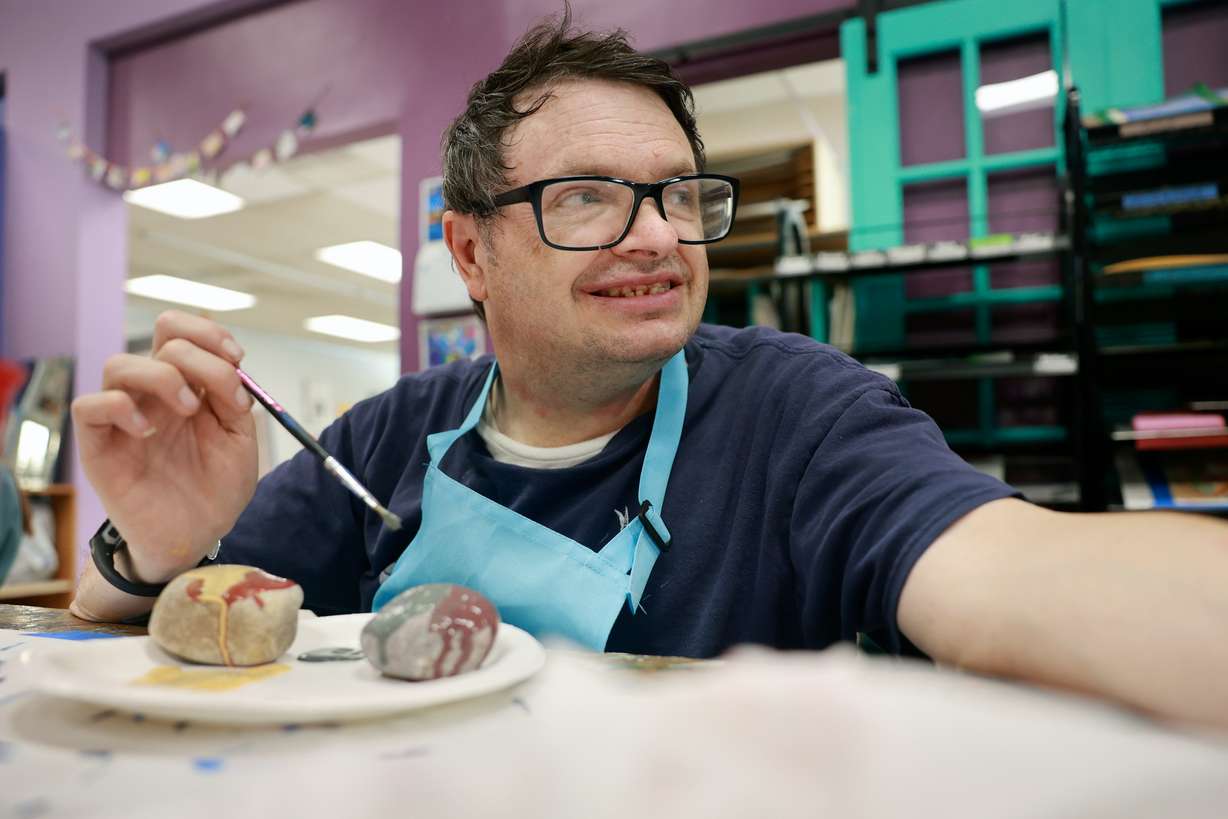
His Tuesdays usually consist of volunteering at Jump the Moon, a Logan-based nonprofit art studio and gallery focused on providing assistive art-making devices, art mentorship and creative opportunities to people with disabilities.
"It's a volunteer place where we help them. We basically cleaned the rugs for them, and then we painted some rocks. We pretty much go to clean for them and then do a project," LaFevre told KSL.
When Wednesday rolls around, LaFevre is back in Logan and back to volunteering — this time at the Cache Valley Humanitarian Center.
"We help them do bags for the homeless people. I really enjoy doing that," LaFevre said.
Like many of the patrons he interacts with at Jump the Moon, LaFevre is a person with a disability — one of over 200 who are clients of Cache Employment and Training Center in Logan.
Cache Valley fixture
The center has been a staple of the Cache Valley community for over six decades, launched in the early 1960s by concerned parents seeking an alternative to institutionalization.
"We had a state facility where many of our clients did go, and parents couldn't fathom the thought of sending their kids away," said Sandra Smith, executive director of the center.
Through the decades, as the center took on different names and found itself in different places, the mission slowly evolved, too. In the 1990s — shortly after becoming a non-profit organization — the center began offering more supportive services to help families keep their children with them, rather than sending them to an institution or group home.
This led to a decision to make the program more work-oriented, with work itself used as a vehicle for training. That's not to say it was a seamless transition or that there wasn't any societal pushback to that model.
"The stigma before that time was clients like ours don't have anything to offer society," Joe Beck, president of the center's board of directors, told KSL.
Fast-forward to now, and the center has served as a change agent in Cache Valley, dispelling notions that people with disabilities aren't capable of societal contributions by slowly but surely integrating people with disabilities into aspects of everyday life and business around the valley.
"We've come to find out that they have tons to offer society, and not only benefit themselves and grow for themselves and develop self-worth and self-confidence, but the abilities that were untapped at the time have been discovered," Beck said.
Smith agreed, calling the impact that the center's clients have had on the local community "incredible."
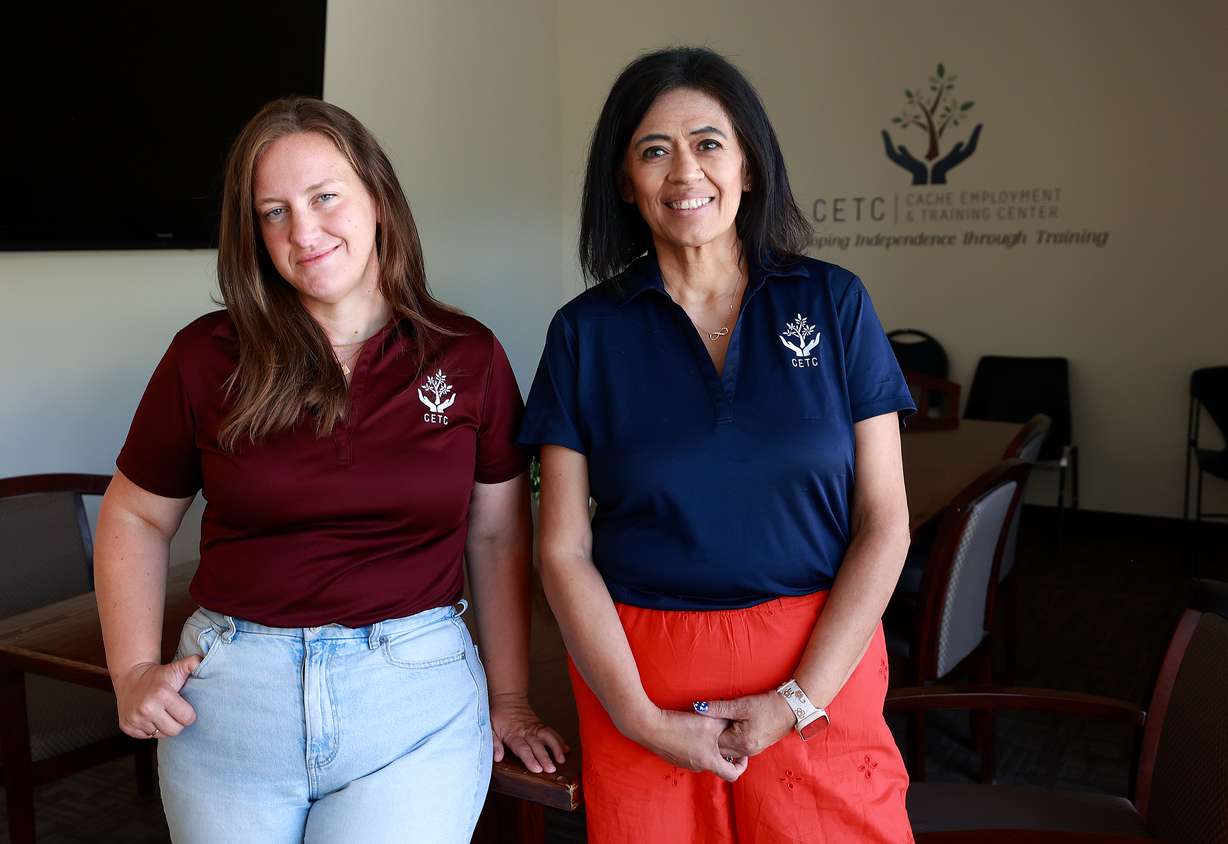
As the needs of families and clients in the Cache Valley evolved, so did the center. Sarah McIntyre, quality inclusion and integration director at the center, succinctly described their mission as helping people with disabilities "live their best lives."
"For some people, it's going to be getting a job and living on their own. Some people, it's going to be having a place where they can come with peers and interact with their community," McIntyre said. "It's going to look different for everyone. We want to support them and how they want their lives to look."
Today, 60-plus years after its formation, client autonomy is at the heart of everything the center does.
"They define what the best life is for them," Smith said. "Before, we used to be more like, 'This is what you need to do, this is how you need to do it.' And now they're in the driver's seat."
Filling needs, changing lives
For 29-year-old client Sarah Hoggan, that "best life" referenced by McIntyre and Smith takes on many different faces. For the work aspect, it's running a card business with her parents.
"I make thank-you cards and get better cards," Sarah Hoggan said, adding that the design aspect is her favorite part of the process. "I'm really good at putting stickers on."
Her mom, Michelle Hoggan, explained that card-making allows Sarah to "fill that need to work and be productive and feel like you're contributing" while also making some money.
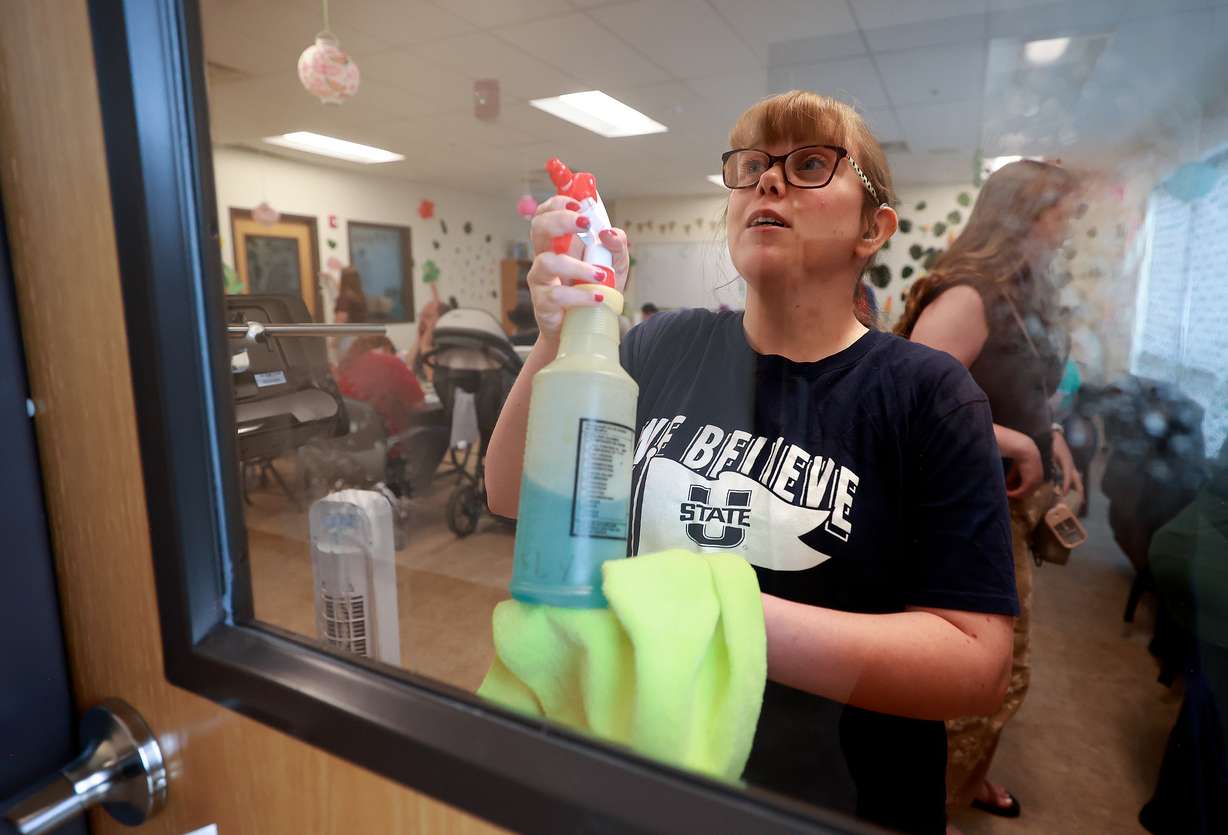
Sarah Hoggan has attended the center since she was in elementary school, Michelle Hoggan said, crediting it with the role it's played in Sarah's development.
"One thing that her teachers noticed is that she was kind of seeming like she would be helpful or would like to help teach classes," Michelle Hoggan said.
Now, a couple of times a month, Sarah Hoggan does just that, teaching a class to her peers on something she's passionate about — for example, the "Harry Potter" book series.
"Being able to teach and study and learn and set up a curriculum like that has been, I think, really stretching for her and fun," Michelle Hoggan said.
And Sarah Hoggan's favorite part?
"I get to help my friends learn something new," she said.
Despite the strides she's taken over her time at the center, Sarah Hoggan is still very much in the business of setting goals for herself.
Currently, her biggest goal is "to try to do more things by myself," she said.
Persevering in the face of challenge
But given the center's approach to letting its clients dictate what they want their lives to look like, progress isn't always linear and truly does look different for every individual.
"Even camping. Something as simple as that and not wandering off," Jessica Frandsen said while talking about how the center has helped her nonverbal son, Stephen Frandsen — affectionately called Steve-O at the center — enjoy more aspects of everyday life.
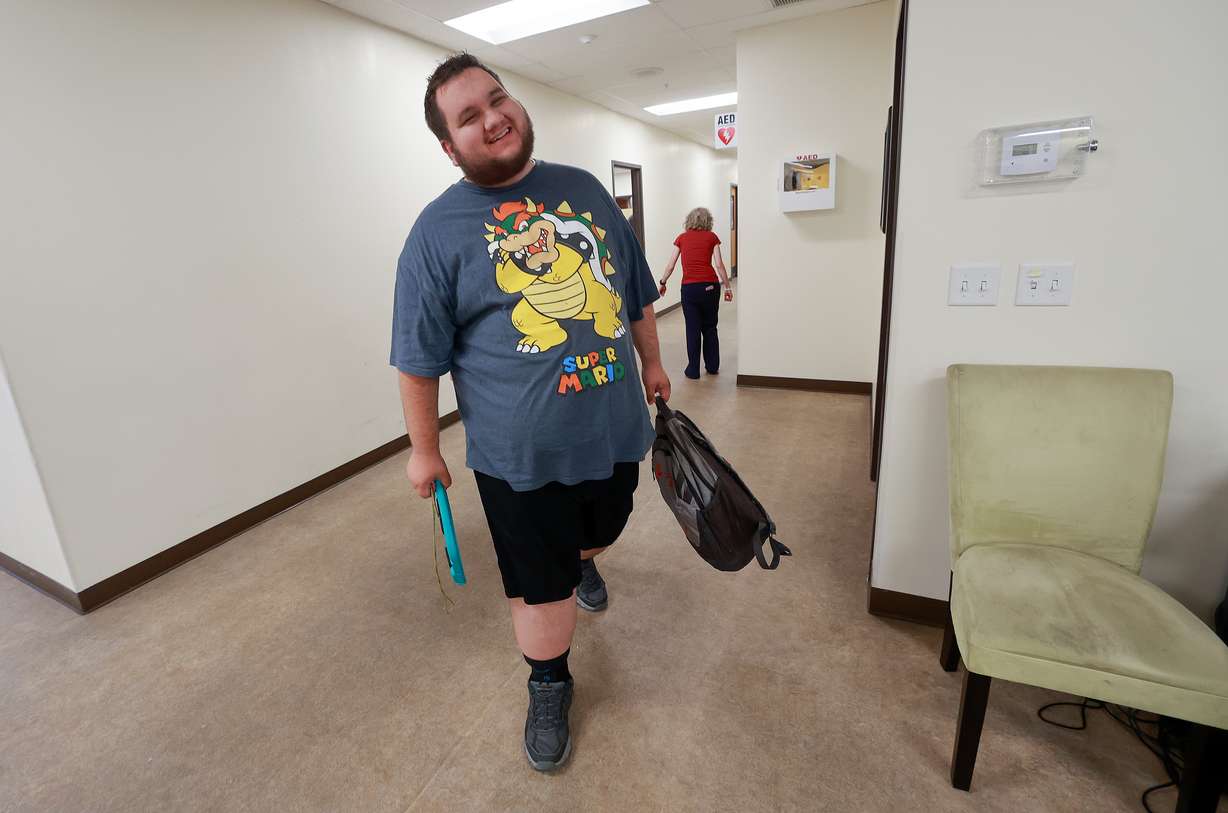
For some, the center has gone beyond just helping enable everyday life, and in cases like that of 48-year-old Scott Godfrey, who has fetal alcohol syndrome and ADHD, it's literally been life-saving.
"He (Scott) had two very serious suicide attempts," Gail Godfrey, Scott's father and Cache Employment and Training Center board member, said. "He tried to electrocute himself at a substation north of our house, just up the road a little bit, and we survived that. He was hospitalized for a period of time, and we just barely got him out of the hospital, and he shot himself with his .22 (caliber) and that was pretty serious. It could have easily taken his life."
After that, Scott Godfrey bounced around various group homes around the state before finally settling at one in Logan — in part so he could attend the center.
Now, he goes to work every day, fulfilling janitorial duties at a student housing unit in Logan. When he's not doing that, Gail Godfrey said he loves coming home to help out on the family farm in Fielding, where his father joked, his favorite chore is to "ride the four-wheeler out to the work site."
Despite the many success stories of the center and its clients, there are still very real, profound challenges faced by people with disabilities.
"(Being) discriminated against, I think, is probably one of the main obstacles I could see for employing someone with a disability," LeFevre said.
While LaFevre said he hasn't faced much discrimination himself, he knows others who have. He urged potential employers and the general public to get to know people before making "a judgment without really knowing."
The center also faces challenges, mainly because demand for services greatly outweighs its capacity to provide them, with Smith saying there's a waiting list of 6,800 individuals seeking assistance in Utah.
Last year, the legislature appropriated funding for about 100 individuals to be removed from that list, Smith said.
To that end, Smith said the center's model of integrating clients in their communities is more crucial than ever.
"If they can be contributing citizens through employment, then that's less reliance on government funding and that opens up opportunities for other individuals to use that funding," Smith said.
Essentially, increasing the amount of what Smith called "natural supports" — friends, family members, coworkers — for people with disabilities to lessen their reliance on paid supports.
"We don't have any control over what happens at the state level or federal level, but we can be involved in our local community, and we can partner with local businesses," McIntyre said. "I think everyone, no matter where they are in their community, can educate themselves more on the disability community and just find ways that they can be more accepting and inclusive to that community. I think on a small level, you'll see changes happen over time."
As LaFevre prepared to board a bus for his commute home to Preston, Idaho, he urged other people with disabilities to seek out centers like the Cache Employment and Training Center in hopes it could impact their lives as the center has impacted his.
"I've had an opportunity to work with many people and grow a trust with them, and I can feel that they have that same trust in me that I have in them, which is very good for anyone that's got disability to know that you have someone that trusts you," LaFevre said.