- Sen. John Curtis opposes President Donald Trump's plan to "run" Venezuela after Nicolas Maduro's capture.
- Curtis acknowledged Congress has ceded power to presidents but said Senate remains a check on the White House.
- Curtis reflects on first Senate year focusing on bipartisan relationships and legislative achievements.
SALT LAKE CITY — Utah Sen. John Curtis is pushing back against the Trump administration's plans for Venezuela following the U.S. capture of President Nicolas Maduro.
Curtis, a Republican, told KSL he disagrees with President Donald Trump's statement that the United States will "run" Venezuela pending a transfer of power.
"No, we're not," Curtis said Tuesday. "If you ask for where I differ, that is a big place where I differ. It makes no sense for us to try to go run their country, and there's really no mechanism for us to actually do that. And I think there are much larger questions that loom ahead."
Curtis' comments came during a wide-ranging interview on the one-year anniversary of taking office as a senator representing Utah. Curtis, a former Provo mayor who previously served in the House of Representatives, is chair of the U.S. Foreign Relations Subcommittee on the Western Hemisphere. He expressed frustration that his committee has not been sufficiently looped in on the military's activities in Venezuela.
"I get it, the administration has a lot of people that they need to follow up with," Curtis said. "But I certainly think the Western Hemisphere subcommittee should be on that list."
Maduro and his wife were brought to the U.S. to face federal drug trafficking charges. Curtis said he will participate in a classified briefing this week about Venezuela with other senators, where he hopes to gain more clarity on the administration's plans.
"I think it's clear that we will debate for decades — and probably throughout history — the legality of what happened. You're going to find experts, I think, on both sides of this," Curtis said. "But I think the bigger question is actually, where do we go from here? That begs huge questions."
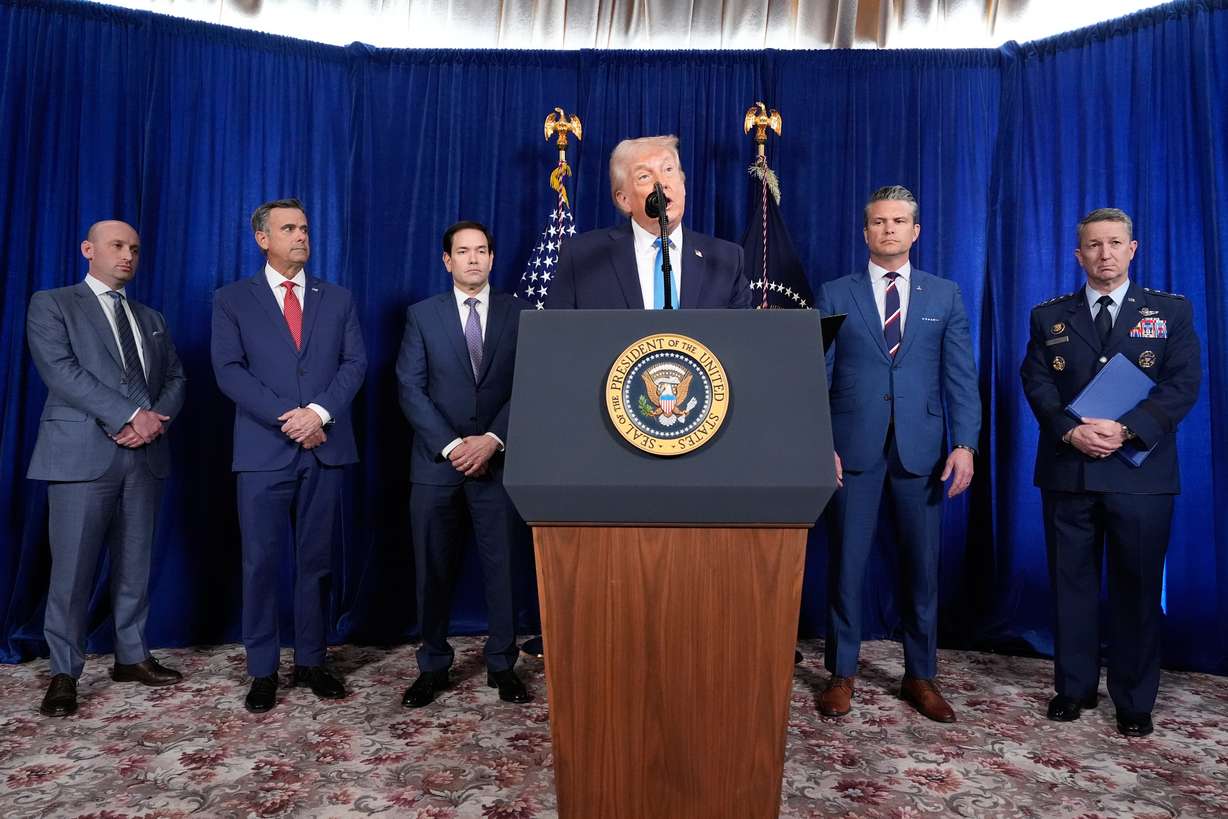
Separation of powers
Since taking office last January, Trump has sought to use his executive powers beyond just using military power abroad, including imposing broad tariffs on foreign goods, seeking to neutralize state-level regulations on artificial intelligence and trying to end the constitutional protection for birthright citizenship.
While Congress passed a collection of GOP policies in the "One Big, Beautiful Bill" last summer, Trump has pushed to remake U.S. policy largely on his own through executive order, raising concerns about an erosion of the separation of powers between the executive and legislative branches.
Trump recently signed the 221st executive order of his second term, surpassing the total number of orders he issued during his first four years in the White House.
Curtis said, "I would be fooling myself" to say Congress hasn't ceded some legislative power to the president, particularly on tariffs, and he said it frustrates him. But he added that many subtler checks on presidential authority often go unnoticed.
"Most of the pushback that we give the executive branch, you're not going to read about in the papers," he said. "If you think about the best way for me to push back, it's not necessarily on social media, but in those one-on-one conversations."
The Republican tax and spending bill was an example of that, according to the senator, who said closed-door conversations led to significant changes in the final version.
Congress is also set to vote to override Trump's vetoes on a pair of Republican-backed bills this week, per Politico, and Curtis said the Senate has resisted eliminating its rule requiring a 60-vote majority to end debate on most bills, despite pressure from Trump.
"He calls (Senate Majority Leader John) Thune almost daily and demands that the Senate repeal that filibuster," Curtis said, referring to the GOP conference leader from South Dakota. "He talks to us individually, and the Senate has remained strong and simply said, 'No, we're not going to do that.'"
Gridlock and partisanship
Even with control of all three branches of government, 2025 was not an easy year for the Republican majority. After failing to reach a spending deal, the government shut down for a record 43 days, disrupting government pay, benefits and programs for millions of Americans.
Curtis went through two shutdowns during the early days of his House tenure and said Republicans have learned that shutdowns are "not a good tool."
"I think Democrats learned this last time around," he said. "I don't know why they felt like they needed to try it. They could have watched and learned from our lessons, but I think they saw they didn't accomplish a single thing with it. And sadly, we hold the wrong people hostage. We should hold ourselves hostage and not the American people."
Curtis called the budgeting process in Washington "flat-out broken," but said he's hopeful that Congress is moving in the right direction when it comes to approving spending.
Despite the general gridlock and dysfunction on display in Washington, Curtis said he was pleasantly surprised with the "rapport and congeniality" between Republicans and Democrats in the Senate. With only 100 senators, Curtis said, it's easier to build personal connections with them, and "relationships are less transactional" than in the House.
"I find myself in just some really fun conversations with people like (independent Vermont Sen.) Bernie Sanders," he said. "Me sitting on the Senate floor talking to Bernie Sanders is kind of one of those, like, who would have ever guessed?"
Senators still find themselves at odds with their colleagues on issues, Curtis said. "But I think in the Senate, we do a better job than we did in the House of seeing people for who they are, understanding their differences and then finding ways to work together."
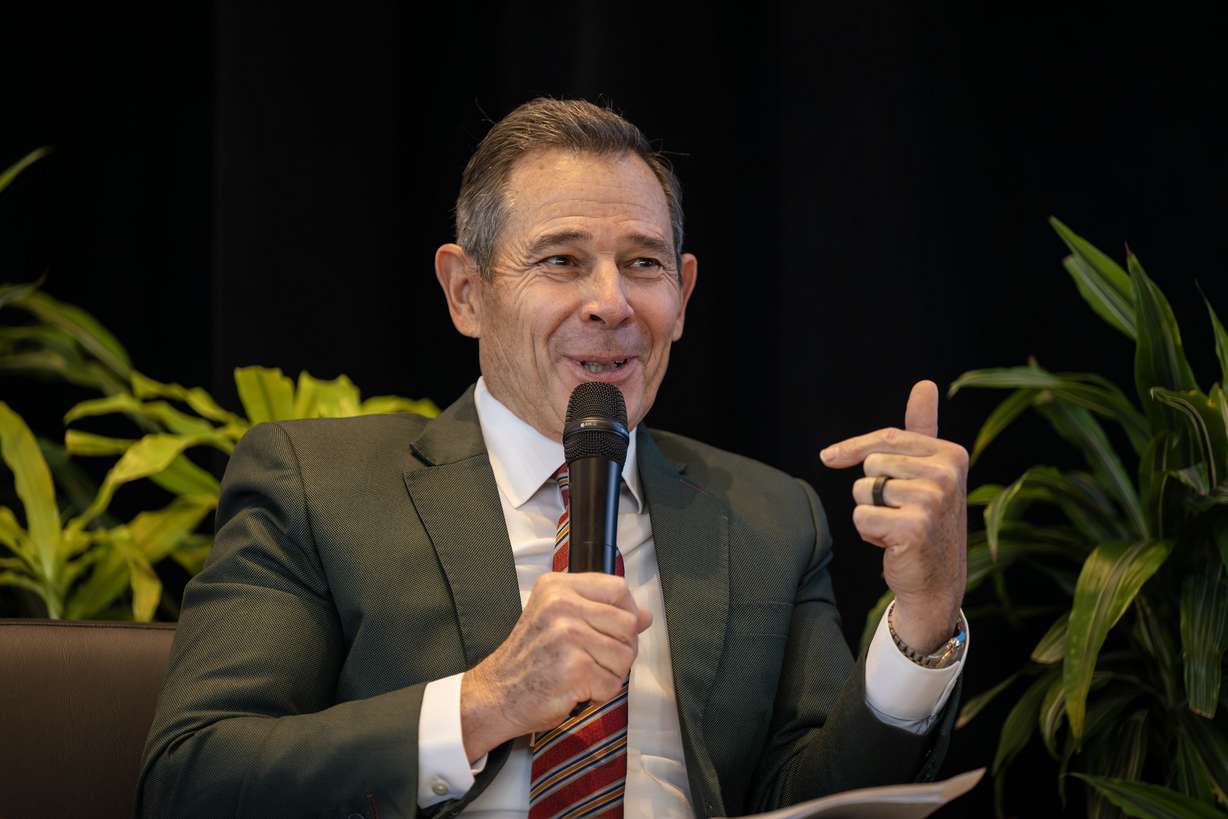
Thoughts on first year
When Mitt Romney decided not to seek a second term in the Senate, Curtis initially balked at replacing him. He wrote an op-ed announcing he would stay in the House of Representatives and not run.
But after just a few months, Curtis reversed course and joined a crowded field of Republicans seeking the seat. While falling short at the 2024 GOP convention, Curtis handily defeated several other candidates in a primary election and went on to win the general election, taking office Jan. 3, 2025.
"Every day is almost a 'pinch me' moment for me, and it's just a real honor to serve," Curtis said, while adding, "It was a long year, and it was a year full of responsibility and hard decisions."
Daniel Woodruff, KSLLooking back on his first year in the Senate, Curtis touted his work on bills dealing with forest management and wildfires, funding for Hill Air Force Base and holding social media platforms accountable for harmful algorithms. He also recently introduced a bill aimed at cracking down on the timeshare industry and making it easier to get out of expensive, long-term contracts.
Curtis said the Senate is very different from the House, where he spent more than seven years.
"I think one of the things that really stands out is that the Senate doesn't really change your values, but it reveals them," he said. "When you are one of 435 (members), a lot happens where people don't really see your every move. When you're one of 100, I think it's fair to say everybody sees your every move."
Curtis is 65, yet he said he feels "better than I have felt in a very long time." He wouldn't say whether he plans to run for another term in 2030, but he said he will look at his health and job performance as he decides.
"I just feel like it's so important for the state that whoever they have here has enthusiasm, has excitement — that they have the health, the energy to run hard," Curtis said. "For my foreseeable future, I have that, and I hope to do this for enough time to make a difference and to accomplish the things that people sent me here to do."