'%3e%3cpath%20d='M34.1406%205.85938C30.3906%202.10547%2025.3047%200%2020%200C14.6953%200%209.60938%202.10547%205.85938%205.85938C2.10938%209.61328%200%2014.6953%200%2020C0%2025.3047%202.10547%2030.3906%205.85938%2034.1406C9.61328%2037.8906%2014.6953%2040%2020%2040C25.3047%2040%2030.3906%2037.8945%2034.1406%2034.1406C37.8906%2030.3906%2040%2025.3047%2040%2020C40%2014.6953%2037.8945%209.60938%2034.1406%205.85938ZM37.0117%2023.543H31.1602V13.5391H27.6328V19.9414C28.1211%2020.6914%2028.3711%2021.582%2028.3711%2022.5625V22.625C28.3711%2023.668%2028.1172%2024.6055%2027.6328%2025.4297V26.6094H36.082C33.4883%2032.9375%2027.2891%2037.3789%2020.0039%2037.3789C10.3711%2037.3789%202.62109%2029.6289%202.62109%2020C2.62109%2010.3711%2010.3711%202.62109%2020%202.62109C29.6289%202.62109%2037.3789%2010.3711%2037.3789%2020C37.3789%2021.1484%2037.2617%2022.2656%2037.0508%2023.3477C37.0391%2023.4141%2037.0234%2023.4766%2037.0117%2023.543Z'%20fill='white'/%3e%3cpath%20d='M22.3086%2018.5352C20.4336%2018.125%2019.9531%2017.8398%2019.9766%2017.1836V17.1406C19.9766%2016.6992%2020.3477%2016.2148%2021.4023%2016.2148C22.582%2016.2148%2023.8867%2016.6797%2025.0781%2017.4766L26.8516%2015.0195C25.4453%2013.8906%2023.707%2013.3398%2021.5547%2013.3398C18.5195%2013.3398%2016.4375%2015%2016.4063%2017.4766V17.5352C16.3633%2020.2617%2018.5859%2020.9805%2021.293%2021.6016C23.0391%2021.9766%2023.5703%2022.3164%2023.5703%2022.9609L23.5469%2022.9766C23.5469%2023.3906%2023.2578%2023.7031%2022.7852%2023.8359C22.5742%2023.9062%2022.1289%2023.9727%2021.5156%2023.9727C20.7617%2023.9727%2019.7539%2023.8633%2018.6328%2023.4844C18.0898%2023.2891%2017.4727%2023.0039%2016.8047%2022.6133L20.1406%2026.625C20.2813%2026.6602%2021.0977%2026.8516%2021.7734%2026.8516C25.0039%2026.8516%2027.0859%2025.2461%2027.1094%2022.6328V22.5703C27.1602%2020.1133%2025.2148%2019.1719%2022.3086%2018.5352Z'%20fill='white'/%3e%3cpath%20d='M5.24219%2013.5664V26.6133H8.75391V23.7578L10.2969%2021.9531L14.2031%2026.6133H18.3867L12.3555%2019.5195L17.4023%2013.5664H13.4531L8.75391%2019.0586V13.5664H5.24219Z'%20fill='white'/%3e%3c/g%3e%3cdefs%3e%3cclipPath%20id='clip0_97_2430'%3e%3crect%20width='40'%20height='40'%20fill='white'/%3e%3c/clipPath%3e%3c/defs%3e%3c/svg%3e)


Estimated read time: 5-6 minutes
- Tyler Robinson's defense seeks disqualification of Utah County Attorney's Office due to conflict.
- The motion cites a prosecuting attorney's familial connection to a case witness.
- Court hearings on Dec. 29 and Jan. 16 will address disqualification and other issues.
PROVO — Tyler Robinson's defense team wants the Utah County Attorney's Office disqualified from prosecuting the capital murder case because of an alleged conflict of interest involving one of the prosecuting attorneys.
Robinson, 22, of Washington, Washington County, is accused of shooting and killing conservative activist Charlie Kirk on Sept. 10 while Kirk was speaking at Utah Valley University. Robinson is charged with aggravated murder, a capital offense, and faces a potential death sentence if convicted
On Dec. 10, Robinson's defense team filed a motion under seal to have the Utah County Attorney's Office disqualified from the case. On Wednesday, a public version of that motion was released.
The public motion claims one of the attorneys currently prosecuting the case has a conflict of interest based on "personal connections" to a witness. The name of that attorney, a public employee, is redacted in the motion, though it is unclear why it's redacted. The motion alludes to the witness being a family member.
"Further, Mr. Robinson seeks findings from this court that: 1) Upon learning of the conflict, the Utah County Attorney's Office did not employ any screening protocol and, 2) Information pertaining to the personal involvement of Mr. (name redacted) was shared among the assigned prosecutorial team, including the county attorney. Based upon these findings and in the interest of protecting Mr. Robinson's federal and state rights to due process, Mr. Robinson requests that this court order that the Utah County Attorney's Office is disqualified from representing the state in this matter," the motion states.
Robinson's attorneys say the unidentified attorney was with Utah County Attorney Jeff Gray at a presentation in Davis County when Kirk was shot and "began receiving text messages from his (family member) and shared those with Mr. Gray in real time," according to the motion. He then called another attorney in the office "almost immediately, told him about the shooting, and shared his (texts)."
The motion states that the attorney did tell others in his office about his family member being a witness. He disclosed the same information to the defense on Oct. 1, and added that the family member who texted him from UVU "will not be a witness for the state and that he does not believe that this circumstance presents a conflict precluding him from participating in the prosecution of Mr. Robinson," according to the motion.
The defense, however, disagrees, and believes the attorney should be disqualified for a conflict of interest for having a familial relationship with a witness, thus violating Robinson's right to due process.
"In this case, the personal relationship between (the attorney and his family member), a potential witness and victim, raises serious concerns about past and future prosecutorial decision-making in this case. Mr. (redacted) cannot serve 'two masters' and should not be permitted to do so," the motion argues. "Mr. (redacted)'s integrity is not the question, and his opinion that there is no conflict is not dispositive. Rather, his (family member's) experience raises an objective question as to whether or not the circumstance presents a 'significant risk' that Mr. (redacted)'s personal family interests may materially limit his ability to represent the state of Utah in these proceedings in the manner that is ethically required."
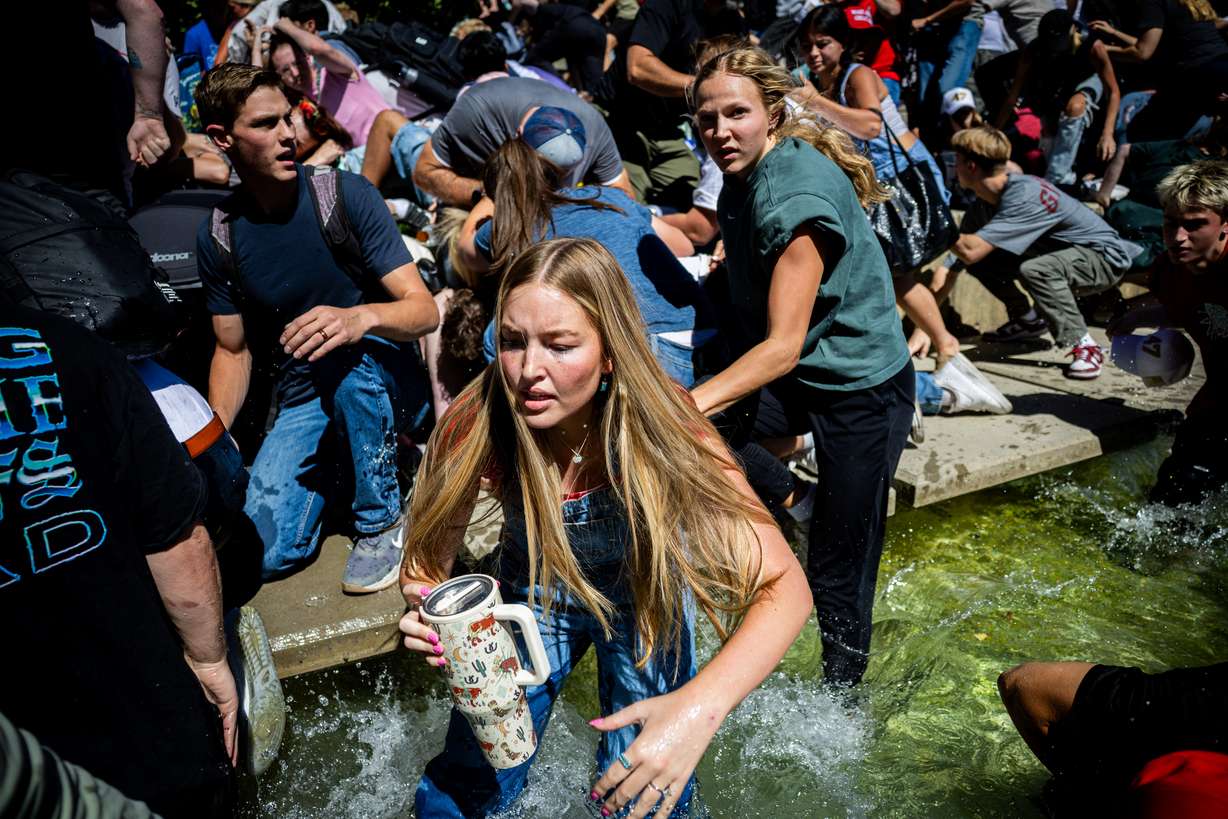
In their motion, Robinson's defense team has included several witness statements filled out for police on the day of the shooting. The statements, the motion contends, show how traumatic the Kirk shooting was, particularly for those who were at the event.
Those traumatic feelings were being conveyed to a prosecuting attorney in real time, the motion argues.
"As described by witnesses on campus at the time of the shooting, the event and the aftermath were harrowing, even for those that did not see the shooting as it happened. Mr. (redacted) and his (family member) are not immune to this trauma. There must have been fear, anxiety, anger, and a host of other emotions as the events unfolded that day and throughout the investigation culminating in the arrest of Mr. Robinson. These feelings and impressions do not simply resolve because a criminal case has been filed," according to the motion.
Furthermore, the defense argues the prosecutor has had "significant communication" with the entire prosecution team. They believe "the rush to seek death in this case evidences strong emotional reactions by Mr. (redacted), the county attorney, and the entire prosecution team, all of whom were informed of his and his (family member's) personal experiences.
"The supervisory nature of Mr. (redacted)'s position with the Utah County Attorney's Office also contributes to the need for disqualification of the entire Utah County Attorney's Office from the prosecution of this death penalty case. The perception of a fair trial is critical in any case and nowhere more than here, where Mr. Robinson's life is in the balance," the motion concludes.
The next court hearing for the Robinson case will be a virtual hearing on Dec. 29. At that time, 4th District Judge Tony Graf is expected to announce his rulings on whether audio and transcripts of a closed-door hearing on Oct. 24 should be released to the public, and whether attorneys representing the media should be recognized as limited party status interveners so they will automatically be notified of proposals to close any future court hearings from the public or classify any documents as private.
The next in-person hearing is set for Jan. 16. During that hearing, the judge will consider Robinson's motion to have the Utah County Attorney's Office disqualified. Another hearing scheduled for Feb. 3 for a yet-to-be-filed motion seeking to keep cameras out of the courtroom.
Kirk, 31, co-founder of Turning Point USA, was sitting under a tent of an outdoor amphitheater-courtyard area at UVU on Sept. 10, speaking in front of approximately 3,000 people, when he was shot in the neck by a gunman on the roof of the nearby Losee Center building.