Estimated read time: 5-6 minutes
- Utah's trade delegation visited India's Art of Living Center in mid-November.
- The University of Utah explores academic partnerships with Indian institutions like Art of Living.
- Potential collaborations include integrating traditional practices into the university's curriculum.
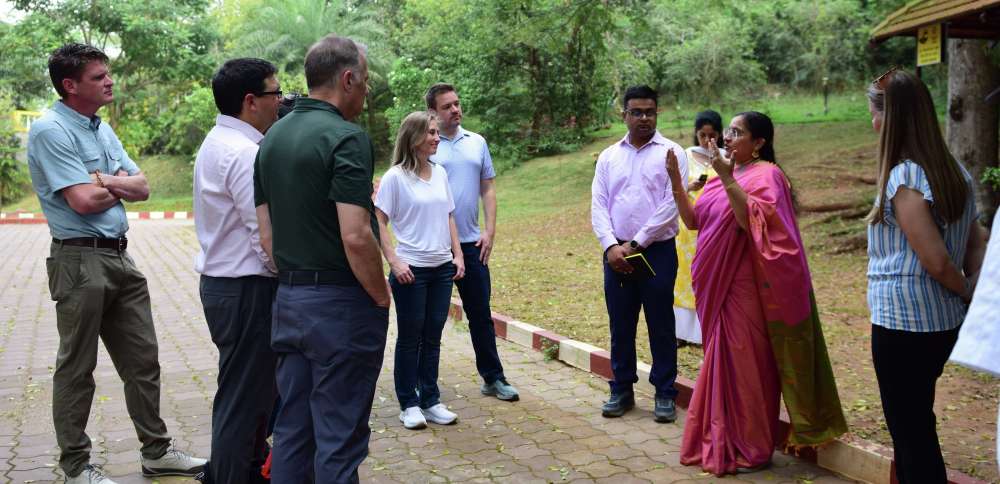
PANCHAGIRI HILLS, India — The members of Utah's trade delegation followed scientist Divya Kanchibhotla past an outdoor class to a meeting and meditation room on the Art of Living International Center campus.
"Gurudev's philosophy is that inner transformation leads to outer transformation," Kanchibhotla told the small group on a pleasant mid-November afternoon, referring to Sri Sri Ravi Shankar, a spiritual leader behind the organization.
Art of Living volunteers worked behind her to get the meeting room open. The group eventually gathered in the room, each delegate carrying a chair for themselves from a pile on the side and sipping from the small bottles of water provided by a volunteer.
"Since you came all the way here, I thought I would lead you into a small meditation," Kanchibhotla said.
Even though the delegates, a mix of lawmakers, policy experts and business leaders, only had a few hours on the Art of Living campus, almost all of them said they left the monastery more relaxed and carefree.
After trying out a 10-minute breathing technique led by a knowledgeable guide, their forehead lines eased and natural smiles took over.
This moment of relaxation for members of the Utah delegation, who were visiting India as part of a trade mission organized by World Trade Center Utah. The delegation visited several cities over two weeks. Bangalore was their final stop before making the long return flight to Utah. The fact that this trip coincided with a ramp-up in the redistricting battle back home stretched their working hours into the night.
"Jason, I think we may have to organize meditation days at the Capitol during session," state Rep. Matt MacPherson, R-West Valley City, joked to his colleague, state Rep. Jason Thompson, R-River Heights, after the meditation.
The delegates experienced a taste of the Art of Living practices, with one person from the group — Nate Friedman, an associate dean at the University of Utah — taking special interest.
The University of Utah sent Friedman on this trade mission to explore partnerships in India. If this initial exploration leads to an academic partnership, it would be the Art of Living's first joint academic pursuit.
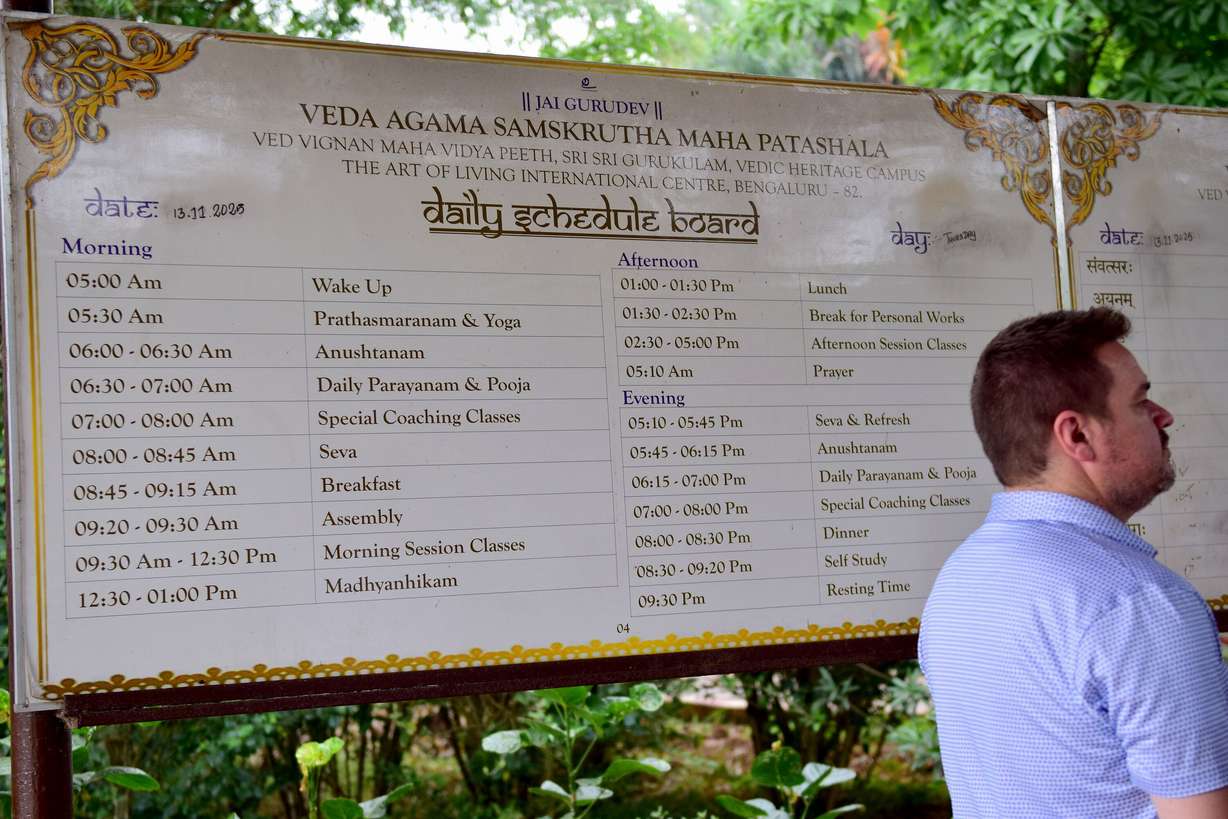
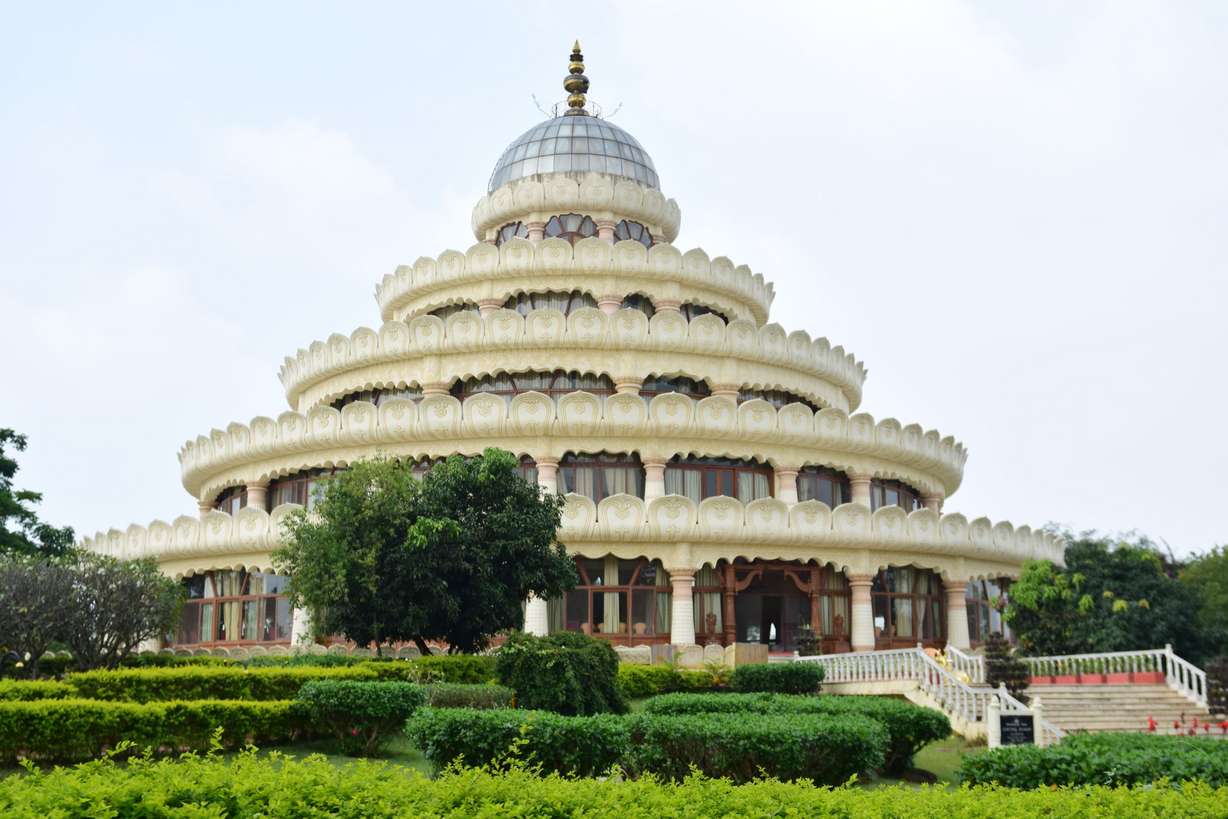
Noting the architecture of the large lotus-shaped meditation center, called the Murugan Mandala Vatika, and the sounds of young men chanting, the associate dean said, "It's hard to feel the rest of the world weighing down on you when you're here."
A brief respite
Kanchibhotla told the delegates about the organization's work in reviving rivers and educating young girls and rural communities.
The delegates, on a tight schedule with ministry meetings ahead of them, didn't get a chance to tour the research center, which Kanchibhotla helped establish.
This center has conducted more than 200 studies on the techniques taught and practiced at the ashram, the executive director of the Art of Living's Institute for Advanced Research said.
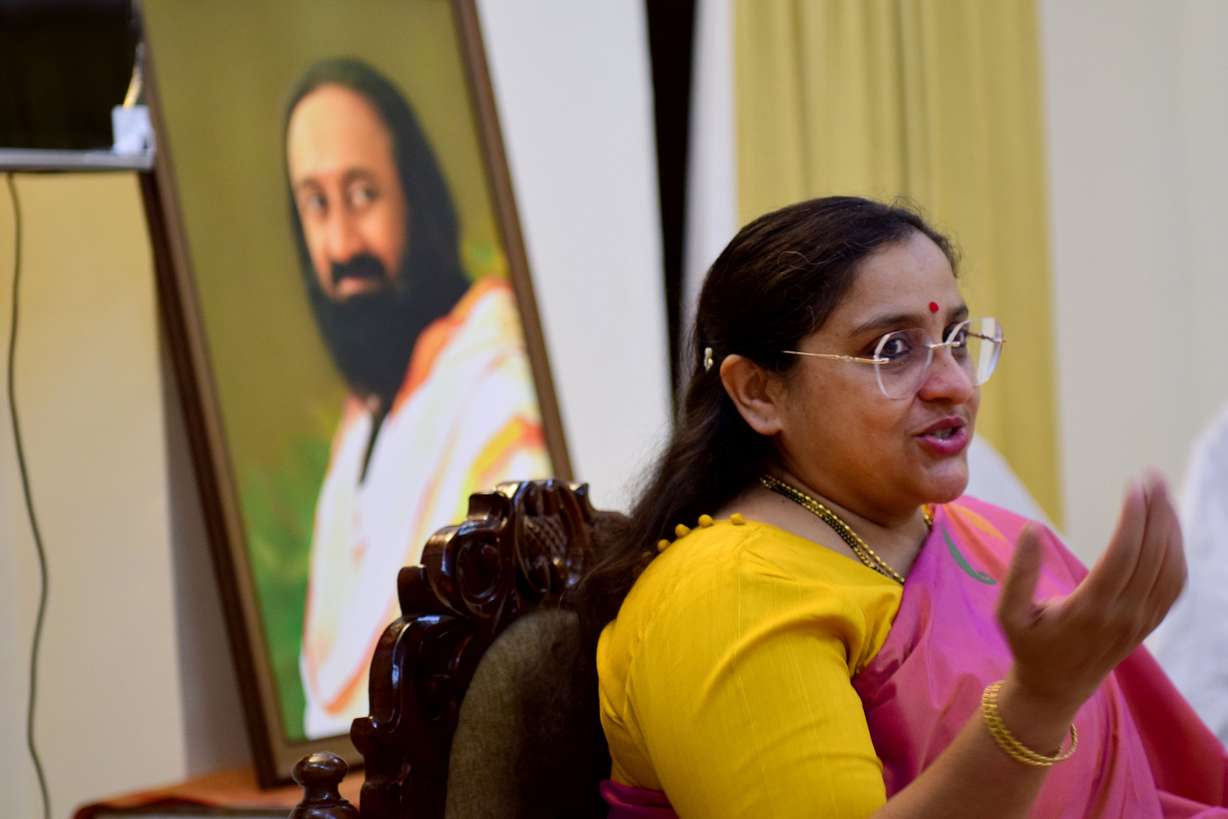
Kanchibhotla wore a magenta pink saree with a yellow blouse, the gleaming strands in the drapes complementing her gold jewelry.
She spoke about "prana," the Sanskrit term for the vital life force energy, akin to "chi" in traditional Chinese philosophy, and how to elevate it for heightened physical resilience and mental clarity.
Sometimes it happens naturally, like during a hike or a day at the beach, she said, when we feel a pleasant shift. Traditional Vedic techniques can also incorporate this heightened rhythm in daily life.
Kanchibhotla listed four things that influence the level of prana someone feels. This includes food — which for the followers of Sri Sri Ravi Shankar typically leans towards vegetarian — physical fitness, breathwork and meditation.
"You know that flow state that they talk about, where alpha waves are more predominant," she noted. "Maybe some of you wear an Apple Watch, where it says, 'You're in a restorative state of mind,' where you are calm, composed, not agitated — that gives you energy."
Kanchibhotla let each word hang as she led the meditation in the barely furnished room, adorned with a picture of Sri Sri Ravi Shankar behind her.
Her instructions were simple: the right thumb on the right nostril, the middle and index fingers on the left nostril. Inhale through one nostril, close it, and exhale through the other. She reassured her audience that the mind is allowed to wander, but the focus should be on the breath.
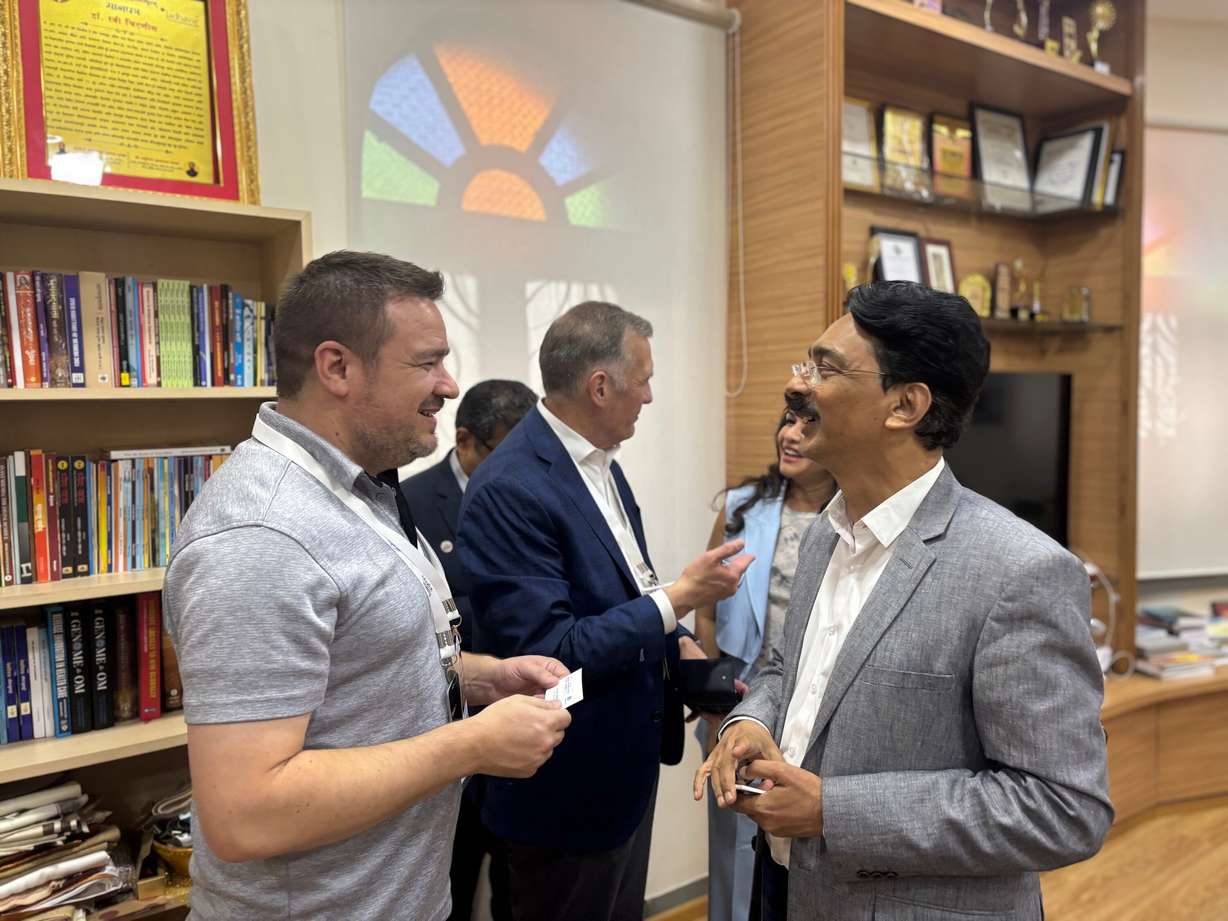
"My brain shut off during that moment," Friedman said an hour later, during the lunch break at the ashram's small restaurant, Panchamrut, which serves satvik style slow-cooking. They offer only vegetarian food, and the recipes don't contain onion or garlic.
The lunch menu included thalis, or round individual platters, that contain lentils, vegetable dishes, soup, rice, flatbreads and desserts.
Amid the chatter of what to order, Friedman told the Deseret News he "felt different coming out of (the meditation) than I did going in." For him, it served as a reminder of the interconnectedness of our physical and mental well-being.
A unique approach
The University of Utah has a global presence, including a campus in South Korea. Creating joint programming with institutions in India, home to a population of 1.4 billion, also aligns with that vision, Friedman said.
Aside from student exchange programs, the American university is also exploring opportunities to integrate some of these teachings into its curriculum.
"We are a top research institution in the U.S. and we have faculty members and students who would be interested in learning about these things," he said about the ancient practices that influence medicine, farming, sustainability and research at the Art of Living campuses.
"From a research perspective," Friedman said, "I do think there are some interesting opportunities at the hospital, for instance, where researchers can come to learn."
Earlier in the day, the delegation toured other parts of the ashram, including the gushala, home to 1,600 cows, and the horse stable.
Although this 250-acre campus is only about 22 miles away from the major metropolitan city of Bangalore, India's very own Silicon Valley, its rich biodiversity and lush fields make it feel much more distant from the sights and sounds of never-ending traffic and horns bouncing between the skyscrapers.