
- Melanie Queen's leaky roof leaves her with no insurance coverage and an expensive repair.
- Meanwhile, an engineer blamed the roofer, but the roofer and shingle maker blamed each other.
- Asking pointed questions about insurance and certifications can help people avoid these situations.
SARATOGA SPRINGS — Melanie Queen didn't need a new roof, per se, but given the age of her home, she thought it was time.
"Some of my neighbors were having issues with no leaks and stuff, and so, I just wanted to be preventative," Queen said.
She did her homework and hired a licensed contractor with more than 20 years installing roofs in Utah.
"It was about $7,000," she said of the cost.
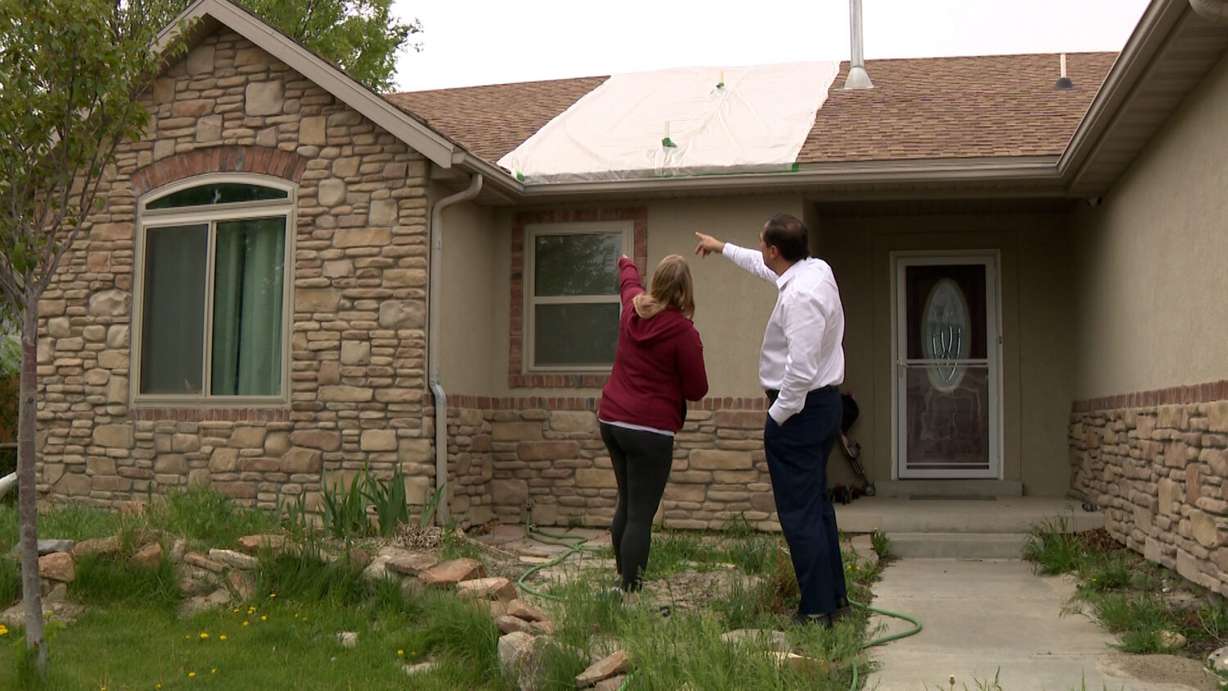
But about one year after installation, she noticed something odd — an undulating pattern of ups and downs across her roof.
"Like, if you look at it, it's like ... it kind of waves," she pointed out.
Things got worse.
"We have a leak coming in," Queen said.
The blame game
She hired an engineer who discovered cracked and shifted trusses in her attic. That can happen for several reasons — like not enough attic ventilation or too much weight on the roof from snow. But the engineer offered another theory.
"The engineer said it was the roofer's fault," she said.
Shingles being dropped or loaded on the roof wrong can cause a truss to crack. Queen called her roofer, who pointed the finger at the maker of the shingles.
"They basically said that they thought it was a manufacturing defect," she said.
So, she called the shingle manufacturer, but it pointed the finger right back at her roofer.
"Because they didn't nail the shingles down properly," Queen said she was told.
With no one taking responsibility, fixing the issue will cost her thousands of dollars more than what she paid for the project.
"I've lost a lot of sleep," she said.
So, Queen asked me to investigate.
Some of my neighbors were having issues with no leaks and stuff, and so, I just wanted to be preventative.
–Melanie Queen
After several months of trying to reach the roofer, I received this two-question response:
"Did Ms. Queen tell you she submitted a complaint to the Utah Division of Consumer Protection?" he wrote me. "And did she tell you that the Utah Division of Consumer Protection rejected her claim?"
She did.
In fact, Queen gave me the roofer's entire written response to the state. In it, the roofer denies causing damage or performing improper installation. They argue the roof was properly installed per the terms of the contract and the manufacturer's guidelines.
The KSL Investigators also reached out to the shingle company. Its spokesperson wrote that the roofer is not on one of its "certified contractors," and said the shingles were improperly installed.
Roofers are required to carry insurance, and Queen's roofer has insurance, but the insurer denied her claim. They also declined to comment on this story.
As for her own homeowner's insurance, she got more finger-pointing. It came out and put down a tarp over a section of her roof to keep more water from entering. But, thus far, Queen said she's been told that fixing workmanship issues is not something it will cover.
"They were just like, basically, 'Good luck,'" she said, laughing.
Now, to tear off the roof, repair the damage to the trusses and then put on another new roof, Queen said she'll have to pay $23,000 — a stressful expense for nearly anyone. The added cruel irony is that she thought she was going to save money by replacing the roof now instead of waiting for it to become necessary.
"I just wanted to be preventative and get ahead of it," she said.
You should know
A roof is a major investment, so you should get bids from several roofers. Asking pointed questions about warranties and confirming a roofer's certifications and insurance coverage can protect you if something goes wrong.
Queen said she wishes those are things she had done.