'%3e%3cpath%20d='M34.1406%205.85938C30.3906%202.10547%2025.3047%200%2020%200C14.6953%200%209.60938%202.10547%205.85938%205.85938C2.10938%209.61328%200%2014.6953%200%2020C0%2025.3047%202.10547%2030.3906%205.85938%2034.1406C9.61328%2037.8906%2014.6953%2040%2020%2040C25.3047%2040%2030.3906%2037.8945%2034.1406%2034.1406C37.8906%2030.3906%2040%2025.3047%2040%2020C40%2014.6953%2037.8945%209.60938%2034.1406%205.85938ZM37.0117%2023.543H31.1602V13.5391H27.6328V19.9414C28.1211%2020.6914%2028.3711%2021.582%2028.3711%2022.5625V22.625C28.3711%2023.668%2028.1172%2024.6055%2027.6328%2025.4297V26.6094H36.082C33.4883%2032.9375%2027.2891%2037.3789%2020.0039%2037.3789C10.3711%2037.3789%202.62109%2029.6289%202.62109%2020C2.62109%2010.3711%2010.3711%202.62109%2020%202.62109C29.6289%202.62109%2037.3789%2010.3711%2037.3789%2020C37.3789%2021.1484%2037.2617%2022.2656%2037.0508%2023.3477C37.0391%2023.4141%2037.0234%2023.4766%2037.0117%2023.543Z'%20fill='white'/%3e%3cpath%20d='M22.3086%2018.5352C20.4336%2018.125%2019.9531%2017.8398%2019.9766%2017.1836V17.1406C19.9766%2016.6992%2020.3477%2016.2148%2021.4023%2016.2148C22.582%2016.2148%2023.8867%2016.6797%2025.0781%2017.4766L26.8516%2015.0195C25.4453%2013.8906%2023.707%2013.3398%2021.5547%2013.3398C18.5195%2013.3398%2016.4375%2015%2016.4063%2017.4766V17.5352C16.3633%2020.2617%2018.5859%2020.9805%2021.293%2021.6016C23.0391%2021.9766%2023.5703%2022.3164%2023.5703%2022.9609L23.5469%2022.9766C23.5469%2023.3906%2023.2578%2023.7031%2022.7852%2023.8359C22.5742%2023.9062%2022.1289%2023.9727%2021.5156%2023.9727C20.7617%2023.9727%2019.7539%2023.8633%2018.6328%2023.4844C18.0898%2023.2891%2017.4727%2023.0039%2016.8047%2022.6133L20.1406%2026.625C20.2813%2026.6602%2021.0977%2026.8516%2021.7734%2026.8516C25.0039%2026.8516%2027.0859%2025.2461%2027.1094%2022.6328V22.5703C27.1602%2020.1133%2025.2148%2019.1719%2022.3086%2018.5352Z'%20fill='white'/%3e%3cpath%20d='M5.24219%2013.5664V26.6133H8.75391V23.7578L10.2969%2021.9531L14.2031%2026.6133H18.3867L12.3555%2019.5195L17.4023%2013.5664H13.4531L8.75391%2019.0586V13.5664H5.24219Z'%20fill='white'/%3e%3c/g%3e%3cdefs%3e%3cclipPath%20id='clip0_97_2430'%3e%3crect%20width='40'%20height='40'%20fill='white'/%3e%3c/clipPath%3e%3c/defs%3e%3c/svg%3e)




This archived news story is available only for your personal, non-commercial use. Information in the story may be outdated or superseded by additional information. Reading or replaying the story in its archived form does not constitute a republication of the story.
- Utah acquires the Mormon Meteor III for a new state museum opening June 27, 2026.
- The historic car was commissioned by racer and former Salt Lake City mayor Ab Jenkins.
- The museum will feature over 950 items that tell Utah's story in different ways.
SALT LAKE CITY — Utah historians noticed a theme when they asked residents what they'd want to see when a new state history museum opens in 2026.
Mormon Meteor III.
Prominent Utah racer — and eventual Salt Lake City mayor — David Abbott "Ab" Jenkins commissioned the vehicle in 1937, which he went on to use to break countless speed records at the time. He raced other vehicles with the name, but Mormon Meteor III was also a core memory many Utahns had when visiting the Utah Capitol, where it had been on display for decades before it was moved in the 1980s.
"The number of people who came up to us and said, 'Are you going to have that Mormon Meteor?' was truly astounding," said Tim Glenn, director of the Museum of Utah. "I was like, 'Wow, this is a really big deal in this state.'"
Their request is now coming to fruition thanks to a partnership between public and private entities. Utah has acquired Mormon Meteor III in an undisclosed deal that will bring it back to Capitol Hill to be displayed at the Museum of Utah next year, the Utah State Historical Society announced on Wednesday.
It will be one of hundreds of unique Utah items on display when the museum officially opens on June 27, 2026.
What was Mormon Meteor III?
The more historians explored the request, the more they agreed it should be featured at the museum.
Jenkins was born in Spanish Fork in 1883 and grew up in Utah as it became a state, and was an adult at the time automobiles began to take over as a key household item. He took up racing beginning in the 1920s and would soon become one of the fastest drivers in the world at a time when motorsports were quite popular.
He would go on to turn the Bonneville Salt Flats into the legendary speedway it is today, and race a couple of Mormon Meteor cars — a name recommended by Deseret News readers. But Mormon Meteor III was a game changer.
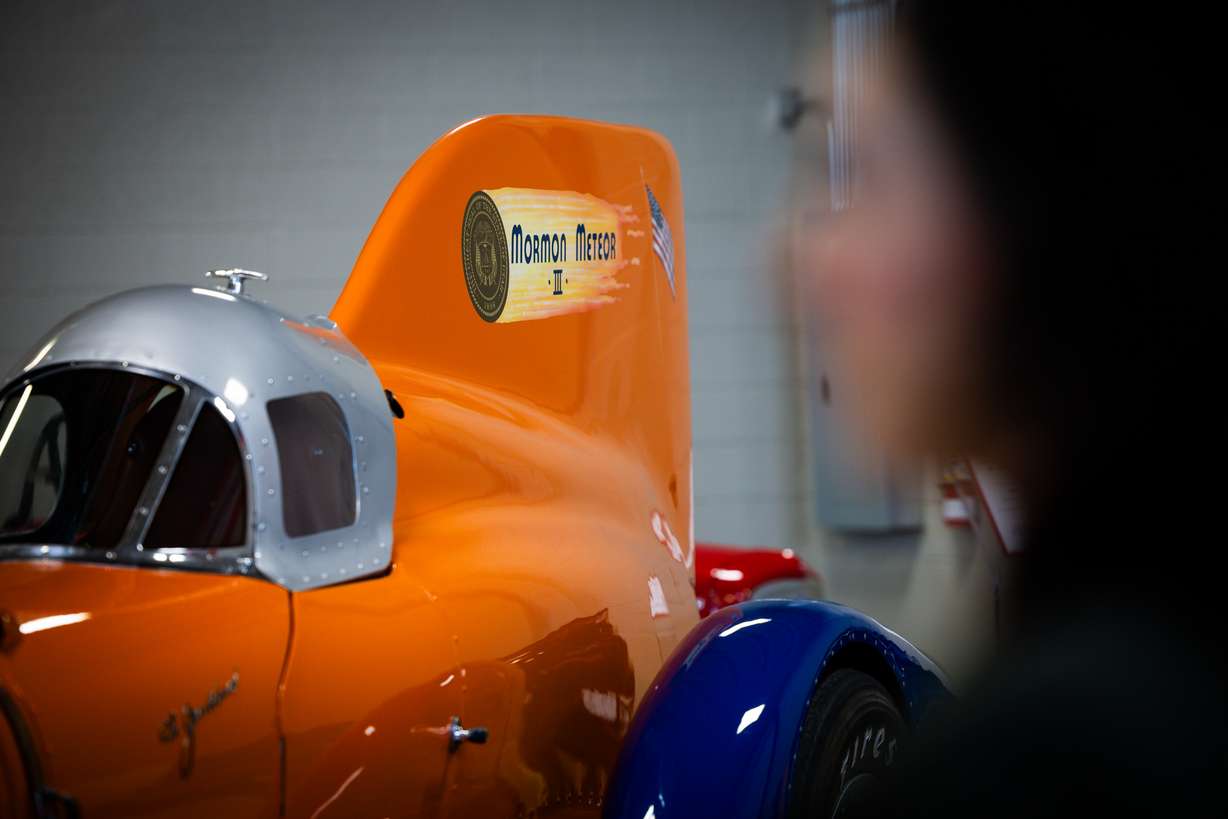
The prized auto engineer Augie Duesenberg and Jenkins' teenage son, Marv, were hired to build the vehicle, which featured a 12-cylinder Curtiss Conqueror airplane engine with 750 horsepower. Jenkins gave it some tests in 1938 before he publicly debuted a year later, using it to break dozens of endurance records at the time over the next few years.
Among those was a record of driving it for 24 hours street at an average speed of 161.2 mph, which stood for 50 years.
"Dad would have to shut off the engine about a mile from the pits and coast in. Mom would bring Dad out a drink, and they'd talk while the crew checked the water and oil, changed tires, washed the windshield and refueled," Marv Jenkins told Deseret News in 2000, recalling that record-breaking day.
Many people likely learned about the state through newspapers or news reports played at global theaters at the time.
"It became a moment when Utah was put in an international spotlight," he said, as he pointed to the orange and blue-colored vehicle. "We were sort of put on the map in that moment. That's all reflected here."
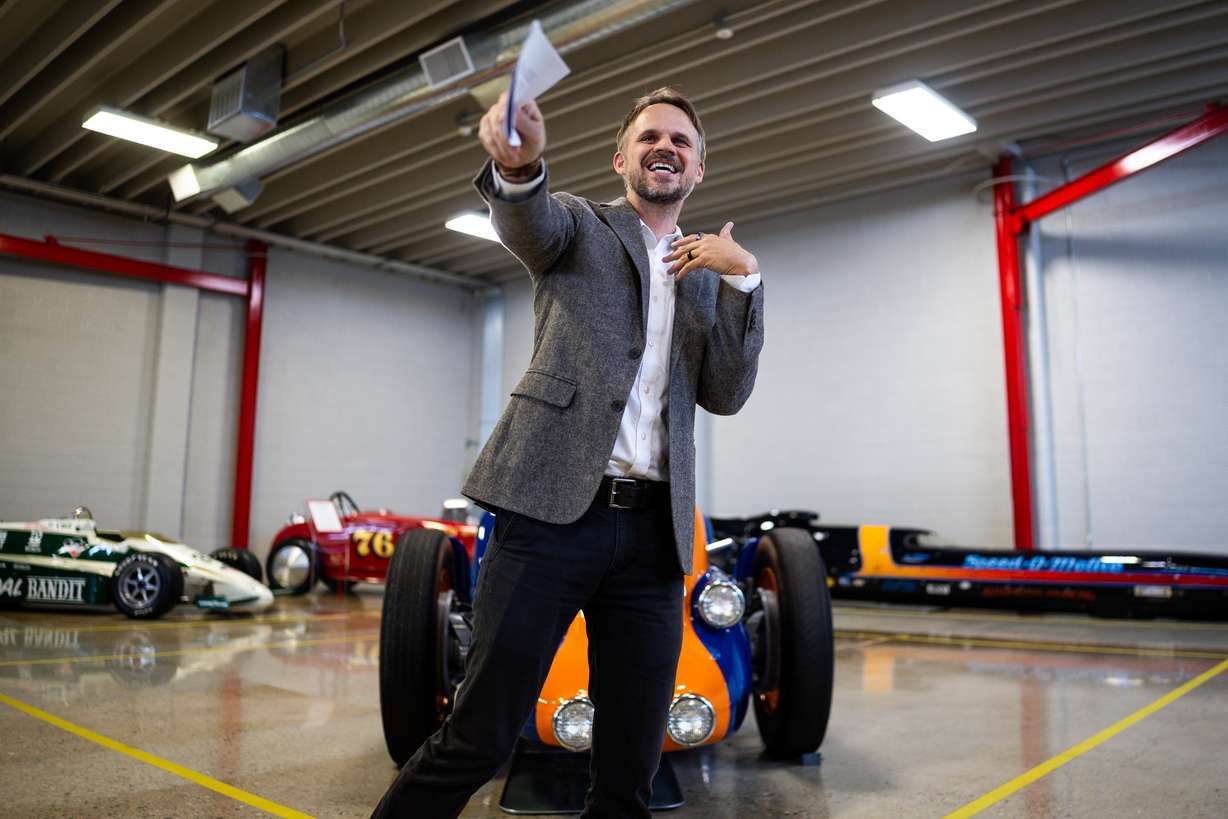
Mormon Meteor III was also displayed at the Utah Capitol for decades, between the 1940s and 1980s, with a notable exception. Jenkins, then 67, brought the car out of retirement in 1950 and used it to break more records at the time. He died six years later, but was immortalized in the racing world through his induction into the Motorsports Hall of Fame of America in 2023.
It wasn't until the 1990s that Mormon Meteor III left the Utah Capitol, when Marv Jenkins reclaimed it for restoration. He ultimately sold it to businessman John Price, who has displayed it at the Price Museum of Speed in Salt Lake City for years.
The meteor finds a new home
State historians began negotiating with Price about Mormon Meteor III as they planned out the new state museum, but acquiring the car took time to come together. Glenn declined to reveal the terms of the deal, but he told KSL.com that "many different people came together" from the public and private sectors before an agreement was reached.
However, it's a piece that historians believed to be back at the Utah Capitol.
The building is on track to open in time for the 2026 legislative session, but it will take a few extra months for historians to set up all the museum displays — and even longer to get everything from its vast collection into the building's state-of-the-art storage spaces. Its gift shop will open in early 2026, and a few preview events are planned before the official grand opening in June, said Jennifer Ortiz, director of the Utah State Historical Society.
It's also open right in time for many of the historical events planned for the 250th anniversary of the signing of the Declaration of Independence.
Utah's new museum will feature over 950 items when it opens, all of which were picked through an extensive process to determine what items within the state's history collection should be displayed first. Mounts, cases and display signs for those items are being built now.
What will be displayed at the museum?
The museum will feature four permanent galleries.
- Becoming Utah: Artifacts and stories from Native American tribes and early pioneer settlers.
- Building Utah: History and growth of Utah's industries, buildings and infrastructure.
- Connecting Utah: Events, faith, art, values, shared experiences, sports and other ways Utahns have been able to connect over time.
- Inspiring Utah: Pop culture artifacts and other items that "show off what Utah is."
A few other items were on display in a sneak preview on Wednesday, giving a small taste of what to expect at the State Museum of Utah.
- A 1950s cowboy outfit worn by Michael J. Fox in a scene of "Back to the Future III" filmed at Monument Valley.
- An abacus and a baseball glove used by people who were held at the Topaz Internment Campsite in Utah.
- A pennant representing the 116 Civilian Conservation Corps work camp that operated during World War II.
- A telescope that Orson Pratt used as he guided pioneers to the Salt Lake Valley in 1847.
Museum officials previously announced that the building will be broken up into four permanent galleries, along with a temporary exhibition space. Each gallery will be 3,500 to 5,000 square feet, and filled with artifacts ranging from Native American tribes to early settlers from The Church of Jesus Christ of Latter-day Saints to pieces of more modern history.
It will also be free for the public to enter.
"This is what we consider a true gift to Utahns," Ortiz said. "It's going to be a really amazing space, and we hope that any Utahn who comes to the museum will see themselves ... and their stories reflected in it."