'%3e%3cpath%20d='M34.1406%205.85938C30.3906%202.10547%2025.3047%200%2020%200C14.6953%200%209.60938%202.10547%205.85938%205.85938C2.10938%209.61328%200%2014.6953%200%2020C0%2025.3047%202.10547%2030.3906%205.85938%2034.1406C9.61328%2037.8906%2014.6953%2040%2020%2040C25.3047%2040%2030.3906%2037.8945%2034.1406%2034.1406C37.8906%2030.3906%2040%2025.3047%2040%2020C40%2014.6953%2037.8945%209.60938%2034.1406%205.85938ZM37.0117%2023.543H31.1602V13.5391H27.6328V19.9414C28.1211%2020.6914%2028.3711%2021.582%2028.3711%2022.5625V22.625C28.3711%2023.668%2028.1172%2024.6055%2027.6328%2025.4297V26.6094H36.082C33.4883%2032.9375%2027.2891%2037.3789%2020.0039%2037.3789C10.3711%2037.3789%202.62109%2029.6289%202.62109%2020C2.62109%2010.3711%2010.3711%202.62109%2020%202.62109C29.6289%202.62109%2037.3789%2010.3711%2037.3789%2020C37.3789%2021.1484%2037.2617%2022.2656%2037.0508%2023.3477C37.0391%2023.4141%2037.0234%2023.4766%2037.0117%2023.543Z'%20fill='white'/%3e%3cpath%20d='M22.3086%2018.5352C20.4336%2018.125%2019.9531%2017.8398%2019.9766%2017.1836V17.1406C19.9766%2016.6992%2020.3477%2016.2148%2021.4023%2016.2148C22.582%2016.2148%2023.8867%2016.6797%2025.0781%2017.4766L26.8516%2015.0195C25.4453%2013.8906%2023.707%2013.3398%2021.5547%2013.3398C18.5195%2013.3398%2016.4375%2015%2016.4063%2017.4766V17.5352C16.3633%2020.2617%2018.5859%2020.9805%2021.293%2021.6016C23.0391%2021.9766%2023.5703%2022.3164%2023.5703%2022.9609L23.5469%2022.9766C23.5469%2023.3906%2023.2578%2023.7031%2022.7852%2023.8359C22.5742%2023.9062%2022.1289%2023.9727%2021.5156%2023.9727C20.7617%2023.9727%2019.7539%2023.8633%2018.6328%2023.4844C18.0898%2023.2891%2017.4727%2023.0039%2016.8047%2022.6133L20.1406%2026.625C20.2813%2026.6602%2021.0977%2026.8516%2021.7734%2026.8516C25.0039%2026.8516%2027.0859%2025.2461%2027.1094%2022.6328V22.5703C27.1602%2020.1133%2025.2148%2019.1719%2022.3086%2018.5352Z'%20fill='white'/%3e%3cpath%20d='M5.24219%2013.5664V26.6133H8.75391V23.7578L10.2969%2021.9531L14.2031%2026.6133H18.3867L12.3555%2019.5195L17.4023%2013.5664H13.4531L8.75391%2019.0586V13.5664H5.24219Z'%20fill='white'/%3e%3c/g%3e%3cdefs%3e%3cclipPath%20id='clip0_97_2430'%3e%3crect%20width='40'%20height='40'%20fill='white'/%3e%3c/clipPath%3e%3c/defs%3e%3c/svg%3e)




This archived news story is available only for your personal, non-commercial use. Information in the story may be outdated or superseded by additional information. Reading or replaying the story in its archived form does not constitute a republication of the story.
- Utah approved three emergency options for hunters impacted by Monroe Canyon Fire.
- Over two-thirds of the elk and deer habitat in the hunting unit are expected to remain closed through the hunting season.
- The fire has burned over 55,000 acres and remains just 7% contained.
FARMINGTON — State wildlife officials approved three options for people who obtained permits for hunts that are now in jeopardy because of the Monroe Canyon Fire in central Utah.
Affected hunters can retain their permit and hunt on areas not closed by the wildfire, surrender their permit to still receive any bonus or preference points and a partial refund, or extend their hunt to the 2026 season, Utah Wildlife Board officials decided, following an emergency meeting to discuss the issue on Friday.
"We wanted to provide some relief options for hunters whose hunts would be severely impacted by the current wildlife and associated closures," said Lindy Varney, licensing coordinator for the Utah Division of Wildlife Resources, in a statement after the meeting.
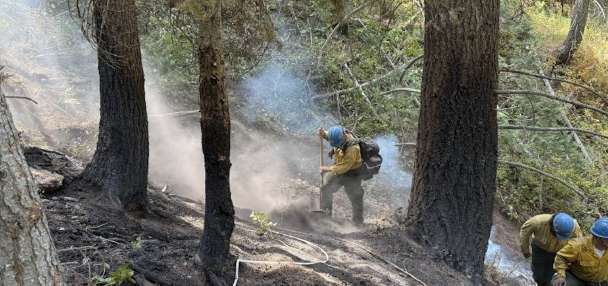
The Monroe Canyon Fire has now burned over 55,000 acres since it started on July 13. Strong winds, low relative humidity and warm temperatures have made firefighting operations difficult, which is why it has grown about five times in size over the past week, while containment has dropped from 16% on Tuesday to 7% on Friday.
On top of the land lost, Fishlake National Forest has issued emergency closures in areas close to it that will remain in place through at least the end of October. Even if the fire is contained in the next few weeks, which is unlikely, the area will still be unsafe, which factors into these types of closures, said Vance Mumford, a wildlife biologist for the Utah Division of Wildlife Resources.
That means a large chunk of land will be inaccessible throughout most of the hunting season, including the general season deer hunts. The division estimates the current closures also block off over two-thirds of the deer and elk habitat within the Monroe hunting unit.
"If the closure stays as is, that severely limits their access to land and the number of animals that are out there," he told the board.
Those numbers are likely to grow as the fire spreads, Varney added. The agency says that approximately 1,200 hunters have permits now affected by the existing closures, which is why it proposed the emergency order.
Under the solution that the board allowed, hunters could still try to hunt in parts of the unit that remain open. Pole Canyon, Kingston Troughs, Cottonwood Canyon and Dry Creek are four U.S. Forest Service roads within the unit that still offer access to open space, she said. That said, access is subject to change between now and the hunting season, depending on the fire's growth.
Affected hunters can also surrender their permit, which is an option available up until the day before their hunt is scheduled to begin. The division would reinstate the hunter's bonus or preference points, while any waiting period normally assessed would be waived. Hunters would also receive a refund, minus a $25 handling fee.
Another option for affected hunters is to extend their hunt to the 2026 hunting season. Hunters must respond to the division's email notice by the day before their hunt starts and surrender their permit by then to be eligible for this option.
"I do want to applaud the division for getting this out quick," said Utah Wildlife Board member Ryan Foutz, before the vote. "This is a fair proposal to all parties involved.
Gov. Spencer Cox hinted that Utah would take steps to address the impacts the fire will have on hunting this year, while visiting wildfire fighting operations earlier Friday. Hunting is perhaps the least of the concerns at the moment, especially since the fire has already burned homes, cabins and vital infrastructure in the area.
But he pointed out that Monroe Mountain is a popular hunting location and another example of how wildfires impact communities.
"We're going to be taking care of you, making sure you have those opportunities," he said.