'%3e%3cpath%20d='M34.1406%205.85938C30.3906%202.10547%2025.3047%200%2020%200C14.6953%200%209.60938%202.10547%205.85938%205.85938C2.10938%209.61328%200%2014.6953%200%2020C0%2025.3047%202.10547%2030.3906%205.85938%2034.1406C9.61328%2037.8906%2014.6953%2040%2020%2040C25.3047%2040%2030.3906%2037.8945%2034.1406%2034.1406C37.8906%2030.3906%2040%2025.3047%2040%2020C40%2014.6953%2037.8945%209.60938%2034.1406%205.85938ZM37.0117%2023.543H31.1602V13.5391H27.6328V19.9414C28.1211%2020.6914%2028.3711%2021.582%2028.3711%2022.5625V22.625C28.3711%2023.668%2028.1172%2024.6055%2027.6328%2025.4297V26.6094H36.082C33.4883%2032.9375%2027.2891%2037.3789%2020.0039%2037.3789C10.3711%2037.3789%202.62109%2029.6289%202.62109%2020C2.62109%2010.3711%2010.3711%202.62109%2020%202.62109C29.6289%202.62109%2037.3789%2010.3711%2037.3789%2020C37.3789%2021.1484%2037.2617%2022.2656%2037.0508%2023.3477C37.0391%2023.4141%2037.0234%2023.4766%2037.0117%2023.543Z'%20fill='white'/%3e%3cpath%20d='M22.3086%2018.5352C20.4336%2018.125%2019.9531%2017.8398%2019.9766%2017.1836V17.1406C19.9766%2016.6992%2020.3477%2016.2148%2021.4023%2016.2148C22.582%2016.2148%2023.8867%2016.6797%2025.0781%2017.4766L26.8516%2015.0195C25.4453%2013.8906%2023.707%2013.3398%2021.5547%2013.3398C18.5195%2013.3398%2016.4375%2015%2016.4063%2017.4766V17.5352C16.3633%2020.2617%2018.5859%2020.9805%2021.293%2021.6016C23.0391%2021.9766%2023.5703%2022.3164%2023.5703%2022.9609L23.5469%2022.9766C23.5469%2023.3906%2023.2578%2023.7031%2022.7852%2023.8359C22.5742%2023.9062%2022.1289%2023.9727%2021.5156%2023.9727C20.7617%2023.9727%2019.7539%2023.8633%2018.6328%2023.4844C18.0898%2023.2891%2017.4727%2023.0039%2016.8047%2022.6133L20.1406%2026.625C20.2813%2026.6602%2021.0977%2026.8516%2021.7734%2026.8516C25.0039%2026.8516%2027.0859%2025.2461%2027.1094%2022.6328V22.5703C27.1602%2020.1133%2025.2148%2019.1719%2022.3086%2018.5352Z'%20fill='white'/%3e%3cpath%20d='M5.24219%2013.5664V26.6133H8.75391V23.7578L10.2969%2021.9531L14.2031%2026.6133H18.3867L12.3555%2019.5195L17.4023%2013.5664H13.4531L8.75391%2019.0586V13.5664H5.24219Z'%20fill='white'/%3e%3c/g%3e%3cdefs%3e%3cclipPath%20id='clip0_97_2430'%3e%3crect%20width='40'%20height='40'%20fill='white'/%3e%3c/clipPath%3e%3c/defs%3e%3c/svg%3e)




This archived news story is available only for your personal, non-commercial use. Information in the story may be outdated or superseded by additional information. Reading or replaying the story in its archived form does not constitute a republication of the story.
- Financial planner Shane Stewart discussed the recently competitive refinancing market for car loans.
- Stewart said refinancing is an option if interest rates drop significantly, your credit score rises, or you have a strong credit history.
- He added refinancing may not suit those with older cars or nearly paid-off loans.
SALT LAKE CITY — When you've financed a car, you've agreed to a certain monthly payment at a certain interest rate for a certain number of months. Now, you can redo your car loan with refinancing that can change those terms and possibly save you money. But it might not always be the right move.
Buying a car to get from Point A to Point B just keeps getting more expensive. Edmunds.com, recently looking into auto sales made in the U.S. from April to June, found payments for new cars averaged out at $756 per month.
We emphasize average, because nearly 1 in 5 drivers (19.3%) agreed to pay over $1,000 per month for their new ride.
Those numbers caught the attention of certified financial planner Shane Stewart, of Deseret Mutual Benefit Administrators.
"I think that's why people are looking to refinance and why lenders are all of a sudden saying, 'Oh, you have a pretty heavy monthly amount,'" Stewart said.
Many big-name lenders — Bank of America, Capital One and Chase, among others — are now offering auto loan refinancing with the lure of possible lower monthly payments.
"It's becoming incredibly competitive right now," said Stewart. "The amount that people are borrowing is way up, and the cost of the car is way up. It's becoming a little more lucrative."
When to refinance your car loan
Stewart said refinancing your car loan can help if interest rates have dropped since you bought the car, and/or you've established a stronger credit history since, and/or if your credit score has gone up.
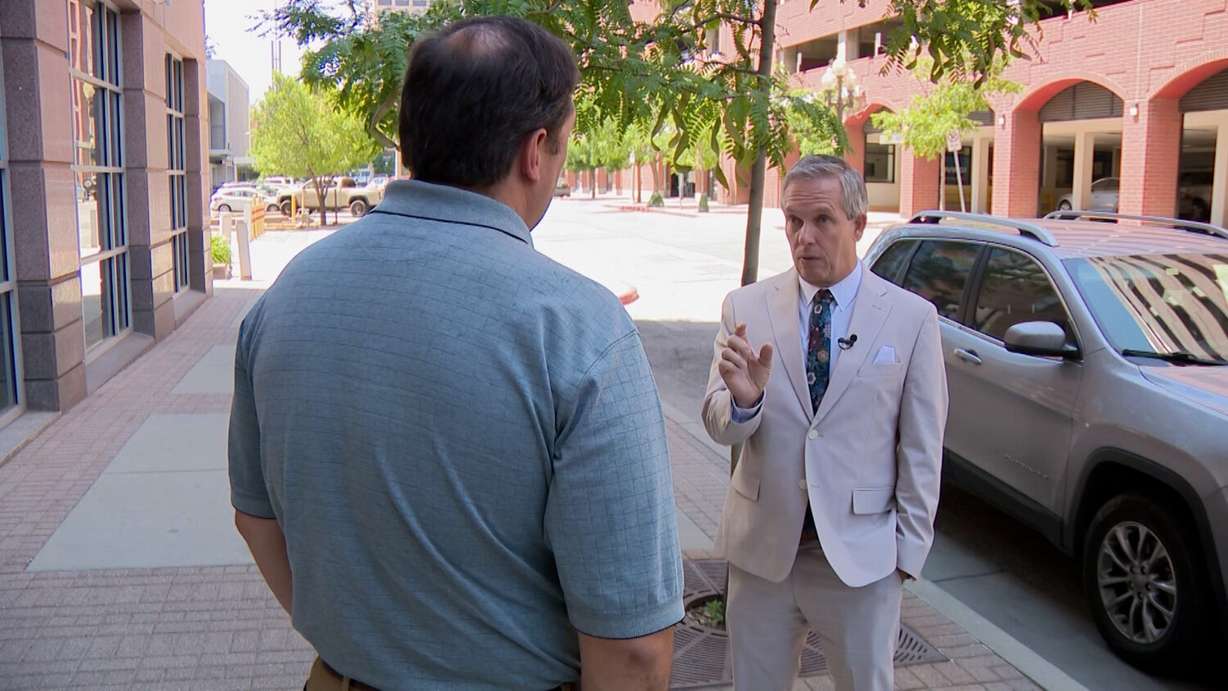
"As that credit score improves, you might be able to get a better rate, and why not? That is a great reason to refinance," he said.
If the new rate is substantially lower than your current rate, you might end up with both a lower monthly payment and a shorter loan. But Stewart said this won't always be the case.
Depending on several factors, you might get a new loan that's shorter but with higher monthly payments. Or a lender might offer you lower monthly rates but on a longer loan.
"You don't want a loan so far out that it outlives the depreciation of your car," Stewart warned.
Still, he said refinancing done right could save you hundreds, even thousands, over the life of your car loan.
When you shouldn't try
If you've already paid off most of your car loan, refinancing probably won't be the right call for you. Or if your car is older than seven years, or closing in on 100,000 miles, many lenders will consider it too old and worn to refinance.