'%3e%3cpath%20d='M34.1406%205.85938C30.3906%202.10547%2025.3047%200%2020%200C14.6953%200%209.60938%202.10547%205.85938%205.85938C2.10938%209.61328%200%2014.6953%200%2020C0%2025.3047%202.10547%2030.3906%205.85938%2034.1406C9.61328%2037.8906%2014.6953%2040%2020%2040C25.3047%2040%2030.3906%2037.8945%2034.1406%2034.1406C37.8906%2030.3906%2040%2025.3047%2040%2020C40%2014.6953%2037.8945%209.60938%2034.1406%205.85938ZM37.0117%2023.543H31.1602V13.5391H27.6328V19.9414C28.1211%2020.6914%2028.3711%2021.582%2028.3711%2022.5625V22.625C28.3711%2023.668%2028.1172%2024.6055%2027.6328%2025.4297V26.6094H36.082C33.4883%2032.9375%2027.2891%2037.3789%2020.0039%2037.3789C10.3711%2037.3789%202.62109%2029.6289%202.62109%2020C2.62109%2010.3711%2010.3711%202.62109%2020%202.62109C29.6289%202.62109%2037.3789%2010.3711%2037.3789%2020C37.3789%2021.1484%2037.2617%2022.2656%2037.0508%2023.3477C37.0391%2023.4141%2037.0234%2023.4766%2037.0117%2023.543Z'%20fill='white'/%3e%3cpath%20d='M22.3086%2018.5352C20.4336%2018.125%2019.9531%2017.8398%2019.9766%2017.1836V17.1406C19.9766%2016.6992%2020.3477%2016.2148%2021.4023%2016.2148C22.582%2016.2148%2023.8867%2016.6797%2025.0781%2017.4766L26.8516%2015.0195C25.4453%2013.8906%2023.707%2013.3398%2021.5547%2013.3398C18.5195%2013.3398%2016.4375%2015%2016.4063%2017.4766V17.5352C16.3633%2020.2617%2018.5859%2020.9805%2021.293%2021.6016C23.0391%2021.9766%2023.5703%2022.3164%2023.5703%2022.9609L23.5469%2022.9766C23.5469%2023.3906%2023.2578%2023.7031%2022.7852%2023.8359C22.5742%2023.9062%2022.1289%2023.9727%2021.5156%2023.9727C20.7617%2023.9727%2019.7539%2023.8633%2018.6328%2023.4844C18.0898%2023.2891%2017.4727%2023.0039%2016.8047%2022.6133L20.1406%2026.625C20.2813%2026.6602%2021.0977%2026.8516%2021.7734%2026.8516C25.0039%2026.8516%2027.0859%2025.2461%2027.1094%2022.6328V22.5703C27.1602%2020.1133%2025.2148%2019.1719%2022.3086%2018.5352Z'%20fill='white'/%3e%3cpath%20d='M5.24219%2013.5664V26.6133H8.75391V23.7578L10.2969%2021.9531L14.2031%2026.6133H18.3867L12.3555%2019.5195L17.4023%2013.5664H13.4531L8.75391%2019.0586V13.5664H5.24219Z'%20fill='white'/%3e%3c/g%3e%3cdefs%3e%3cclipPath%20id='clip0_97_2430'%3e%3crect%20width='40'%20height='40'%20fill='white'/%3e%3c/clipPath%3e%3c/defs%3e%3c/svg%3e)




Estimated read time: 6-7 minutes
This archived news story is available only for your personal, non-commercial use. Information in the story may be outdated or superseded by additional information. Reading or replaying the story in its archived form does not constitute a republication of the story.
- Utah's $300 million affordable housing initiative aims to build starter condos.
- The plan addresses a shortage of affordable homes, offering ownership over renting.
- Developers face challenges, but state support could boost condo construction significantly.
SALT LAKE CITY — Last year, Utah launched Gov. Spencer Cox's novel plan, making some $300 million in public funds available for low-interest loans to encourage developers to build more affordable homes for first-time buyers.
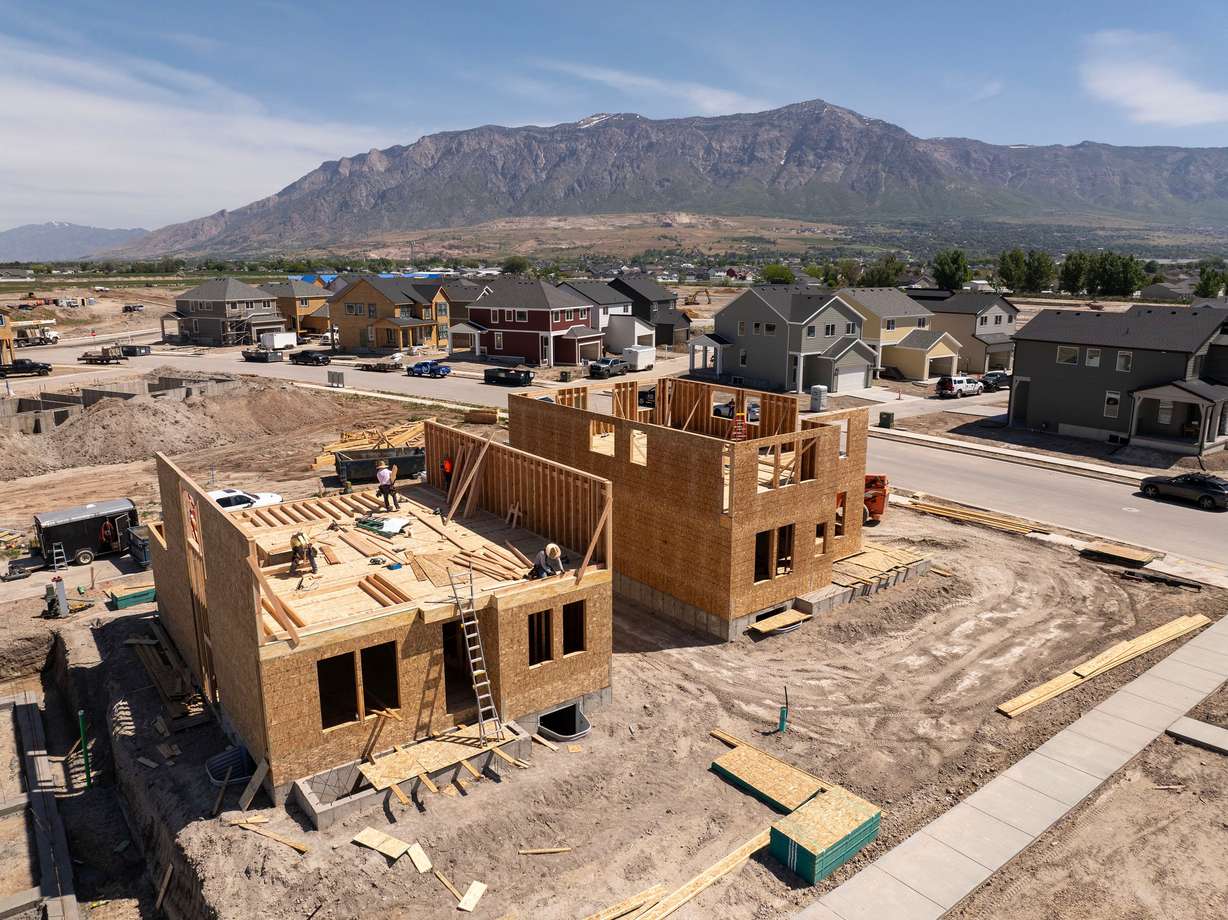
But just $10.7 million has been transferred from the fund, in February for a Nilson Homes project just outside Plain City, Weber County, according to the Utah State Treasurer's office. The first dozen of what eventually will be 275 homes priced below $450,000 have been built and sold.
It's a slow start toward meeting the governor's goal of 35,000 more starter homes by 2028.
So the 2025 Legislature quietly made a change to the program that allows for a new type of affordable housing in addition to the traditional single-family house to be built with money from the funds set aside.
Starter condominiums.
"They're the natural entry point into the housing market," said Steve Waldrip , a former state lawmaker and the first to fill the recently created role of senior adviser for housing strategy and innovation to the governor.
The apartment-like, multistory housing can be much less expensive than a single-family home and, Waldrip said, allow developers to take advantage of smaller and odd-sized lots, particularly around public transit stations.

"The governor has been very vocal about wanting single-family homes to be the priority of the administration. So we've done and are doing things in that arena. But there are places where you just can't do that," he said.
Say there's 2 acres available to develop. Instead of building just a couple of houses, Waldrip said, "you could do 50 condos, or 100 condos. You get ownership in both instances. But because of the volume benefit of the condo process, they come a lot cheaper."
Although many communities have balked at high-density development, he said they "are much more amenable to condos than apartments because you have that ownership component. It provides much more housing stability."
In Utah and the rest of the country, though, there's been little interest in building lower-priced condos for years because of costly insurance and regulatory issues, he said. Such projects are seen as offering a lower reward for a much higher financial risk than building apartments.
Utah lawmakers have taken steps to remove some of the roadblocks but there's more to be done. Last session's legislation also extended the availability of funding for building starter homes and now condos for an additional year, until 2028.
Waldrip said the state is working to create a Utah-specific construction defects insurance policy to counter premiums that can be four times higher for condo than apartment development because of regional pricing.
While that might take more legislation, he doesn't see it as a "show-stopper" for the administration's new push for starter condos, especially since a larger financing issue was resolved by allowing the nonprofit Utah Housing Corporation to make loans, just as banks have.
That change in the law, slipped into a larger housing bill after being successfully pitched to the Legislature's closed-door caucuses last session, is a way around federal regulations requiring 50% of a condo project to be sold before FHA loans that first-time buyers rely on are available.
"We're just talking about taking some of the risk away from condo development," Waldrip said. "What have we been building? Apartments. We've been building apartment after apartment after apartment. ... We have all these built-in disincentives to creating condos."
So will that be enough to get apartment developers to shift to condos?
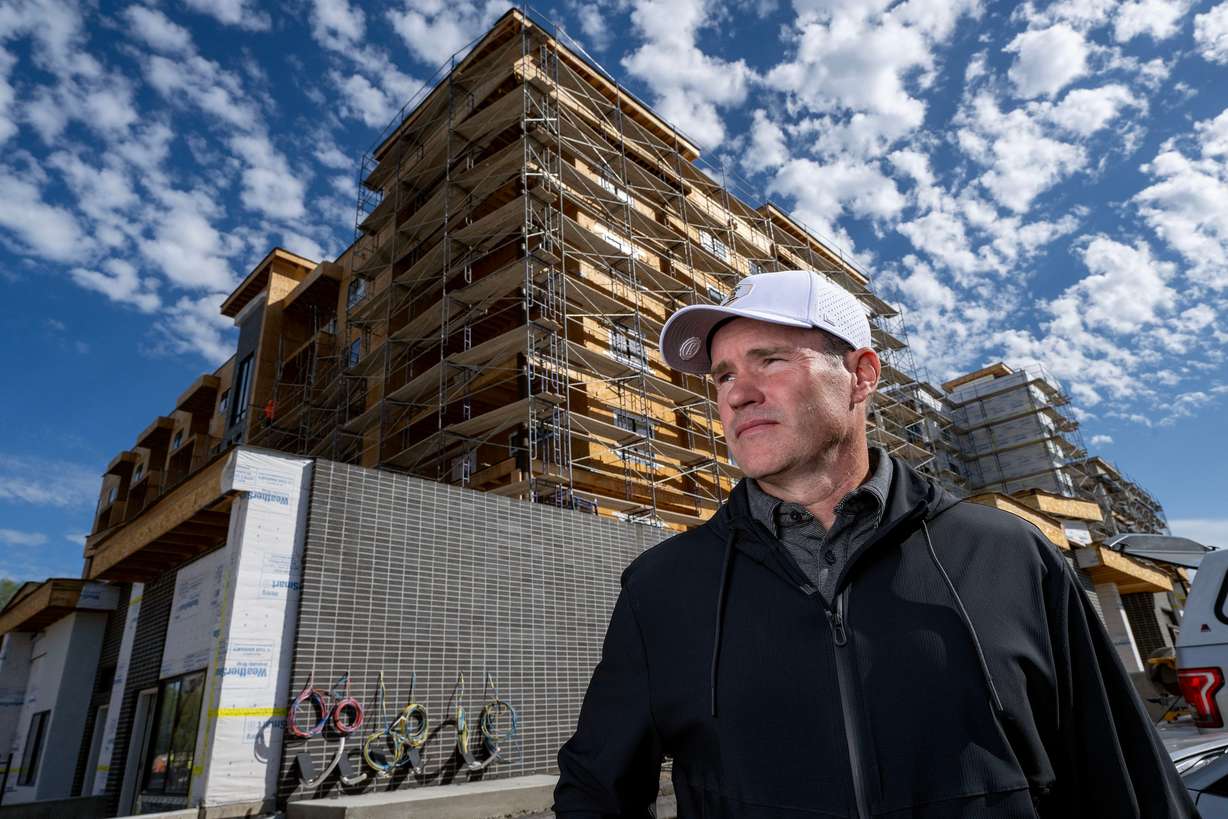
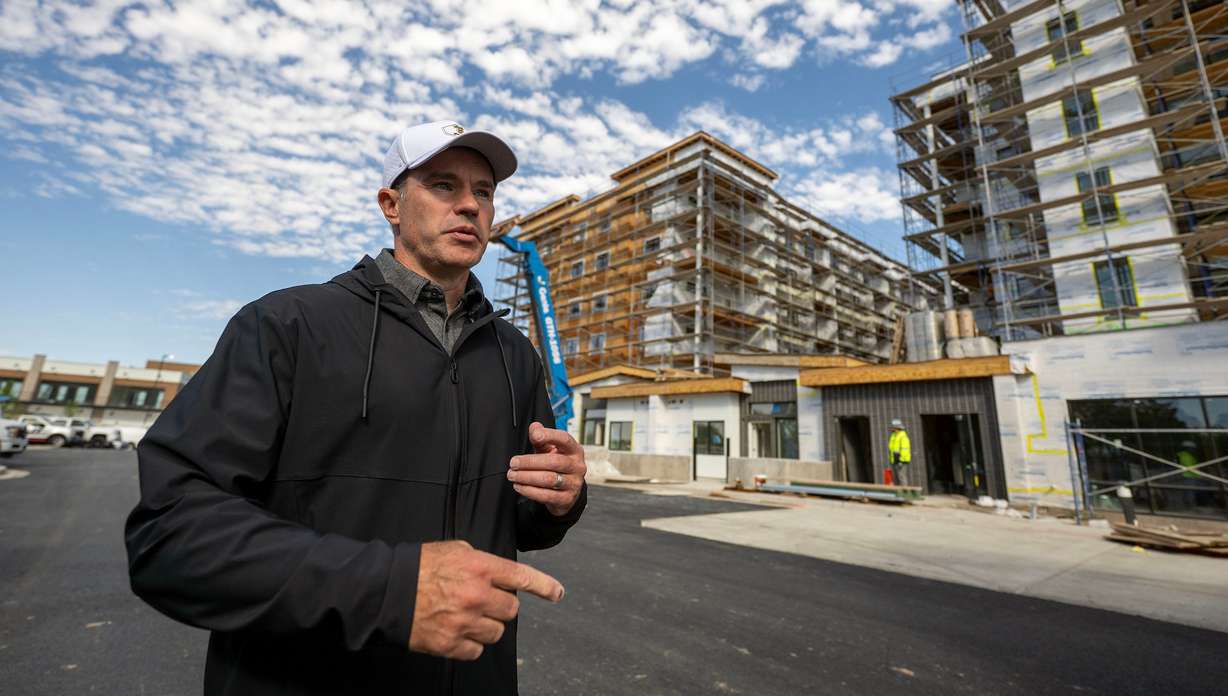
Waldrip believes it is. He said the changes being made to the starter home program are in response to a developer who came to the state for help making the switch, Tom Henriod, a partner in the Holladay-based Rockworth Companies that develops projects throughout the West.
"That was the beginning of the discussion of how to create this condo project," Waldrip said.
Henriod's detailed proposal from late last year for "Advancing Affordable Condominium Development in Utah" fills the front and back of a single sheet of paper. It spells out that the supply of affordable homes "is nearly nonexistent," so more and more households remain renters.
There's also a warning about the "(w)idening wealth gap between owners and renters fostering greater class distinction, discord between classes and increased risk of societal unrest," noting that the government's solution is usually to subsidize rental units for low-income residents.
"We're not trying to be alarmist ... but we mean it," Henriod said, making a point to single out that statement in his proposal. "We need people to feel like they have ownership in their community, literally."
How a starter condo program could work
Condo units could be built for $350,000 or less and sold at or near cost to lower-income buyers, Henriod said. Developers would be paid a yet-to-be determined fee of maybe 10% of the project's overall cost, he said, similar to what they get for building subsidized apartments.
What's not sustainable in his mind is continuing to build multifamily housing only for renters.
"There should be a large contingent of it that's for sale," said Henriod, who has built thousands of apartment units over the years. "This idea is really borne from that thought, that we need more for-sale housing at smaller purchase prices, period."
But his last condo project, near Trolley Square in Salt Lake City, was some 15 years ago. The challenges of building multiple units sold to individual buyers versus an apartment complex with a single owner are just too steep for developers, Henriod said.
"I've got better tax options if I do apartments. I've got liability issues that exist with the condos that don't exist with apartments. It's so much easier for me to get financing and I don't have to worry about figuring out how my buyers of all these individual condos can get financing," he said.
Those issues have led developers to say "why bother" building something sold as a "box in the air" with a fractional interest in shared parts of a building, Henriod said. "It's tough. It's super tough. There's a lot of reasons why no one has been doing this."
A mortgage payment on an affordable condo may actually be a little less than the nearly $2,000 typical rent for a two-bedroom apartment, he said, allowing the owner to build equity estimated to be valued at $158,000 over a decade.
"It's not rocket science," said Henriod, a father of four children ages 10 to 21. "I'm thinking about my kids and what are they going to buy. I'd like them to be able to buy something, gain equity and get into a move-up market. I think that's what the American dream really is."
Nothing's planned yet, but the company's already scouting property, including in Cottonwood Heights, Salt Lake City, Ogden, Spanish Fork and Murray. Henriod said he's just waiting for the state to come out with specifics of the starter condo program.
"Hopefully soon," he said, adding the company would love to be able get started in the next year or so since it takes at least three to four years to secure the necessary permits and then build a 200-unit complex.
To read more of this story, visit deseret.com.