'%3e%3cpath%20d='M34.1406%205.85938C30.3906%202.10547%2025.3047%200%2020%200C14.6953%200%209.60938%202.10547%205.85938%205.85938C2.10938%209.61328%200%2014.6953%200%2020C0%2025.3047%202.10547%2030.3906%205.85938%2034.1406C9.61328%2037.8906%2014.6953%2040%2020%2040C25.3047%2040%2030.3906%2037.8945%2034.1406%2034.1406C37.8906%2030.3906%2040%2025.3047%2040%2020C40%2014.6953%2037.8945%209.60938%2034.1406%205.85938ZM37.0117%2023.543H31.1602V13.5391H27.6328V19.9414C28.1211%2020.6914%2028.3711%2021.582%2028.3711%2022.5625V22.625C28.3711%2023.668%2028.1172%2024.6055%2027.6328%2025.4297V26.6094H36.082C33.4883%2032.9375%2027.2891%2037.3789%2020.0039%2037.3789C10.3711%2037.3789%202.62109%2029.6289%202.62109%2020C2.62109%2010.3711%2010.3711%202.62109%2020%202.62109C29.6289%202.62109%2037.3789%2010.3711%2037.3789%2020C37.3789%2021.1484%2037.2617%2022.2656%2037.0508%2023.3477C37.0391%2023.4141%2037.0234%2023.4766%2037.0117%2023.543Z'%20fill='white'/%3e%3cpath%20d='M22.3086%2018.5352C20.4336%2018.125%2019.9531%2017.8398%2019.9766%2017.1836V17.1406C19.9766%2016.6992%2020.3477%2016.2148%2021.4023%2016.2148C22.582%2016.2148%2023.8867%2016.6797%2025.0781%2017.4766L26.8516%2015.0195C25.4453%2013.8906%2023.707%2013.3398%2021.5547%2013.3398C18.5195%2013.3398%2016.4375%2015%2016.4063%2017.4766V17.5352C16.3633%2020.2617%2018.5859%2020.9805%2021.293%2021.6016C23.0391%2021.9766%2023.5703%2022.3164%2023.5703%2022.9609L23.5469%2022.9766C23.5469%2023.3906%2023.2578%2023.7031%2022.7852%2023.8359C22.5742%2023.9062%2022.1289%2023.9727%2021.5156%2023.9727C20.7617%2023.9727%2019.7539%2023.8633%2018.6328%2023.4844C18.0898%2023.2891%2017.4727%2023.0039%2016.8047%2022.6133L20.1406%2026.625C20.2813%2026.6602%2021.0977%2026.8516%2021.7734%2026.8516C25.0039%2026.8516%2027.0859%2025.2461%2027.1094%2022.6328V22.5703C27.1602%2020.1133%2025.2148%2019.1719%2022.3086%2018.5352Z'%20fill='white'/%3e%3cpath%20d='M5.24219%2013.5664V26.6133H8.75391V23.7578L10.2969%2021.9531L14.2031%2026.6133H18.3867L12.3555%2019.5195L17.4023%2013.5664H13.4531L8.75391%2019.0586V13.5664H5.24219Z'%20fill='white'/%3e%3c/g%3e%3cdefs%3e%3cclipPath%20id='clip0_97_2430'%3e%3crect%20width='40'%20height='40'%20fill='white'/%3e%3c/clipPath%3e%3c/defs%3e%3c/svg%3e)


- The Utah House committee supports HCR14 to use some unreserved federal lands for housing.
- The resolution aims to address housing challenges while keeping most public lands in the public lands, its sponsor says.
- Concerns arise over potential public land loss, a key issue last year.
SALT LAKE CITY — Measures to turn swaths of public land over to local entities were met with widespread opposition last year, but a Utah legislative committee agrees it could yield good things.
Outdoor recreation groups and others say they're concerned it could be a slippery slope leading to the loss of public land.
Members of the House Natural Resources, Agriculture and Environment Committee voted unanimously on Monday to favorably recommend HCR14, which urges Congress to allow "limited use of unreserved lands near existing communities and infrastructure for moderate income housing."
Unlike Utah's effort to secure 18.5 million acres of Bureau of Land Management land or Utah Sen. Mike Lee's push to include the sale of 0.5% to 0.75% of public lands in Utah and 10 other Western states in a federal budget bill, each of which failed last year, HCR14 supports a "much smaller ask" and a particular type of federal land, said Rep. Raymond Ward, R-Bountiful, the resolution's sponsor.
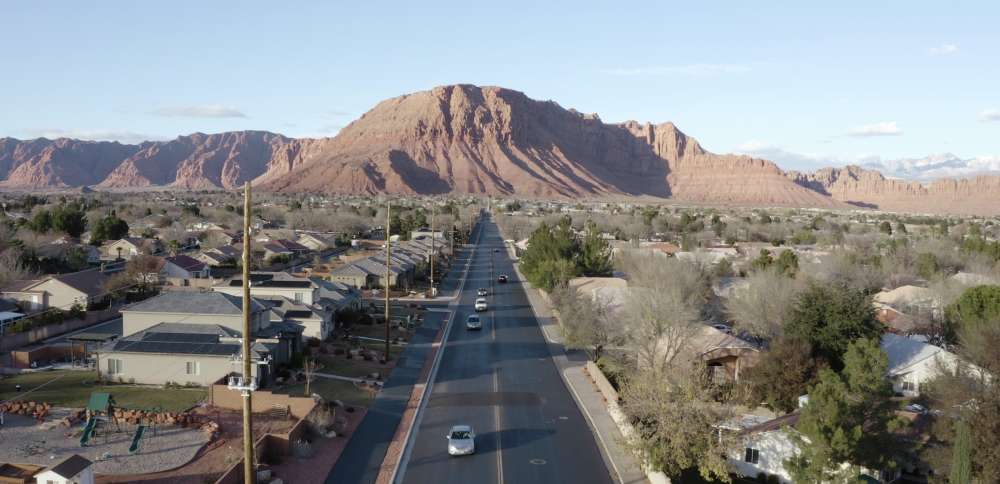
The idea was sparked by a conversation with Santa Clara leaders, who are dealing with southwest Utah's population growth near federal land, but it's a challenge that many other Utah communities face, he and members of the committee added. That's contributed to some of the state's housing affordability and other challenges.
"At least some portion of this difficulty is that land is a lot more expensive than it used to be," he said. "You can't make any more land, but there is some land that is right close by us, but because of the way it is designated federally, it is not available to be used for housing."
Department of the Interior Secretary Doug Burgum and Housing and Urban Development Secretary Scott Turner announced last year that they formed a joint task force to explore using "underutilized federal land" for housing to increase supply and potentially lower costs. Utah's resolution, if passed, offers federal leaders "one more thing in their hand that they can use as a tool" when they have these types of land policy discussions in Washington, Ward said.
However, efforts to tinker with public land have been unpopular across all spectrums thus far, especially among those who recreate outdoors. Brett Stewart, president of the Utah OHV Advocates, asked if there are ways to trade state and private land in exchange for public land, so that the public doesn't lose access to the land.
"Once you start doing this, you start handing it off ... it's going to do the domino effect," he said. "It's going to get easier and easier and easier, and now we've got that reputation that we're selling off our public lands, which we'll never, ever be able to touch again once it's privatized."
Housing is an important issue, but there's a "huge lack of trust" following last year's effort to sell land off land, said Kael Weston, of Salt Lake County.
Members of the committee agreed that it's a complicated issue, which could require tighter language in the final resolution to avoid confusion, said House Majority Leader Casey Snider, R-Paradise.
"I think the intent is appropriate. I'd like to see it move forward, but I'm wondering if we could just have a conversation," he said.
Ward acknowledged that it could be nice to clear up any concerns to reassure the public that the resolution isn't seeking "a lot of other lands" that should remain in the public's hands.
Others on the committee said land swaps and other types of agreements can be beneficial for both sides of the conversation. They can produce "win-wins" that support conservation and housing development needs, added Rep. Doug Owens, D-Millcreek.
"I think it's a great resolution. It's not in the far distant past where this used to happen more," he said.
The resolution now heads to the House floor for a wider vote.