'%3e%3cpath%20d='M34.1406%205.85938C30.3906%202.10547%2025.3047%200%2020%200C14.6953%200%209.60938%202.10547%205.85938%205.85938C2.10938%209.61328%200%2014.6953%200%2020C0%2025.3047%202.10547%2030.3906%205.85938%2034.1406C9.61328%2037.8906%2014.6953%2040%2020%2040C25.3047%2040%2030.3906%2037.8945%2034.1406%2034.1406C37.8906%2030.3906%2040%2025.3047%2040%2020C40%2014.6953%2037.8945%209.60938%2034.1406%205.85938ZM37.0117%2023.543H31.1602V13.5391H27.6328V19.9414C28.1211%2020.6914%2028.3711%2021.582%2028.3711%2022.5625V22.625C28.3711%2023.668%2028.1172%2024.6055%2027.6328%2025.4297V26.6094H36.082C33.4883%2032.9375%2027.2891%2037.3789%2020.0039%2037.3789C10.3711%2037.3789%202.62109%2029.6289%202.62109%2020C2.62109%2010.3711%2010.3711%202.62109%2020%202.62109C29.6289%202.62109%2037.3789%2010.3711%2037.3789%2020C37.3789%2021.1484%2037.2617%2022.2656%2037.0508%2023.3477C37.0391%2023.4141%2037.0234%2023.4766%2037.0117%2023.543Z'%20fill='white'/%3e%3cpath%20d='M22.3086%2018.5352C20.4336%2018.125%2019.9531%2017.8398%2019.9766%2017.1836V17.1406C19.9766%2016.6992%2020.3477%2016.2148%2021.4023%2016.2148C22.582%2016.2148%2023.8867%2016.6797%2025.0781%2017.4766L26.8516%2015.0195C25.4453%2013.8906%2023.707%2013.3398%2021.5547%2013.3398C18.5195%2013.3398%2016.4375%2015%2016.4063%2017.4766V17.5352C16.3633%2020.2617%2018.5859%2020.9805%2021.293%2021.6016C23.0391%2021.9766%2023.5703%2022.3164%2023.5703%2022.9609L23.5469%2022.9766C23.5469%2023.3906%2023.2578%2023.7031%2022.7852%2023.8359C22.5742%2023.9062%2022.1289%2023.9727%2021.5156%2023.9727C20.7617%2023.9727%2019.7539%2023.8633%2018.6328%2023.4844C18.0898%2023.2891%2017.4727%2023.0039%2016.8047%2022.6133L20.1406%2026.625C20.2813%2026.6602%2021.0977%2026.8516%2021.7734%2026.8516C25.0039%2026.8516%2027.0859%2025.2461%2027.1094%2022.6328V22.5703C27.1602%2020.1133%2025.2148%2019.1719%2022.3086%2018.5352Z'%20fill='white'/%3e%3cpath%20d='M5.24219%2013.5664V26.6133H8.75391V23.7578L10.2969%2021.9531L14.2031%2026.6133H18.3867L12.3555%2019.5195L17.4023%2013.5664H13.4531L8.75391%2019.0586V13.5664H5.24219Z'%20fill='white'/%3e%3c/g%3e%3cdefs%3e%3cclipPath%20id='clip0_97_2430'%3e%3crect%20width='40'%20height='40'%20fill='white'/%3e%3c/clipPath%3e%3c/defs%3e%3c/svg%3e)


Estimated read time: 5-6 minutes
This archived news story is available only for your personal, non-commercial use. Information in the story may be outdated or superseded by additional information. Reading or replaying the story in its archived form does not constitute a republication of the story.
NEW YORK — How much choice is too much?
Apparently for Coca-Cola, it's about 400 different types of drinks.
That's why the beverage company recently decided to discontinue half of them, shedding brands like Tab, Zico coconut water, Diet Coke Feisty Cherry and Odwalla juices but still leaving about 200 others to choose from.
It's a move that other businesses are making as well, reducing the variety of offerings from mayonnaise to cereals to cars and instead focusing on what they think will sell best.
Edgewell Personal Care, the maker of Schick razors and Banana Boat suntan lotion, has trimmed certain varieties of its anti-bacterial wipes Wet Ones, among others. And Dollar General, based in Goodlettsville, Tennessee, used to stock six different kinds of mayonnaise on its shelves and is now looking to drop a couple of them.
"The consumer is not going to know the difference," Todd J. Vasos, CEO of Dollar General, told analysts in December. "Actually, it's going to make her life a little simpler when she goes to the shelf."
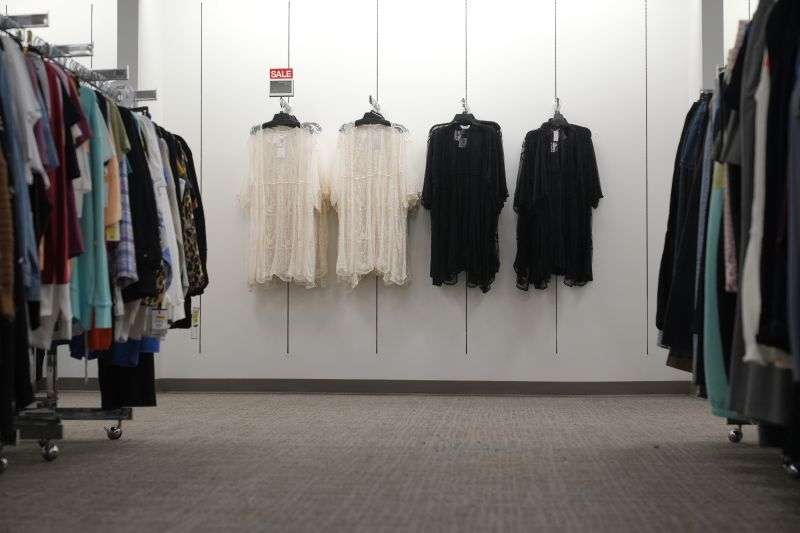
Just a year ago, Kohl's store in Clifton, New Jersey had tables stacked high with sweaters and shirts in a rainbow of colors as well as dress racks crammed with a wide assortment of styles. Now, it boasts a more edited approach — tables have slim piles of knit shirts that focus on fewer colors, and many dress racks have been reduced to just three or four styles.
Under its new CEO Tom Kingsbury, Kohl's has been cutting back on the colors and variations of sweaters, jeans and other items, while sending their buyers into the New York market more frequently to bring in fresh trendy merchandise.
"We would go out, and we would buy a lot of goods and it would come in 12, 14 months later, and it didn't perform very well," Kingsbury told analysts in a call in November. "We're going to be using the marketplace, so that we can react to the business quickly, getting into trends."
Some customers like the changes so far.
"It's pretty organized," said Kimberly Ribeiro, 30, who was at the Kohl's store on a recent Friday. "If it's not so cluttered, then you don't get overwhelmed."
You want to make these cuts so they're not even aware of it, and you want the store to still look full.
–David Berliner
Even in the auto world, shoppers are finding fewer choices. Both General Motors and Ford have been touting how they are limiting the number of option combinations customers can get on their vehicles to reduce manufacturing and purchasing complexity.
That's a reversal from a few years ago when there was an explosion of choices, encouraged in part by online shopping that paid no mind to space constraints. But that didn't always lead to sales so companies started pruning selections a year or two before the pandemic.
'We avoid jumping on fad
During the pandemic, the pruning only accelerated, with companies focusing on necessities as they wrestled with supply chain clogs. But even after the pandemic, when goods began moving freely again, many businesses decided less was better and justified the limited selection by asserting shoppers don't want so much choice. It's also more profitable for companies because they're not carrying over as many leftovers that need to be discounted.
Overall, new items accounted for about 2% of products in stores in 2023 across categories such as beauty, footwear, technology and toys, down from 5% of items in 2019, says market-research firm Circana.
Eric O'Toole, president of Edgewell's North America division, noted the pandemic presented "a really valuable stimulus" for reassessing assortment.
"We avoid jumping on fads, as the supply chain and retailer costs required to support getting to shelf typically don't generate a return in the end," O'Toole said. "A tighter, more curated portfolio supports healthy profit management. "
Many think they're also doing shoppers a favor, with studies showing that fewer choices, not lots of variety, actually encourage shoppers to buy more.
'I like variety'
In 2000, psychologists Sheena Lyengar and Mark Lepper published a study that showed limited selection is better for the shopper. In their experiment, Lyengar and Lepper found consumers were 10 times more likely to purchase jam on display when the number of jams available was cut down from 24 to six even though they were more likely to stop at the display offering more selection. Subsequent studies have confirmed this phenomenon.
"Retailers are recognizing that they have to be respectful of shoppers' time," said Paco Underhill whose company, Envirosell, studies consumer behavior.
If it's not so cluttered, then you don't get overwhelmed.
–Kimberly Ribeiro
Still, retailers can't just slash products willy-nilly, said David Berliner, who leads the business restructuring and turnaround practice at BDO.
"You want to make these cuts so they're not even aware of it, and you want the store to still look full," Berliner said. "If you do it too much, you might scare some away."
Berliner also believes reducing variety may also hurt smaller brands who rely on retailers to offer different products — and will send shoppers like Bob Friedland to other competitors.
The 48-year-old communications consultant from Little Falls, New Jersey said that for years, his go-to barbecue sauce has been Open Pit. But Friedland noticed that over the past few years, his local grocers hadn't been carrying it, and he's since turned to Amazon to buy it. That means those local stores not only lost out on Open Pit sales to Friedland. but all the other purchases he used to make while shopping for his favorite barbecue sauce.
"I really don't love the idea of a retailer telling me what I should and should not be interested in," Friedland said. "I like variety. I like specific brands."
Contributing: Dee-Ann Durbin and Tom Krisher