Estimated read time: 3-4 minutes
This archived news story is available only for your personal, non-commercial use. Information in the story may be outdated or superseded by additional information. Reading or replaying the story in its archived form does not constitute a republication of the story.
Editor's note: This article is published through the Great Salt Lake Collaborative, a solutions journalism initiative that partners news, education and media organizations to help inform people about the plight of the Great Salt Lake.
SALT LAKE CITY — These days, the Great Salt Lake State Park and Marina are much busier than they were a few years ago.
"We've seen the tourism double here since the beginning of the pandemic," said Dave Shearer, the Great Salt Lake State Park manager. "We've seen a 40% increase just this year alone."
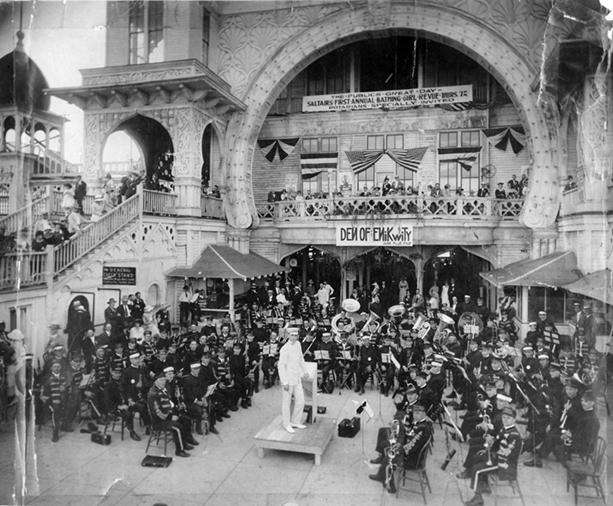
In Utah's early days of statehood, this was a typical site for the Great Salt Lake Shores. Restaurants and bars used to sit near the shore, people would come out in droves for the weekend, and events were frequently held at the Great Saltair.
"Back in the 1800s, there would be 10,000, 15,000 people that would come out here to the Saltair Resort on a weekend," Shearer said.
Cars and transportation became cheaper and more convenient after World War II, taking Utahns further away to recreate, and the emergence of Utah's ski industry drove more people to the mountains. Lately, though, Shearer is encouraged to see the bustle on the Great Salt Lake build back up.
He says people going outside and staying close to home during the pandemic helped drive that, but so have discussions about the lake being in danger of drying up.
"People in the Wasatch Front are really seeing what it is and coming out and experiencing it," Shearer said.
While a lot of the recreation has been from hikers, kayakers, and swimmers, the rise in water levels this year allowed people to get boats back on the water. Shearer said about 60 boats were able to get to the Great Salt Lake from the State Park Marina this year.
"It is a sailing Mecca," Shearer said. He says the dense water makes it harder for waves to kick up. "So you can go out there, and you can glide along doing six, seven knots in total glass conditions, it's great."

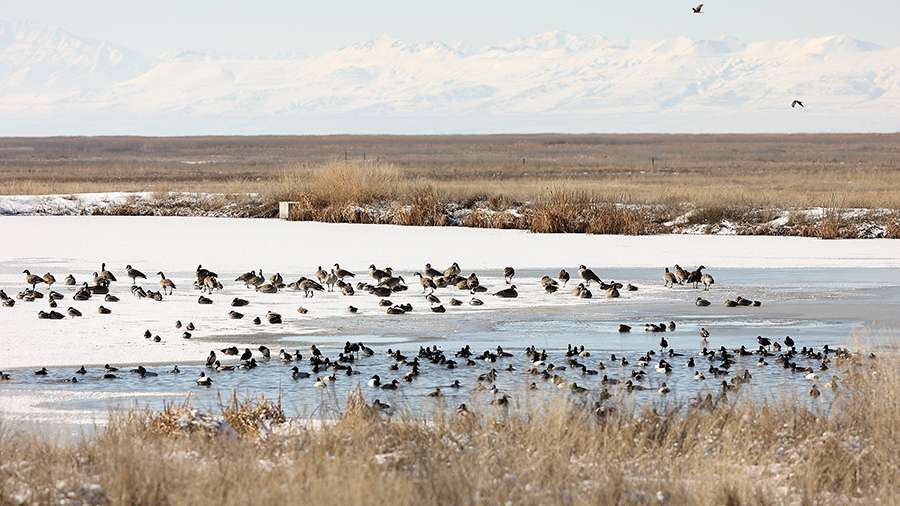
Then there's the wildlife that drives tourism for birdwatching to the Wasatch Front.
"In the Western Hemisphere, this is one of the most important bodies of water for birds," said Bonnie Baxter, a biology professor at Westminster University and the director of the Great Salt Lake Institute.
She says the lake feeds more than 10 million birds as they migrate. The lake's importance to the birds can change how it is managed if water levels continue to fall as they have over the past decade.
"That could mean that the Endangered Species Act could get used to save the Great Salt Lake," Baxter said. "That would not be that would not be everyone's preferred method."
The Endangered Species Act could shift control of the Great Salt Lake away from Utah and to the Federal Government. That would likely change water rights for farmers, businesses, and people in northern Utah.
"Even if you're not a bird watcher and you don't go outside, and you don't care about the birds, everyone should care about that," Baxter said.
Baxter says the lake is a valuable teaching tool as well. She takes her students and grade school students on field trips to the lake to learn from and study about its unique ecosystem.
"It's really cool to teach kids about science with something in their backyard," she said.
When Baxter's research started showing warning signs for the lake, she began speaking about it. She was contacted by people around Utah telling her about the importance of the lake to their lives and upbringings.
The messages had a common theme: "I didn't realize how important the lake was to me until it was threatened," Baxter said.
As long as the lake has water, Shearer thinks its renewed interest will continue.
"I think it's a resurgence of the Great Salt Lake, and people can come out here for very cheap and recreate all day," Shearer said.