Estimated read time: 4-5 minutes
This archived news story is available only for your personal, non-commercial use. Information in the story may be outdated or superseded by additional information. Reading or replaying the story in its archived form does not constitute a republication of the story.
Even as a successful engineer, entrepreneur and expert witness in the amusement ride industry, Troy Richardson's letters to fellow engineers regarding zipline safety issues fell on deaf ears. He quickly recognized his need to learn how to clearly articulate his 30 years' worth of knowledge. Determined to improve his communication skills, Richardson enrolled in the Technical Writing & Digital Rhetoric master's program at Utah Tech University.
After some time in Utah Tech's TWDR program, Richardson received several invitations to speak at the ASTM F24 Conference to discuss zipline incidents. "TWDR program has elevated my prose beyond my dreams! … If nothing else, writing matters … you need to get your point across quickly with concrete clarity the first time," Richardson said.
While multiple institutions in the region offer one or the other, Utah Tech is unique in offering the combination of both technical writing and digital rhetoric. Instead of focusing solely on professional writing for communication-based employment or correspondence specific to one technology, the TWDR degree is built to improve the thinking, writing, communicating and ethical skills of its students in any career field.
"We see students from an English background, but also from engineering, the sciences and other humanities programs like history and psychology," program coordinator Dr. Joy McMurrin said. "What they are finding in the TWDR program is the ability to articulate their interests and specializations in a better way."
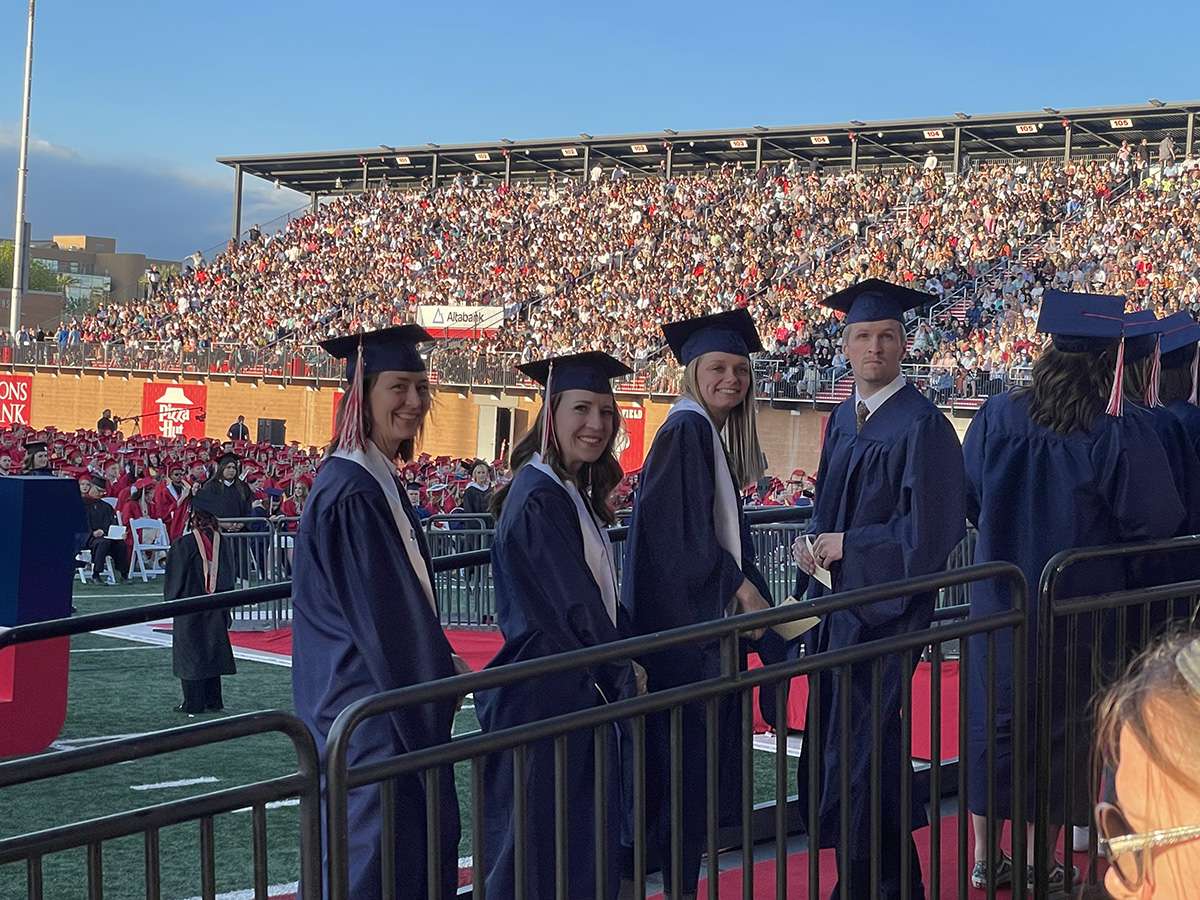
Richardson plans to use the TWDR degree as a stepping stone to an eventual doctorate in engineering, and he's not alone. 2021 graduate Stacey Koller wasn't sure her undergraduate performance would qualify her for law school, so she earned her TWDR in an effort to prepare and compete. After completing the degree, she was accepted to every law school she applied to — more than 20 programs — and successfully negotiated significant tuition reductions at her current institution, Creighton University School of Law. 2023 grad Jesse Cowley progressed from farm hand to scriptwriter to instructional designer. He referred to the TWDR as "an option-increasing, door-opening kind of opportunity."
"While TWDR might not seem relevant to you and your goals, it's actually a very versatile area of study," recent graduate Autumn Nuzman said. "I've met people who studied things like engineering, creative writing, agriculture, and marketing in their undergrad, among other diverse subjects."
With the U.S. Bureau of Job Statistics projecting an 11% growth in careers requiring a master's degree — the fastest growing sector of employment in the country over the next decade — those in the work field may feel pressure to set themselves apart, including a return to school. Utah Tech University's Technical Writing & Digital Rhetoric degree is designed largely for working adults, with the flexibility to simultaneously study and maintain a full-time career, all while focusing on their own specific topics of interest.
"I see how the program was a wonderful stepping stone to where I am now, but see how it was the same for my peers in various industries and different places in their careers," Koller said. "There is enough flexibility in the program to tailor it to what the student's goals are, and that makes it invaluable."
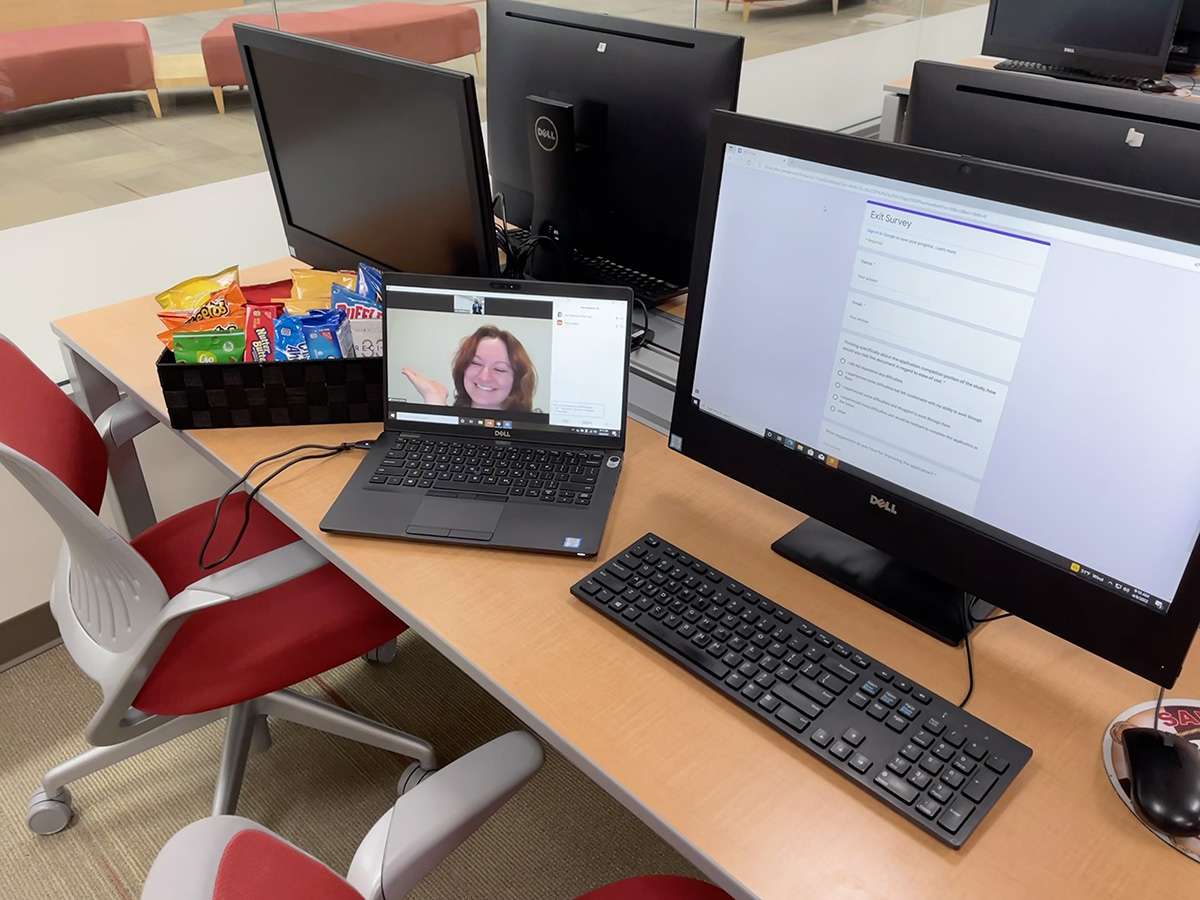
Shorter than similar degrees in the region, the TWDR requires only 30 credit hours to complete, with courses that meet one night per week from 6 p.m. to 8:30 p.m. and are simultaneously taught face-to-face and via Zoom. According to McMurrin, roughly one-third of students complete the program completely online, one-third attend in-person, and the remaining third create their own hybrid version by bouncing back and forth as needed. All class participants — even those in the classroom — are logged into Zoom via a specialized camera that lets students interact seamlessly, fostering class discussion and camaraderie.
With about 15 students in the program at any point, students receive intense one-on-one support and mentorship from the degree's half-dozen faculty members. Courses run in both spring and fall, and students typically graduate in about two years. A graduate assistantship is also an option, allowing interested students to become composition instructors, earning the same salary as part-time faculty to teach beginning and intermediate writing courses. And because the master's in TWDR has one of the lowest tuition points in the region at only $345 per credit hour, some students are able to teach and study simultaneously, completing the program with no debt.
Although the TWDR degree focuses on audience and purpose more than simply new technologies, in a nod to the recent explosion of artificial intelligence, McMurrin will teach a course next year specifically about AI, using a perspective grounded in Cicero's five canons of rhetoric: invention, arrangement, style, memory and delivery.
"If you focus on any one technology, you will never keep pace with what is happening in the world," McMurrin said. "Technical writing is not in the service of products or processes or profits–we are in the service of people. When you have a humanistic approach to technology, you'll have longevity. If you have a flash-in-the-pan approach, you'll lose your skill set before the next generation. If you understand the principles, you will have a long life in an ever-changing field."
Learn more about Utah Tech University's Technical Writing & Digital Rhetoric master's program on the program's webpage.