'%3e%3cpath%20d='M34.1406%205.85938C30.3906%202.10547%2025.3047%200%2020%200C14.6953%200%209.60938%202.10547%205.85938%205.85938C2.10938%209.61328%200%2014.6953%200%2020C0%2025.3047%202.10547%2030.3906%205.85938%2034.1406C9.61328%2037.8906%2014.6953%2040%2020%2040C25.3047%2040%2030.3906%2037.8945%2034.1406%2034.1406C37.8906%2030.3906%2040%2025.3047%2040%2020C40%2014.6953%2037.8945%209.60938%2034.1406%205.85938ZM37.0117%2023.543H31.1602V13.5391H27.6328V19.9414C28.1211%2020.6914%2028.3711%2021.582%2028.3711%2022.5625V22.625C28.3711%2023.668%2028.1172%2024.6055%2027.6328%2025.4297V26.6094H36.082C33.4883%2032.9375%2027.2891%2037.3789%2020.0039%2037.3789C10.3711%2037.3789%202.62109%2029.6289%202.62109%2020C2.62109%2010.3711%2010.3711%202.62109%2020%202.62109C29.6289%202.62109%2037.3789%2010.3711%2037.3789%2020C37.3789%2021.1484%2037.2617%2022.2656%2037.0508%2023.3477C37.0391%2023.4141%2037.0234%2023.4766%2037.0117%2023.543Z'%20fill='white'/%3e%3cpath%20d='M22.3086%2018.5352C20.4336%2018.125%2019.9531%2017.8398%2019.9766%2017.1836V17.1406C19.9766%2016.6992%2020.3477%2016.2148%2021.4023%2016.2148C22.582%2016.2148%2023.8867%2016.6797%2025.0781%2017.4766L26.8516%2015.0195C25.4453%2013.8906%2023.707%2013.3398%2021.5547%2013.3398C18.5195%2013.3398%2016.4375%2015%2016.4063%2017.4766V17.5352C16.3633%2020.2617%2018.5859%2020.9805%2021.293%2021.6016C23.0391%2021.9766%2023.5703%2022.3164%2023.5703%2022.9609L23.5469%2022.9766C23.5469%2023.3906%2023.2578%2023.7031%2022.7852%2023.8359C22.5742%2023.9062%2022.1289%2023.9727%2021.5156%2023.9727C20.7617%2023.9727%2019.7539%2023.8633%2018.6328%2023.4844C18.0898%2023.2891%2017.4727%2023.0039%2016.8047%2022.6133L20.1406%2026.625C20.2813%2026.6602%2021.0977%2026.8516%2021.7734%2026.8516C25.0039%2026.8516%2027.0859%2025.2461%2027.1094%2022.6328V22.5703C27.1602%2020.1133%2025.2148%2019.1719%2022.3086%2018.5352Z'%20fill='white'/%3e%3cpath%20d='M5.24219%2013.5664V26.6133H8.75391V23.7578L10.2969%2021.9531L14.2031%2026.6133H18.3867L12.3555%2019.5195L17.4023%2013.5664H13.4531L8.75391%2019.0586V13.5664H5.24219Z'%20fill='white'/%3e%3c/g%3e%3cdefs%3e%3cclipPath%20id='clip0_97_2430'%3e%3crect%20width='40'%20height='40'%20fill='white'/%3e%3c/clipPath%3e%3c/defs%3e%3c/svg%3e)




Estimated read time: 4-5 minutes
This archived news story is available only for your personal, non-commercial use. Information in the story may be outdated or superseded by additional information. Reading or replaying the story in its archived form does not constitute a republication of the story.
SALT LAKE CITY — Variety in housing options is a key desire for Utahns as the state is projected to continue its rapid growth, but urban and rural residents differ in the solutions they want to see in their communities.
The majority of Utahns also want aggressive water conservation efforts, including incentives for landscape conversions, water-wise landscaping requirements for new developments and more efficient irrigation practices, according to a recent state survey with more than 28,000 respondents.
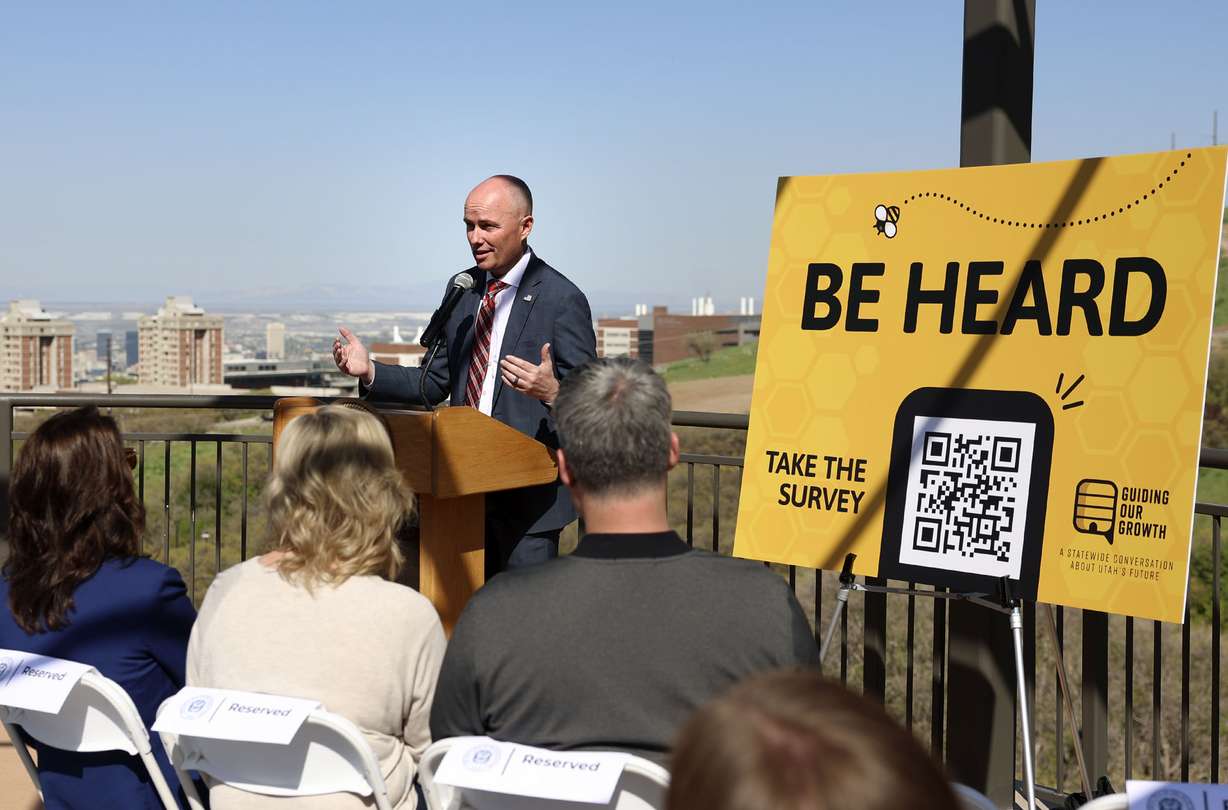
Utah Gov. Spencer Cox launched the Guiding Our Growth survey in May, urging Utahns to weigh in on how they would like the state to handle the challenges that come with expansion. The survey closed to the public at the end of August and the first results were released Thursday.
The results are intended to guide public policy and will be distributed to lawmakers, state leaders and city officials.
"I haven't seen all of the data yet, except to know that Utahns are very concerned about our growth and making sure that we grow the right way — that's probably not a surprise to any of you — and that people in rural Utah and people in urban Utah have some different ideas about what growth should look like," Cox told reporters during his monthly news conference Thursday, prior to the release of results.
While most of the respondents said they support new housing development to accommodate growth, residents in southwest Utah, those aged 55 or older and those who own homes are more likely to support restricting development in order to slow growth, the survey said.
Urban Utahns support measures to allow for the most new housing, and they want more small lots, town houses, duplexes and accessory dwelling units.
"Fighting growth is a sure way of turning us into high-cost, poorly planned markets," one anonymous respondent said. "Let's be intentional about how we grow and take charge of that growth before it overwhelms us."
"Housing affordability is critical as the cost of living has increased dramatically," another said.
Urban respondents also said they want to allow more strip malls, big box stores and parking lots to be redeveloped into housing.
A majority of rural Utahns would like to see new developments focus on existing main streets "to create a lively town center and maintain country roads outside of town," according to the survey. Nearly two-thirds disagree with building new housing on large, spread-out lots.
Respondents from rural areas acknowledged the need for growth, but some were more wary of the changes that come with it.
"Many of us have lived in Utah for a long time and hate the growth," one said. "I choose to live rural so that my kids have more opportunities and don't get lost in the crowds. Low crime rates, knowing our neighbors, walking distance to so many things (schools, stores, work). Growth changes all of this. Our qualify of life suffers with too much growth too fast."
Forty-six percent of rural respondents said they support limiting short-term rentals, which can take up valuable housing supply in areas with frequent tourists.
Water conservation and transportation
When it comes to conserving water, the majority of Utahns favor aggressive efforts, with 80% of urbanites and 70% of rural Utahns backing rebates or incentives to encourage converting to water-wise landscaping.
Rural Utahns said there's an essential need for water for agriculture and ranching, but many support more efficient irrigation and water capture systems across the state — not just on new developments.
"I think it's ridiculous to only conserve water with new developments; that's not a strong water conservation tactic at all," one said.
Residents across the state favor more investment in public transportation, even as the needs are different in urban and rural areas.
Three-quarters of residents in urban areas want to focus transportation development in town centers, and two-thirds support more funding for transit, bicycle and pedestrian infrastructure, and zero-fare public transportation.
"Public transportation needs to be more convenient than driving and parking. We've prioritized freeways for long enough. Now we need to prioritize public transportation," one urban resident said.
Rural residents favor transportation investment as well, but are more focused on funding services that connect smaller towns to larger cities. More than half would like to invest in a statewide passenger rail system, in addition to improvements or expansions of state highways and investment in a trail network to connect rural communities.