Estimated read time: 5-6 minutes
This archived news story is available only for your personal, non-commercial use. Information in the story may be outdated or superseded by additional information. Reading or replaying the story in its archived form does not constitute a republication of the story.
FARMINGTON — Shelley Deamer Campbell spent 40 years on the receiving end of 911 calls about everything from burning homes to high-profile rape and murder cases.
She retired Sept. 12, leaving behind a legacy as possibly the longest-serving dispatcher in Davis County, according to Stephanie Dinsmore, Davis County Sheriff's Office public information officer.
"It's sad to lose her, but 40 years — it's such a rarity for anyone to last that long," Dinsmore said. "It's a very taxing job … and it takes a special person to be able to do that."
Campbell started dispatching for the Clearfield police on her 26th birthday in the summer of 1983. She transferred to the Davis County Sheriff's Office in 1996, finishing out her 40 years there this year.
"I didn't have any idea what I was getting into," Campbell said about starting work as a dispatcher. "And then I loved the job."
"It does take a different kind of person," Campbell added. "You can't panic. You've got to be able to think on your feet and make important decisions."
She talked about the stress of handling continual emergencies over the phone with no time to decompress in between, from giving CPR instructions to advising someone to stay quiet while they're hiding from an abusive partner.
"Then you hang up the phone, and the phone rings again," Campbell said. "That's where the quick thinking on your feet comes in — not a lot of people can do that."
"No one should do it for 40 years," she added. "It does stuff to you mentally."
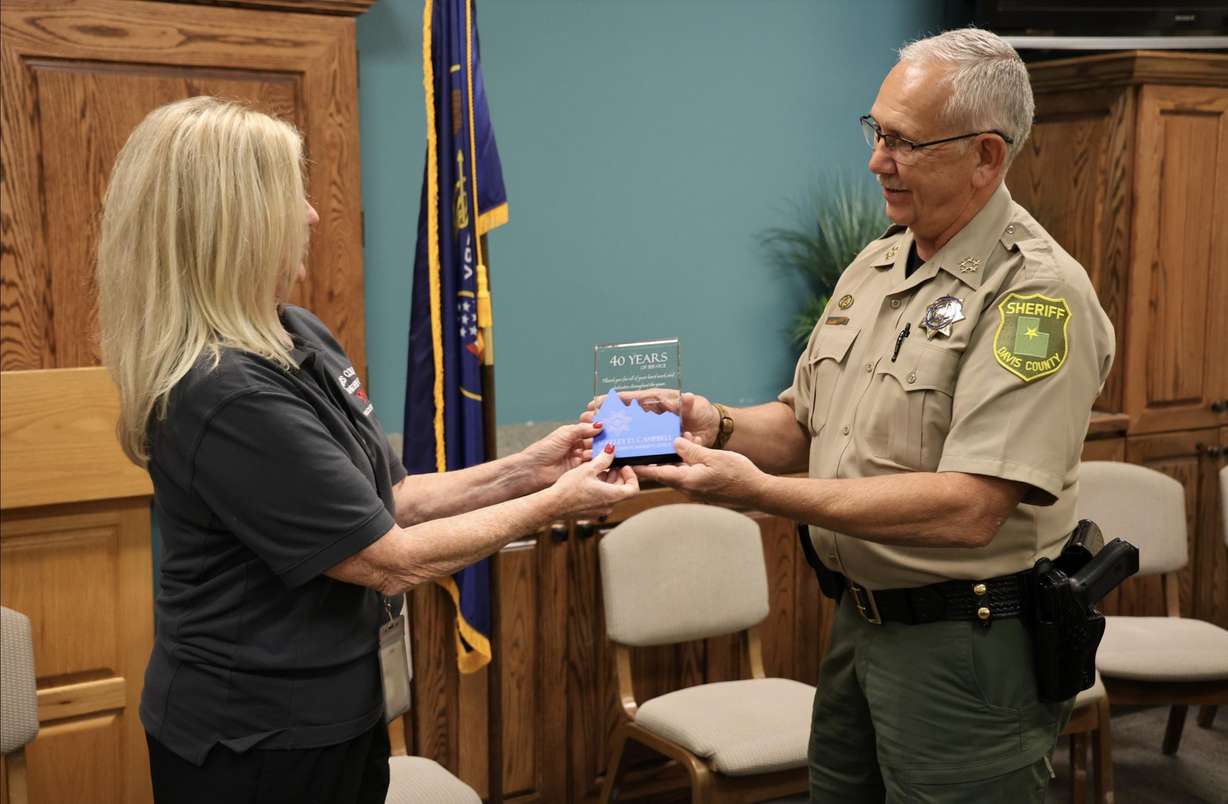
Campbell said some cases, especially those involving kids, have stuck with her. Years ago, a supervisor told her that if it bothered her too much, it wasn't the job for her. But Campbell replied, "If stuff like this stops bothering me, that's when I'll quit. … We're human beings, of course it's gonna bother us."
One case that has haunted Campbell for almost four decades involved Joyce Yost, who went missing Aug. 11, 1985. Doug Lovell was later convicted of Yost's murder. Prosecutors say Lovell killed her to keep her from testifying against him in a rape case, but her body was never found.
Campbell was working with Clearfield police when the department handled that rape case. Campbell remembers bringing Yost into her office while a detective interviewed Lovell, shutting the curtains so Lovell couldn't see Yost.
"I remember telling her, 'He can't see you. He doesn't know you're here,'" Campbell said. "She was visibly shaking."
Campbell added, "And then to find out in all this, she disappeared and he killed her — that was horrifying. It broke my heart."
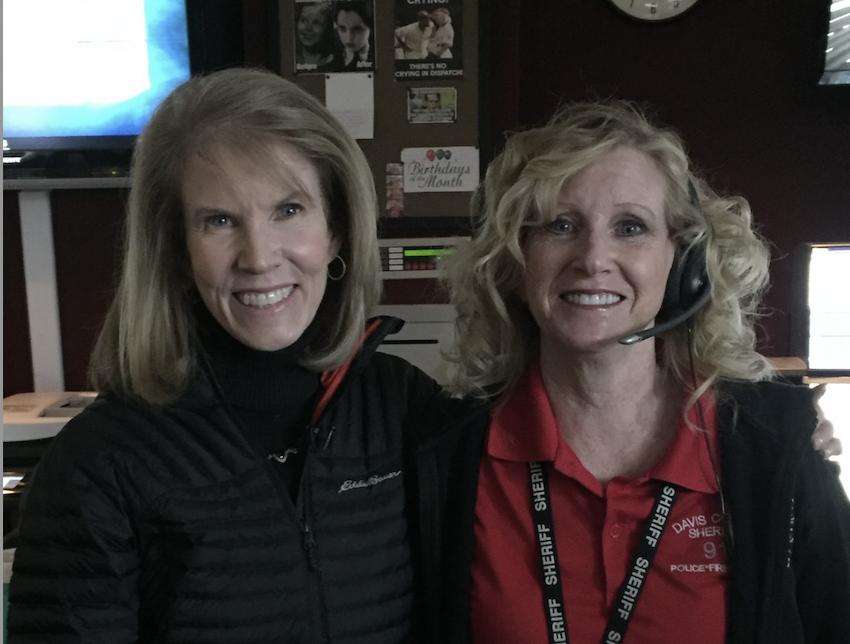
Another case Campbell handled as a dispatcher earned her an appearance on the CBS show "48 Hours," where she was interviewed by Emmy-award winner Erin Moriarty.
In a 2013 episode called "Don't Scream," Campbell helps tell the story of when Kristopher Lee Ertmann, of Clearfield, slit the throat of his wife, Tiffany Mead, then had her call 911 to claim it was a suicide attempt. Mead survived, and Ertmann was sentenced to life in prison. He was denied parole in 2018 and will not have another chance at parole until 2029.
But the cases Campbell handled weren't all bad. She helped several people deliver babies over the phone, and later she got to visit the babies she helped.
Once, she was on the phone with an elderly woman who called to report her husband had fallen in the bathroom. Campbell said the woman was sweet, saying things like, "Thank you, darling." When the woman thought Campbell couldn't hear her, the woman barked at her husband, "Cover that up! No one wants to see that."
"If we're in a stressful situation 24 hours a day, it does something to your body. But if you have a little bit of laughter and a little bit of lightness … it makes the time go by faster," Campbell said.
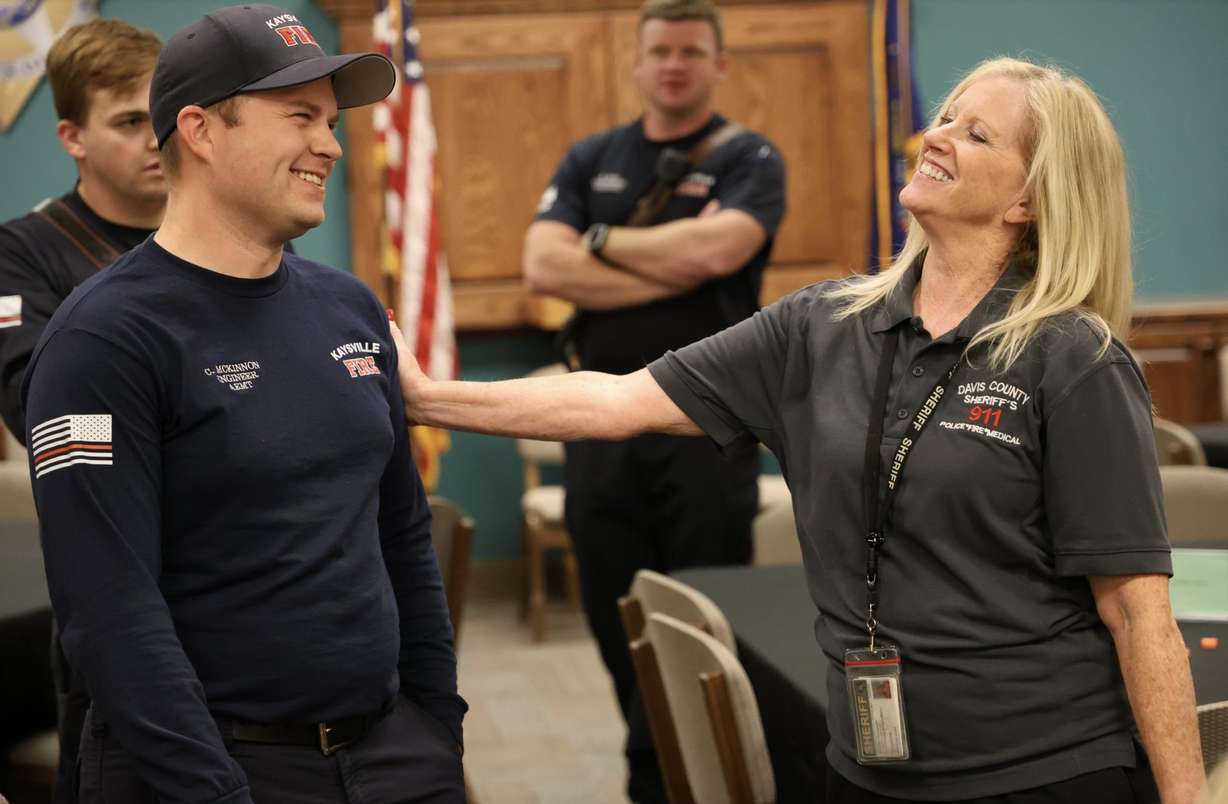
She said she'll miss the people she worked with the most. She and her coworkers played pranks on each other and shared funny calls to lighten the mood. Once, they put a hot dog on a police officer's car antenna. He didn't realize it was there until he pulled a woman over and she asked about it.
What people should know about calling 911
Campbell said there are many misconceptions about how calling 911 works.
She said people don't always realize their call will be routed to the nearest police station, so they need to call from the area of the actual emergency.
She also estimates about 20% of dispatch calls are for actual emergencies. Other calls she received included people calling about paying parking tickets or to ask how they know when their turkey is done cooking on Thanksgiving. A woman called once to report someone "suspiciously" standing on the sidewalk outside their house — when it turned out there was a bus stop there.
"It's constant education for the public," Campbell said.
Davis County dispatchers frequently get accidental 911 calls from people riding high-intensity roller coasters at the Lagoon amusement park in Farmington, when their phone is jostled in their pockets and accidentally calls 911.
"The 911 dispatcher picks up the phone and you hear someone scream, and you have to determine if that person is screaming because they're having fun on a roller coaster or if that person is screaming because someone is trying to kill them," Campbell said.

Photos
Most recent Police & Courts stories
Related topics
 Gabrielle Shiozawa