Estimated read time: 5-6 minutes
This archived news story is available only for your personal, non-commercial use. Information in the story may be outdated or superseded by additional information. Reading or replaying the story in its archived form does not constitute a republication of the story.
SALT LAKE CITY — A Utah wildlife biologist says this year's record-breaking snowpack should help fish habitats in the state's various bodies of water, but it could lead to "slower" fishing, as lakes and reservoirs continue to fill up.
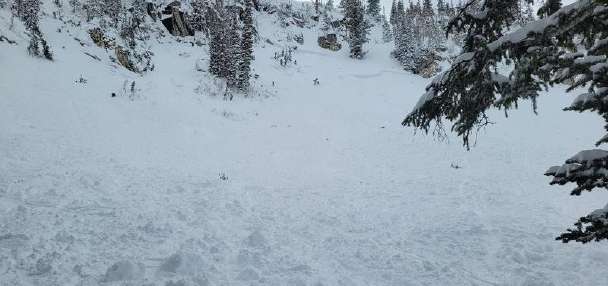
One inch is all that's left of Utah's record 30-inch statewide snowpack, though that is still about 10 times the normal for this point of the year, according to the Natural Resources Conservation Service data. The state's highest-elevation sites are the only areas with snow left to melt; for example, there are still 17.1 inches of snowpack left to melt at Snowbird Resort in Little Cottonwood Canyon.
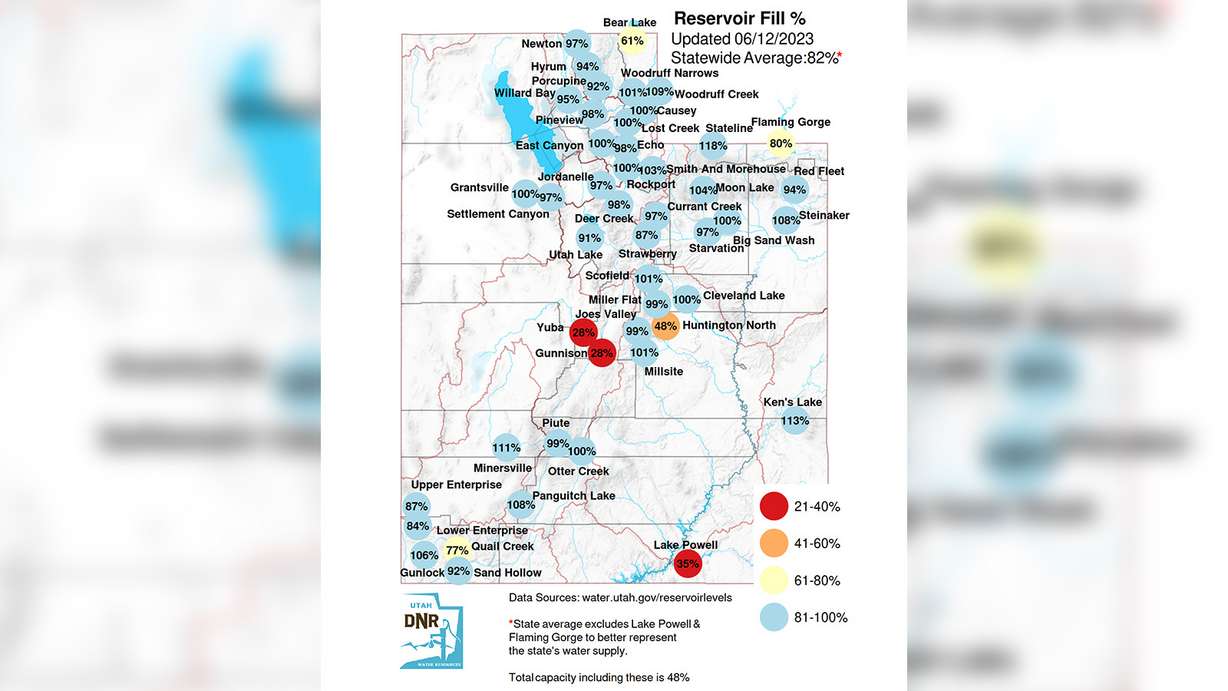
Most of what has melted so far has ended up in creeks, streams and rivers across the state, flowing into reservoirs or lakes. The Utah Division of Water Resources reports that Utah's entire reservoir system, excluding Flaming Gorge and Lake Powell, entered this week at 82% of capacity.
Why fishing might be 'slower' this summer
This year's water situation should also lead to larger fish and higher survival rates; however, it could lead to some "slower" fishing opportunities this summer, says Randy Oplinger, sportfish coordinator for the Utah Division of Wildlife Resources. He penned a blog about this year's fishing outlook, which the division posted online last week.
This is a mixture of a few reasons. First, he explains the higher water levels at lakes and reservoirs mean there is more water for fish to swim around in. The current reservoir levels are about 10 percentage points above the median average for this point in the year and more than 20 percentage points from the same span last year.
Second, there are more zooplankton and insects, providing a better habitat for the fish. Fish will be less likely to take the bait when an angler casts a line into the water.
"(Our) prediction is that at some waterbodies fishing may be slower this year than in past years," Oplinger wrote. "That is because higher water levels allow fish to disperse more, making them more difficult for anglers to locate. Also, lots of natural prey and an abundance of other food sources may mean that fish bellies will be more full this year, making fish less inclined to take bait and lures."
He adds that the higher flows in streams and rivers could make it difficult for smaller fish to swim in the stronger currents, which may reduce fish reproduction this year.
All of the impacts this year are completely different from the past two years, where drought conditions caused sorts of different problems.
The wildlife agency asked anglers to release fish back into the water as soon as possible and in an area where there was more available water both in 2021 and 2022. The division also reduced stocking — where fish are released into a body of water — in some parts of the state because of drought conditions and even increased the daily limit to catch fish in some areas before the body of water ran dry.
The U.S. Drought Monitor listed a little more than 90% of Utah as in at least an extreme drought by the second week of June in 2021, placing nearly two-thirds of the state in its exceptional drought category. It wasn't much better in 2022, as more than 80% of the state remained in extreme drought or worse.
The drought monitor currently lists 14% of Utah in a moderate drought; another almost 47% is considered "abnormally dry." The worst conditions at this point are in south-central and a piece of southwest Utah. That said, most reservoirs are still at 80% capacity or higher right now in those regions.
A brighter fishing outlook
The higher lake and reservoir water levels this year may also end up being a gift that keeps on giving.
Oplinger writes that fish don't just have space to grow, they also have space to spawn. The higher water levels are helping submerge brush that was growing along the shorelines during the years of drought, providing the perfect spawning habitat for species like yellow perch, crappie, bluegill and bass because of the nutrients that the vegetation provides.
"As a result of these conditions, we expect strong growth of many fish species in the years to come," he wrote. "Anglers may expect to see larger numbers of trout starting next year, and more yellow perch, crappie, bluegill and bass in two to four years. Also, the fish that anglers see should be a little larger than in recent years."
Forecasting how water levels and preferences among our anglers are going to change in the years to come is both an exciting and challenging part of our work.
– Randy Oplinger, Utah Division of Wildlife Resources sportfish coordinator
He also points out that the higher water levels should mean higher survival rates among the fish that are stocked in reservoirs, like kokanee salmon. So while they may be hard to catch this year, they could be larger next year.
As for fish in streams and rivers, the higher flows that could mess with reproduction should also clear out all the fine sediment that's built up over time, creating higher water volumes that can help improve the ecosystem and breeding habitat in the long run, Oplinger adds.
Of course, it's unclear what Utah's water situation could be down the road. Lakes and reservoirs may very well be back to the dry conditions of 2021 and 2022 in the near future. Oplinger acknowledges this as well, writing that the state agency will have to make adjustments to how it manages its fisheries along the way.
"Forecasting how water levels and preferences among our anglers are going to change in the years to come is both an exciting and challenging part of our work," he wrote. "By managing our fisheries proactively, we strive to provide high-quality angling opportunities into the future."