'%3e%3cpath%20d='M34.1406%205.85938C30.3906%202.10547%2025.3047%200%2020%200C14.6953%200%209.60938%202.10547%205.85938%205.85938C2.10938%209.61328%200%2014.6953%200%2020C0%2025.3047%202.10547%2030.3906%205.85938%2034.1406C9.61328%2037.8906%2014.6953%2040%2020%2040C25.3047%2040%2030.3906%2037.8945%2034.1406%2034.1406C37.8906%2030.3906%2040%2025.3047%2040%2020C40%2014.6953%2037.8945%209.60938%2034.1406%205.85938ZM37.0117%2023.543H31.1602V13.5391H27.6328V19.9414C28.1211%2020.6914%2028.3711%2021.582%2028.3711%2022.5625V22.625C28.3711%2023.668%2028.1172%2024.6055%2027.6328%2025.4297V26.6094H36.082C33.4883%2032.9375%2027.2891%2037.3789%2020.0039%2037.3789C10.3711%2037.3789%202.62109%2029.6289%202.62109%2020C2.62109%2010.3711%2010.3711%202.62109%2020%202.62109C29.6289%202.62109%2037.3789%2010.3711%2037.3789%2020C37.3789%2021.1484%2037.2617%2022.2656%2037.0508%2023.3477C37.0391%2023.4141%2037.0234%2023.4766%2037.0117%2023.543Z'%20fill='white'/%3e%3cpath%20d='M22.3086%2018.5352C20.4336%2018.125%2019.9531%2017.8398%2019.9766%2017.1836V17.1406C19.9766%2016.6992%2020.3477%2016.2148%2021.4023%2016.2148C22.582%2016.2148%2023.8867%2016.6797%2025.0781%2017.4766L26.8516%2015.0195C25.4453%2013.8906%2023.707%2013.3398%2021.5547%2013.3398C18.5195%2013.3398%2016.4375%2015%2016.4063%2017.4766V17.5352C16.3633%2020.2617%2018.5859%2020.9805%2021.293%2021.6016C23.0391%2021.9766%2023.5703%2022.3164%2023.5703%2022.9609L23.5469%2022.9766C23.5469%2023.3906%2023.2578%2023.7031%2022.7852%2023.8359C22.5742%2023.9062%2022.1289%2023.9727%2021.5156%2023.9727C20.7617%2023.9727%2019.7539%2023.8633%2018.6328%2023.4844C18.0898%2023.2891%2017.4727%2023.0039%2016.8047%2022.6133L20.1406%2026.625C20.2813%2026.6602%2021.0977%2026.8516%2021.7734%2026.8516C25.0039%2026.8516%2027.0859%2025.2461%2027.1094%2022.6328V22.5703C27.1602%2020.1133%2025.2148%2019.1719%2022.3086%2018.5352Z'%20fill='white'/%3e%3cpath%20d='M5.24219%2013.5664V26.6133H8.75391V23.7578L10.2969%2021.9531L14.2031%2026.6133H18.3867L12.3555%2019.5195L17.4023%2013.5664H13.4531L8.75391%2019.0586V13.5664H5.24219Z'%20fill='white'/%3e%3c/g%3e%3cdefs%3e%3cclipPath%20id='clip0_97_2430'%3e%3crect%20width='40'%20height='40'%20fill='white'/%3e%3c/clipPath%3e%3c/defs%3e%3c/svg%3e)


Estimated read time: 4-5 minutes
This archived news story is available only for your personal, non-commercial use. Information in the story may be outdated or superseded by additional information. Reading or replaying the story in its archived form does not constitute a republication of the story.
EUREKA, Juab County — Utah archeologists are trying to find new ways to preserve an old mine as vandals continue to damage its historic buildings and machinery.
The Utah Division of Oil, Gas and Mining on Monday was alerted about recent vandalism at the old Chief Consolidated Mine within the East Tintic mining district. The agency wrote that someone had ripped out the entire wall of what was the mine's main office.
Ian Wright, the state cultural site stewardship coordinator for the Utah State Historic Preservation Office, told KSL.com on Thursday that the hole in the wall isn't new. The problem is that people have returned to the site to take items that were inside the building, including resources and paperwork. Vandals have also routinely broken into a hoist house in the same mine yard.
A few weeks ago, someone also broke into a machine shop and dismantled parts of the old machinery, likely for its copper.
"That mine has just been kind of getting hammered over the last little while," he said.
The preservation office — and other state agencies — have taken notice because they view the mine as a "historically significant site." It first opened as the Little Chief Mine in the 1890s before it was transferred to the Chief Consolidated Mining Company in 1909. It remained in operation up until 1957, reportedly serving as "the second-largest silver producer in the world" at one point, according to the online mine database Mindat.
Its history goes beyond that. Wright adds that the mine, located in Eureka, is located "at the heart" of the important Tintic mining district. Walter Fitch Sr., the head of a famous family in Eureka's history, owned the facility. The Fitches even once brought famous aviator Amelia Earhart to the facility after she had a hard landing in the area, and she stayed at the family's home in the small city.
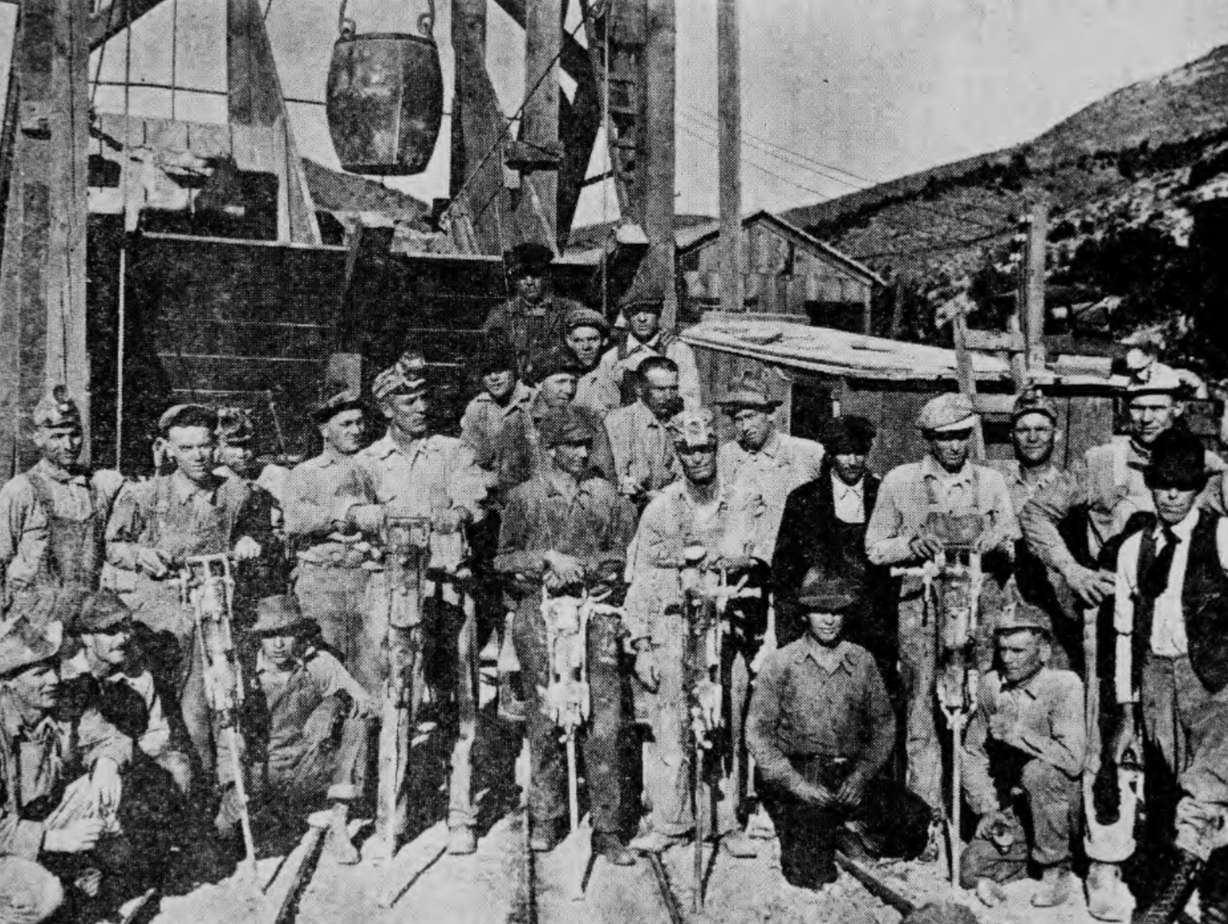
Some of the equipment she saw then still exists at the site today, which is also what makes the mine stand out compared to others in the state and region. Most of the facility's old tools and machinery were left virtually intact when its owners ceased operations 66 years ago.
"It has some of the best intact representations of industrial mine equipment in the West — for sure in Utah," Wright adds. "So we have so much we can learn (from it). ... You can still see what a mine yard looked like."
That picture has started to fade with recent vandalism and looting, though. Wright believes that many people break into a facility because they think it's abandoned or it's falling apart, so steps are now being taken to reverse that perception.
Emerald Hollow LLC, the property's owner, agreed to partner with the state preservation office, which offers to have site stewards on all state, federal and private land with historical significance. Crews recently boarded up the large hole in the office to stop people from walking in.
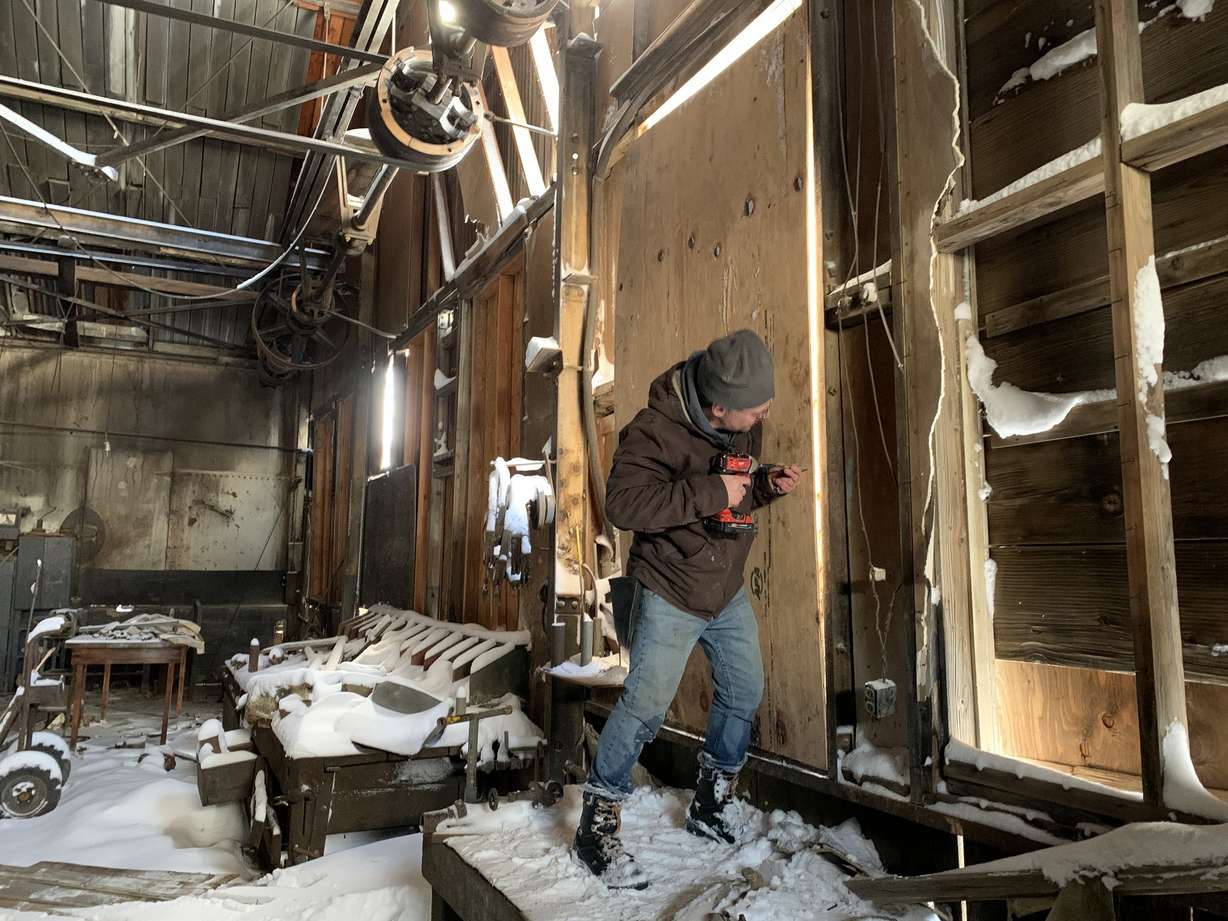
The company is also helping pay for ways to secure the site and add new educational signage that will share the story of the mine's history, as a possible deterrent. Similar signage has helped slow down vandalism and looting at other historical sites in the state, Wright said.
City officials and even state lawmakers have also expressed interest in the effort. For example, Rep. Doug Owens, D-Millcreek, is proposing that Utah spends $150,000 during the upcoming fiscal year on projects to secure the historic mining structures so they can be restored and preserved for historical and educational reasons in the future, according to an appropriations request document.
"We should not permit further loss of these historic structures to the elements and trespassers/vandals," the request reads. "Once properly restored, the structures will provide an educational and recreational destination and assist the local economy."
State archeologists are hopeful that the new efforts will help stop the break-ins before a piece of Utah history is lost for good.
"When people start to understand ... this place is still significant to the community or the descendant communities there, that people are caring about his site, it significantly cuts down the vandalism," Wright said. "With this, it lends (the public) and opportunity to jump in, lend a hand and (help) these areas."
Correction: A previous version stated Sen. Derrin Owens, R-Fountain Green, is proposing an appropriation request to preserve the mine; Rep. Doug Owens, D-Millcreek, is proposing the request.