'%3e%3cpath%20d='M34.1406%205.85938C30.3906%202.10547%2025.3047%200%2020%200C14.6953%200%209.60938%202.10547%205.85938%205.85938C2.10938%209.61328%200%2014.6953%200%2020C0%2025.3047%202.10547%2030.3906%205.85938%2034.1406C9.61328%2037.8906%2014.6953%2040%2020%2040C25.3047%2040%2030.3906%2037.8945%2034.1406%2034.1406C37.8906%2030.3906%2040%2025.3047%2040%2020C40%2014.6953%2037.8945%209.60938%2034.1406%205.85938ZM37.0117%2023.543H31.1602V13.5391H27.6328V19.9414C28.1211%2020.6914%2028.3711%2021.582%2028.3711%2022.5625V22.625C28.3711%2023.668%2028.1172%2024.6055%2027.6328%2025.4297V26.6094H36.082C33.4883%2032.9375%2027.2891%2037.3789%2020.0039%2037.3789C10.3711%2037.3789%202.62109%2029.6289%202.62109%2020C2.62109%2010.3711%2010.3711%202.62109%2020%202.62109C29.6289%202.62109%2037.3789%2010.3711%2037.3789%2020C37.3789%2021.1484%2037.2617%2022.2656%2037.0508%2023.3477C37.0391%2023.4141%2037.0234%2023.4766%2037.0117%2023.543Z'%20fill='white'/%3e%3cpath%20d='M22.3086%2018.5352C20.4336%2018.125%2019.9531%2017.8398%2019.9766%2017.1836V17.1406C19.9766%2016.6992%2020.3477%2016.2148%2021.4023%2016.2148C22.582%2016.2148%2023.8867%2016.6797%2025.0781%2017.4766L26.8516%2015.0195C25.4453%2013.8906%2023.707%2013.3398%2021.5547%2013.3398C18.5195%2013.3398%2016.4375%2015%2016.4063%2017.4766V17.5352C16.3633%2020.2617%2018.5859%2020.9805%2021.293%2021.6016C23.0391%2021.9766%2023.5703%2022.3164%2023.5703%2022.9609L23.5469%2022.9766C23.5469%2023.3906%2023.2578%2023.7031%2022.7852%2023.8359C22.5742%2023.9062%2022.1289%2023.9727%2021.5156%2023.9727C20.7617%2023.9727%2019.7539%2023.8633%2018.6328%2023.4844C18.0898%2023.2891%2017.4727%2023.0039%2016.8047%2022.6133L20.1406%2026.625C20.2813%2026.6602%2021.0977%2026.8516%2021.7734%2026.8516C25.0039%2026.8516%2027.0859%2025.2461%2027.1094%2022.6328V22.5703C27.1602%2020.1133%2025.2148%2019.1719%2022.3086%2018.5352Z'%20fill='white'/%3e%3cpath%20d='M5.24219%2013.5664V26.6133H8.75391V23.7578L10.2969%2021.9531L14.2031%2026.6133H18.3867L12.3555%2019.5195L17.4023%2013.5664H13.4531L8.75391%2019.0586V13.5664H5.24219Z'%20fill='white'/%3e%3c/g%3e%3cdefs%3e%3cclipPath%20id='clip0_97_2430'%3e%3crect%20width='40'%20height='40'%20fill='white'/%3e%3c/clipPath%3e%3c/defs%3e%3c/svg%3e)




Estimated read time: 3-4 minutes
This archived news story is available only for your personal, non-commercial use. Information in the story may be outdated or superseded by additional information. Reading or replaying the story in its archived form does not constitute a republication of the story.
SALT LAKE CITY — As Salt Lake resident Maria Elena Romero sat through an immersive art experience Tuesday, it wasn't the scenes of flowers or portraits that made her emotional. It was the fact that the exhibit was narrated in her first language of Spanish.
"It felt very emotional because as an immigrant person, you have to navigate these different systems and being able to have this space open to me that way is incredible," said Romero, a Salvadoran-American who grew up on the west side of Salt Lake City. "This inclusivity and accessibility was not available growing up as a Spanish-speaking, Salvadorian Latina student."
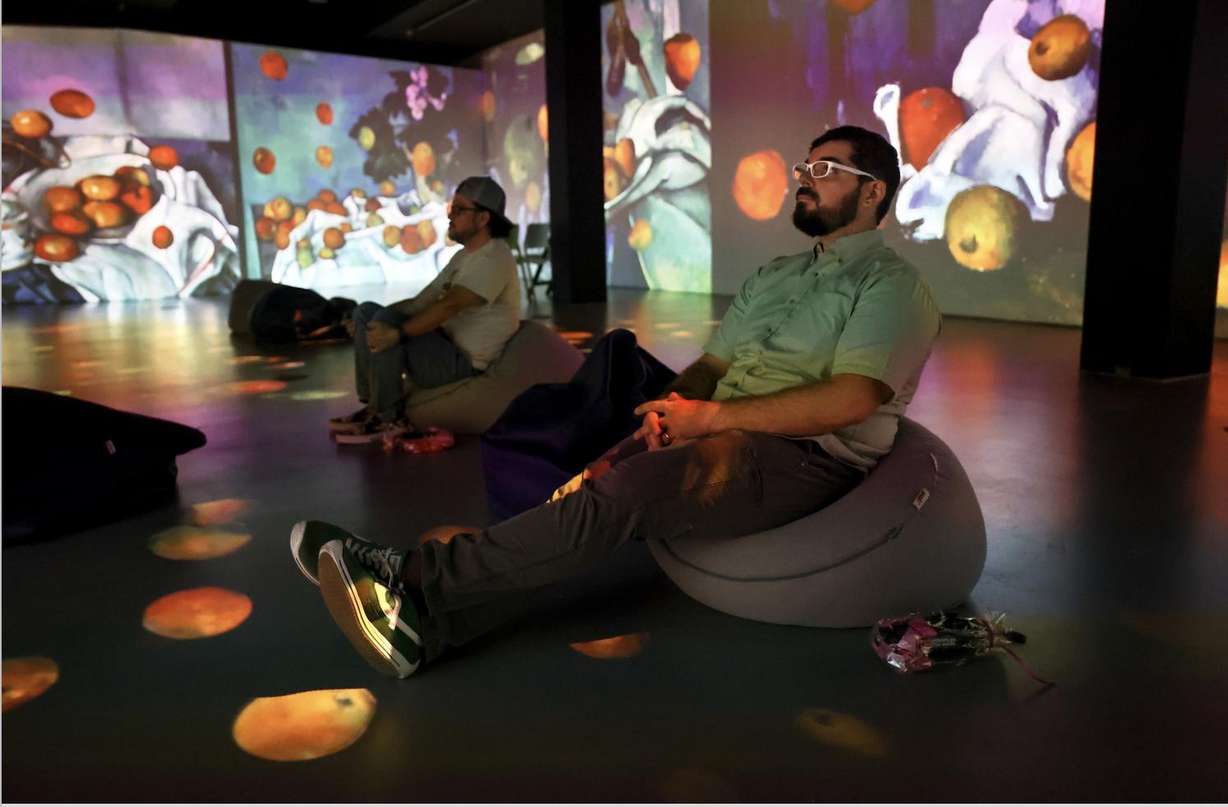
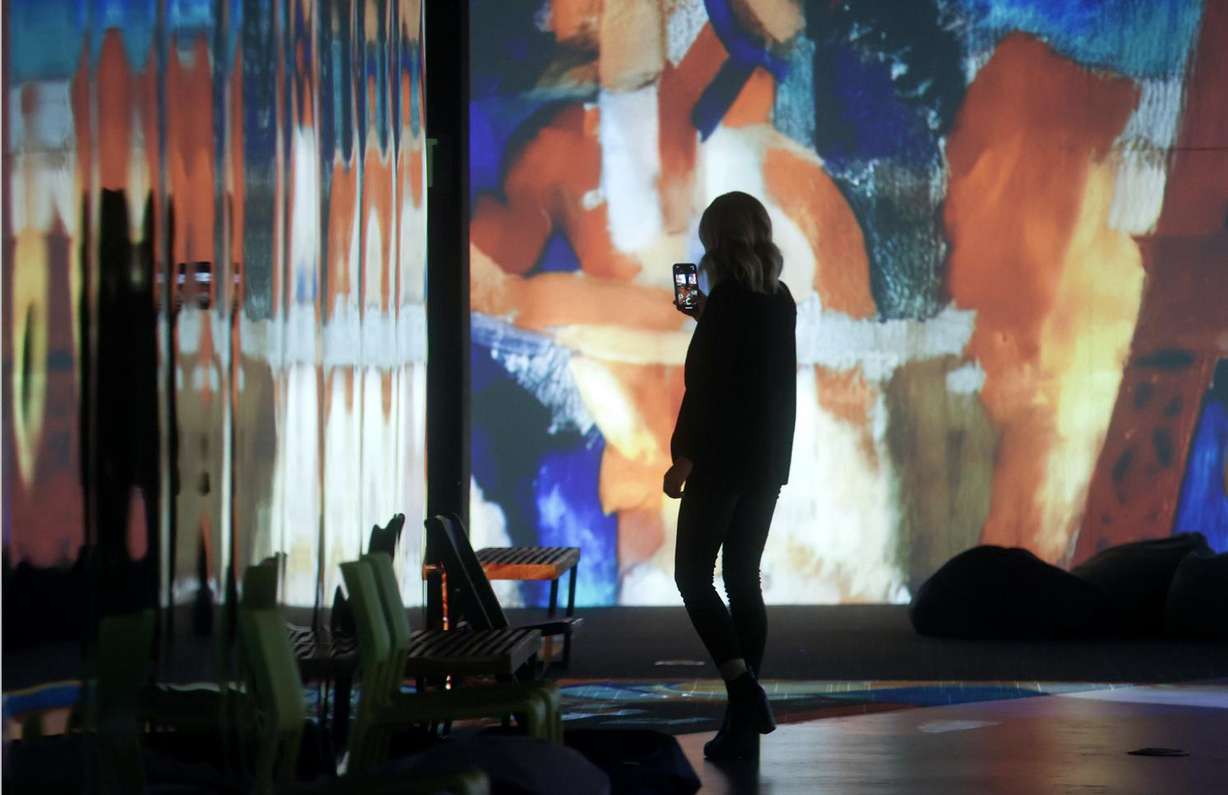
The exhibit, "From Monet to Kandinsky," is an immersive art exhibit that uses narration, music and moving digital images to walk audiences through the works of several artists who lived during the Industrial Revolution. It's the first immersive exhibit that The Leonardo museum will offer in Spanish.
José V. Borjón, head consul of Mexico in Salt Lake City, called the decision to offer a Spanish narration for the exhibit a critical step to removing barriers to art and culture in Utah.
"We believe that if we show other cultural institutions that we have the audience and we have the interest, more people and organizations are going to modify the programming," Borjón said at a press conference. "This is for the Spanish-speaking community, and they should take the best advantage of it."
Universal Exhibition Group, which creates content for immersive exhibits across the globe, already had narration files for "From Monet to Kandinsky" in Spanish. Alexandra Hesse, executive director at The Leonardo, said it was lucky the files already existed and that offering that to audiences was a decision to show the museum's commitment to becoming more accessible. The museum plans on offering more resources in Spanish in the future, such as signage and programs.
"You'll see a lot more of that in the years to come," Hesse said. "We're also trying to make a point that this programming exists and that it's important to offer it in Spanish. Hopefully we can inspire others to do the same as well, so that it becomes more normal for all of us to do that."
The Leonardo already partners with Artes de México for an artist in residence program that features a new Latino/Hispanic artist each month. Signage for the program is in Spanish and Spanish speakers are also available to help visitors during the program's events each Saturday and Sunday.
Fanny Guadalupe Blauer, Artes de México executive director, agreed that offering the "From Monet to Kandinsky" exhibit in Spanish is a great example to other institutions of how to include the state's largest ethnic community.
"It was about time," Blauer said, adding that art has traditionally been seen as an exclusive space that many people see as too fancy or sophisticated.
"You mention Monet or Kandinsky — it's OK to say I don't know (who they are). But people immediately establish this distinction of that sounds sophisticated, so that is not for me." Blauer said. "But art is something that belongs to everyone. Art is everywhere."
Salt Lake City Councilwoman Ana Valdemoros encouraged individuals to visit the exhibit, calling it a step forward to show other institutions the need for Spanish resources.
"What an opportunity to learn about modern art," Valdemoros said in Spanish during the press conference. "We have a very large, very diverse community and we're here waiting for the opportunities to learn and get involved."
More information, including exhibit times and ticket prices, is available here.