'%3e%3cpath%20d='M34.1406%205.85938C30.3906%202.10547%2025.3047%200%2020%200C14.6953%200%209.60938%202.10547%205.85938%205.85938C2.10938%209.61328%200%2014.6953%200%2020C0%2025.3047%202.10547%2030.3906%205.85938%2034.1406C9.61328%2037.8906%2014.6953%2040%2020%2040C25.3047%2040%2030.3906%2037.8945%2034.1406%2034.1406C37.8906%2030.3906%2040%2025.3047%2040%2020C40%2014.6953%2037.8945%209.60938%2034.1406%205.85938ZM37.0117%2023.543H31.1602V13.5391H27.6328V19.9414C28.1211%2020.6914%2028.3711%2021.582%2028.3711%2022.5625V22.625C28.3711%2023.668%2028.1172%2024.6055%2027.6328%2025.4297V26.6094H36.082C33.4883%2032.9375%2027.2891%2037.3789%2020.0039%2037.3789C10.3711%2037.3789%202.62109%2029.6289%202.62109%2020C2.62109%2010.3711%2010.3711%202.62109%2020%202.62109C29.6289%202.62109%2037.3789%2010.3711%2037.3789%2020C37.3789%2021.1484%2037.2617%2022.2656%2037.0508%2023.3477C37.0391%2023.4141%2037.0234%2023.4766%2037.0117%2023.543Z'%20fill='white'/%3e%3cpath%20d='M22.3086%2018.5352C20.4336%2018.125%2019.9531%2017.8398%2019.9766%2017.1836V17.1406C19.9766%2016.6992%2020.3477%2016.2148%2021.4023%2016.2148C22.582%2016.2148%2023.8867%2016.6797%2025.0781%2017.4766L26.8516%2015.0195C25.4453%2013.8906%2023.707%2013.3398%2021.5547%2013.3398C18.5195%2013.3398%2016.4375%2015%2016.4063%2017.4766V17.5352C16.3633%2020.2617%2018.5859%2020.9805%2021.293%2021.6016C23.0391%2021.9766%2023.5703%2022.3164%2023.5703%2022.9609L23.5469%2022.9766C23.5469%2023.3906%2023.2578%2023.7031%2022.7852%2023.8359C22.5742%2023.9062%2022.1289%2023.9727%2021.5156%2023.9727C20.7617%2023.9727%2019.7539%2023.8633%2018.6328%2023.4844C18.0898%2023.2891%2017.4727%2023.0039%2016.8047%2022.6133L20.1406%2026.625C20.2813%2026.6602%2021.0977%2026.8516%2021.7734%2026.8516C25.0039%2026.8516%2027.0859%2025.2461%2027.1094%2022.6328V22.5703C27.1602%2020.1133%2025.2148%2019.1719%2022.3086%2018.5352Z'%20fill='white'/%3e%3cpath%20d='M5.24219%2013.5664V26.6133H8.75391V23.7578L10.2969%2021.9531L14.2031%2026.6133H18.3867L12.3555%2019.5195L17.4023%2013.5664H13.4531L8.75391%2019.0586V13.5664H5.24219Z'%20fill='white'/%3e%3c/g%3e%3cdefs%3e%3cclipPath%20id='clip0_97_2430'%3e%3crect%20width='40'%20height='40'%20fill='white'/%3e%3c/clipPath%3e%3c/defs%3e%3c/svg%3e)




Estimated read time: 4-5 minutes
This archived news story is available only for your personal, non-commercial use. Information in the story may be outdated or superseded by additional information. Reading or replaying the story in its archived form does not constitute a republication of the story.
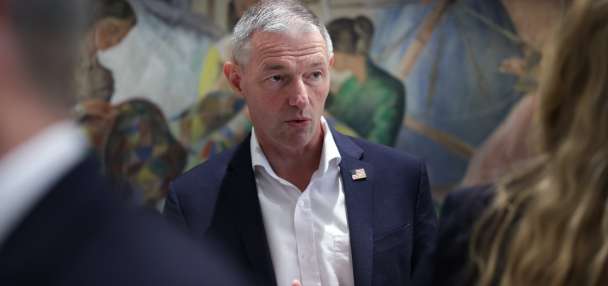
SALT LAKE CITY — Attention to mental health has become increasingly important in the workplace, according to Derek Miller, president and CEO of the Salt Lake Chamber.
He said multiple Utah businesses expressed a need for help with mental health resources, after the pandemic altered workplaces and impacted many employees' mental health.
"We sought to provide mental health and suicide prevention resources to Utah businesses as a way to reach as many people as possible," Miller said. "Our goal is to create a movement along with all Utah businesses to help turn this tide."
The Salt Lake Chamber, along with multiple private and public workplaces, launched a program on Tuesday, called Live On Utah. it is designed to help employers provide mental health resources directly to their employees. The program includes a variety of public service announcements and a toolkit that can be used to train employees on how to help others and themselves.
The Live On campaign focuses on resilience and providing resources to employees, according to Miller. He asks employers throughout Utah to share the tools with their employees, and to encourage workers to share the resources with others as well.
Brad Strong, managing director at Strong Auto Group, said that the repair bay where the kick off event was held was chosen because mental health issues affect everyone and mental health needs to be checked frequently — just like cars.
Mental health is something that employers should address, Strong said.
The partnership "aims to further elevate the conversation around suicide prevention and mental health, and increase the distribution of suicide prevention and mental health resources for employers," Strong said. "Collectively, we truly believe that we can help so many individuals that are facing crisis or dark times."
Strong said preventing loss of life from suicide, which is the leading cause of preventable death, starts with each individual asking for help and getting involved.
For the Live On campaign to work, communities will need to "come together," he said.
It's a promising model that should make a difference, said Dave Eldredge, senior director of clinical operations with University of Utah Health.
In his 30 years of work, he said two things that have kept people from getting help are a stigma surrounding mental health issues, and access to services. Involving employers in the conversation addresses both of these. Eldredge said Live On is unique because it is centered around places where people work.
He said the fact that suicide is a leading cause of death for all ages, including children, is staggering.
"That's preventable, and you've got to do something about it," Eldredge said.
Although this initiative is directed at employers, Eldredge said that it will help the entire community, including kids, as more individuals learn about mental health. The available resources can teach that small things — like even a hug can help and, that it does not hurt to talk to people who are struggling about their mental health.
John Barrand, executive director of Utah's division of human resource management, said that the lines between personal lives and work have been blurred in the last few years, and that people have struggled processing changes during the COVID-19 pandemic. Each year, he said, 1 in 5 Utahns has a mental health episode.
The pandemic has exacerbated this, and made it more difficult to access resources.
"Having an experience with mental health is not uncommon. As employers, we need a guide to know how to connect ourselves and those we work with to professional health benefits and resources," Barrand said.
He encouraged employers to create connections to resources and make them easy to use, and then to trust employees. Barrand said resources not only can be found within Live On, but through insurance providers, Utah health crisis management providers and employee assistance programs.
"Care, compassion and consideration is intertwined into every decision we make on an employee level. We reach intimately into their lives with these conversations. I hope that we can continue to offer that exposure and shine a bright, white light to continue to make Utah a great place to live, and to work," Barrand said.
David Utrilla, president and owner of U.S. Translation Co., said that as a business leader he has seen an impact on mental health, in addition to the economic impact, from the pandemic and said many business leaders don't know how to help. The recently released resources, however, he said, have helped.
"You'll be surprised how much we can do," Utrillo said. "Yes, we are not all professionals. We don't know the answers, but there are resources out there. There are people that know how to handle this and, yes, there is hope, there is a solution."