'%3e%3cpath%20d='M34.1406%205.85938C30.3906%202.10547%2025.3047%200%2020%200C14.6953%200%209.60938%202.10547%205.85938%205.85938C2.10938%209.61328%200%2014.6953%200%2020C0%2025.3047%202.10547%2030.3906%205.85938%2034.1406C9.61328%2037.8906%2014.6953%2040%2020%2040C25.3047%2040%2030.3906%2037.8945%2034.1406%2034.1406C37.8906%2030.3906%2040%2025.3047%2040%2020C40%2014.6953%2037.8945%209.60938%2034.1406%205.85938ZM37.0117%2023.543H31.1602V13.5391H27.6328V19.9414C28.1211%2020.6914%2028.3711%2021.582%2028.3711%2022.5625V22.625C28.3711%2023.668%2028.1172%2024.6055%2027.6328%2025.4297V26.6094H36.082C33.4883%2032.9375%2027.2891%2037.3789%2020.0039%2037.3789C10.3711%2037.3789%202.62109%2029.6289%202.62109%2020C2.62109%2010.3711%2010.3711%202.62109%2020%202.62109C29.6289%202.62109%2037.3789%2010.3711%2037.3789%2020C37.3789%2021.1484%2037.2617%2022.2656%2037.0508%2023.3477C37.0391%2023.4141%2037.0234%2023.4766%2037.0117%2023.543Z'%20fill='white'/%3e%3cpath%20d='M22.3086%2018.5352C20.4336%2018.125%2019.9531%2017.8398%2019.9766%2017.1836V17.1406C19.9766%2016.6992%2020.3477%2016.2148%2021.4023%2016.2148C22.582%2016.2148%2023.8867%2016.6797%2025.0781%2017.4766L26.8516%2015.0195C25.4453%2013.8906%2023.707%2013.3398%2021.5547%2013.3398C18.5195%2013.3398%2016.4375%2015%2016.4063%2017.4766V17.5352C16.3633%2020.2617%2018.5859%2020.9805%2021.293%2021.6016C23.0391%2021.9766%2023.5703%2022.3164%2023.5703%2022.9609L23.5469%2022.9766C23.5469%2023.3906%2023.2578%2023.7031%2022.7852%2023.8359C22.5742%2023.9062%2022.1289%2023.9727%2021.5156%2023.9727C20.7617%2023.9727%2019.7539%2023.8633%2018.6328%2023.4844C18.0898%2023.2891%2017.4727%2023.0039%2016.8047%2022.6133L20.1406%2026.625C20.2813%2026.6602%2021.0977%2026.8516%2021.7734%2026.8516C25.0039%2026.8516%2027.0859%2025.2461%2027.1094%2022.6328V22.5703C27.1602%2020.1133%2025.2148%2019.1719%2022.3086%2018.5352Z'%20fill='white'/%3e%3cpath%20d='M5.24219%2013.5664V26.6133H8.75391V23.7578L10.2969%2021.9531L14.2031%2026.6133H18.3867L12.3555%2019.5195L17.4023%2013.5664H13.4531L8.75391%2019.0586V13.5664H5.24219Z'%20fill='white'/%3e%3c/g%3e%3cdefs%3e%3cclipPath%20id='clip0_97_2430'%3e%3crect%20width='40'%20height='40'%20fill='white'/%3e%3c/clipPath%3e%3c/defs%3e%3c/svg%3e)




Estimated read time: 6-7 minutes
This archived news story is available only for your personal, non-commercial use. Information in the story may be outdated or superseded by additional information. Reading or replaying the story in its archived form does not constitute a republication of the story.
SALT LAKE CITY — Chances are you’ve purchased something online over the past few weeks. If not, at least some point in your life. You may have scrolled around and seen what others had to say on third-party websites before making your decision.
What if your purchase was influenced by a completely fake review?
A 2017 Stanford study found that about 20 percent of Yelp reviews were written by people paid to give good reviews of a company. The Federal Trade Commission is now cracking down on companies who pay for these reviews.
On Tuesday, the FTC filed a federal complaint against New York-based Cure Encapsulations, Inc. and its owner, Naftula Jacobowitz for “unfair or deceptive acts or practices in or affecting commerce.” The FTC alleges Cure Encapsulations paid the website amazonverifiedreviews.com to give glowing Amazon reviews of their weight-loss pills — thus moving the product near the top of the page for anyone who searched for weight-loss pills.
The complaint — the first of its kind from the FTC — stated that Jacobowitz wrote specifically in October 2014 that he wanted 30 reviews at a rate for three per day for his product.
“The goal of my competition is to bring me down to a 4.2 overall rating, and I need to be at 4.3 overall in order to have the sales,” Jacobowitz wrote in the email, according to the complaint.
The reviews the FTC alleges the website left on Amazon had nothing but praise for Jacobowitz’s company’s product:
- “Works brilliantly. I’ve tried other aids, and this one is amount [sic] the best I’ve tried. I saw results in my workout within weeks.”
- “Wow. I’m actually still amazed that it worked way faster than I expected. I have lost 20 pounds by using these amazing capsules.”
- “This product really cuts your appetite! I didn’t eat much and I was already feeling full. I used this product for 3 months and I am very glad I did. It helps with weight loss. I really love it.”
Online reviews can be a great source of information before you make a decision, Daniel O’Bannon, director of Utah’s Division of Consumer Protection, points out. It assists in the homework process the division encourages consumers to do and gives insight to the experiences others have had with a company or product.
That comes with an extremely important caveat.
“Not everything that someone writes in an online review is necessarily true,” O’Bannon said. “No one’s vetting these reviews for accuracy or for truth or for how long ago this situation may have occurred.”
It’s a problem that has plagued third-party review websites like Amazon, Yelp, Google and Facebook, said Jane Driggs, president of the Utah and northern Nevada branch of the Better Business Bureau. One of the issues, she said, is not all review sites have the same algorithms for the reviews it allows. The 2017 Stanford study and the FTC complaint show there can be flaws in third-party review systems — even if there are measures to stop bogus customer reviews.
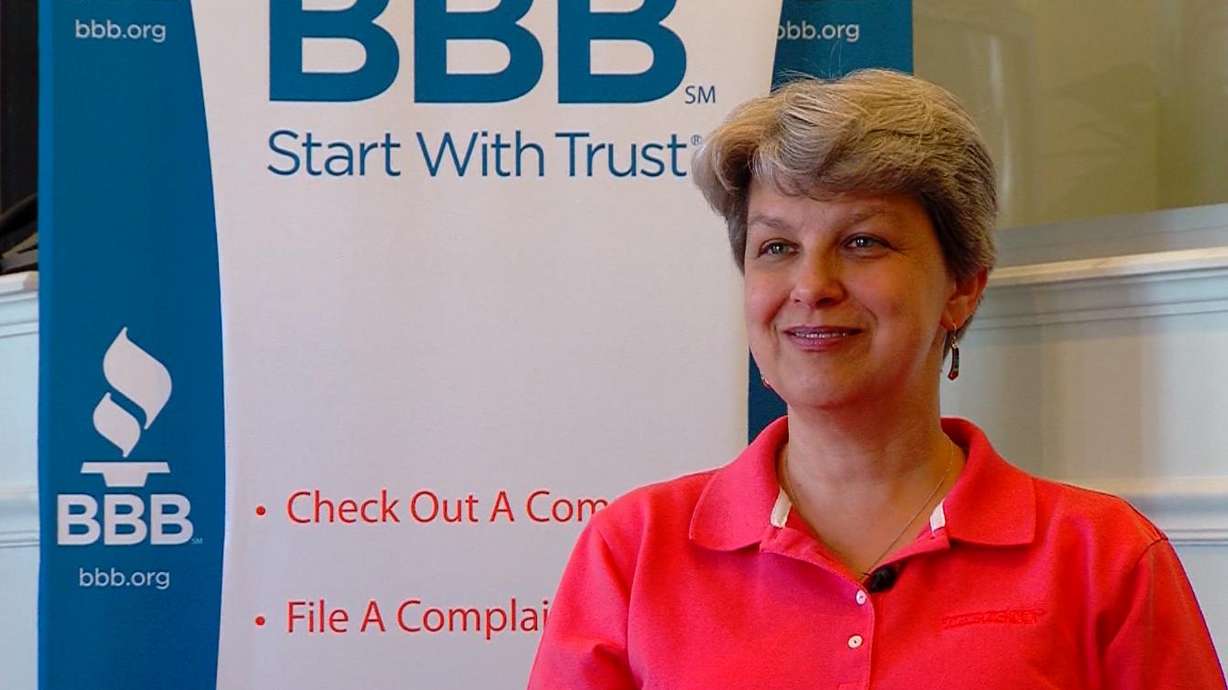
The Better Business Bureau, or BBB, verifies that each person who leaves a review has at least purchased the product from that company it reviews. Those include 5-star and 1-star ratings. Basically, it wants to know the person with a recommendation or the person with a complaint have actually done business with the company they’re reviewing.
However, Amazon, which got wrapped into the FTC complaint as the alleged tool for the fake reviews, has a similar process for verified customer reviews. Amazon places a “verified purchase” next to a consumer review left by someone it knows has actually bought the product.
The company didn't go into details about Tuesday's case, but in a statement, an Amazon spokesperson told KSL.com the company was appreciative of the FTC's work on the case.
"Amazon invests significant resources to protect the integrity of reviews in our store because we know customers value the insights and experiences shared by fellow shoppers. Even one inauthentic review is one too many," the statement continued. "We have clear participation guidelines for both reviewers and selling partners and we suspend, ban, and take legal action on those who violate our policies."
Driggs acknowledged that it's nearly impossible to verify every review even with steps to ensure their authenticity.
“There is no magic filter that tells you this is a fake review,” she said. “You really do, sometimes, take them with a grain of salt. ... You have to really be careful to make sure they are real and, unfortunately, not a lot of sites do that. We have a great system, but I’m not going to say it’s perfect.”
KSL.com interviewed Driggs and O’Bannon before the FTC announced it had filed its first-ever federal complaint on a company to crack down on fake reviews. Both Driggs and O’Bannon acknowledged it isn’t a secret in the consumer industry that some companies pay others to write good reviews, some offer incentives to consumers for reviews, and some ask for a review after purchase.
O’Bannon said he once received an offer for a free extra item if he left a review following a purchase he made with that company.
On the other hand, it’s also not a secret that people have left businesses negative reviews based on experiences brought up on incidents brought up in the news, social media posts or a business owner’s views. For example, South Jordan-based Cafe Yugo received a firestorm of poor reviews after someone online claimed to have been harassed by the company because of their gender identity. Surveillance video later exonerated the business in the public eye, but not after negative reviews were placed.
There is no magic filter that tells you this is a fake review. You really do, sometimes, take them with a grain of salt.
–Jane Driggs, president of the Utah and northern Nevada branch of the Better Business Bureau
So where is the ethical line drawn for online reviews? For Driggs, the line is whether someone has done business with the company they’re reviewing.
“There’s nothing wrong with a business asking a consumer that has done business with them, will you please file a review? I think more and more businesses are doing it,” she said. She warned that those who supply fake reviews usually do it in bunches or the wording sounds repetitive to other reviews left for the company.
O’Bannon didn’t speculate where the ethic line is. He preferred to warn customers to be aware fake reviews exist online when they are doing their research. That research, O’Bannon said, should also include receiving terms in writing, seeing that the business is properly licensed and has a course of action if “something goes wrong” with that business.
That said, he finds it unsettling there are untrustworthy or misleading reviews of businesses floating around online.
“We would be concerned about any fake reviews — anything that anyone is saying that isn’t true. That’s a problem,” O’Bannon said. “A fake review can mean anything. We’re especially concerned about any review that is a misrepresentation. That’s where it’d cross the line of the laws that we enforce, and we’d like consumers to bring those to us.”